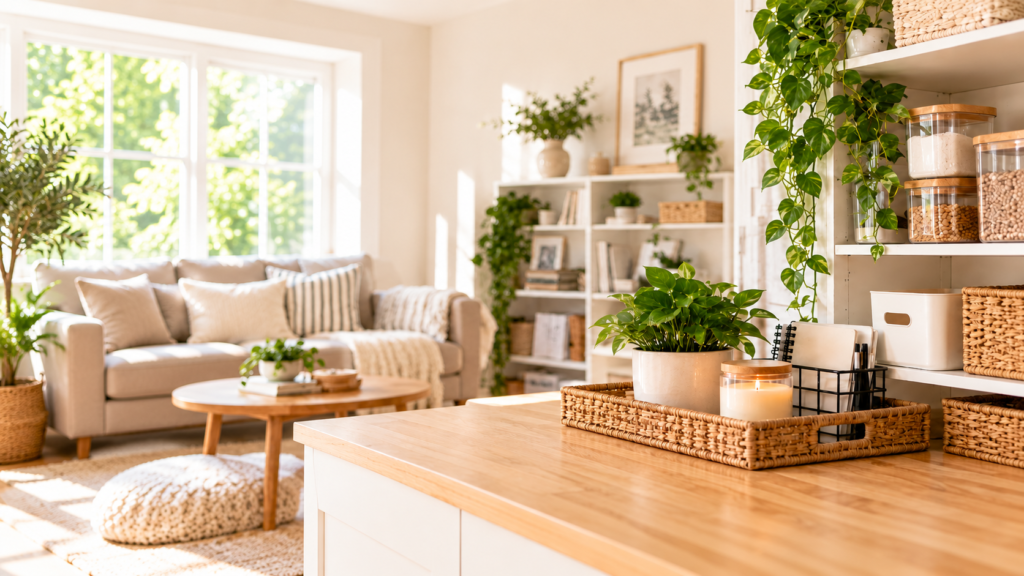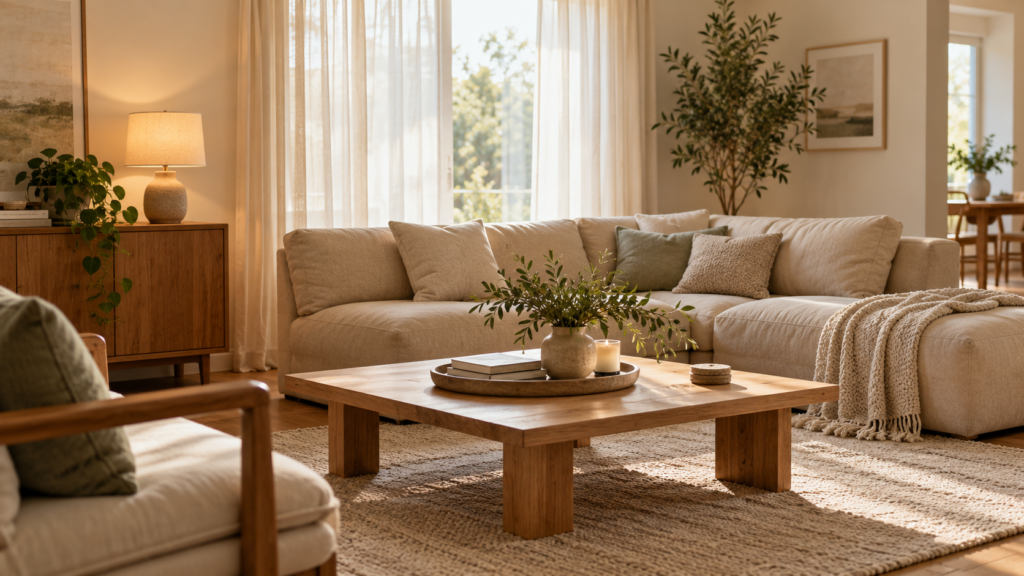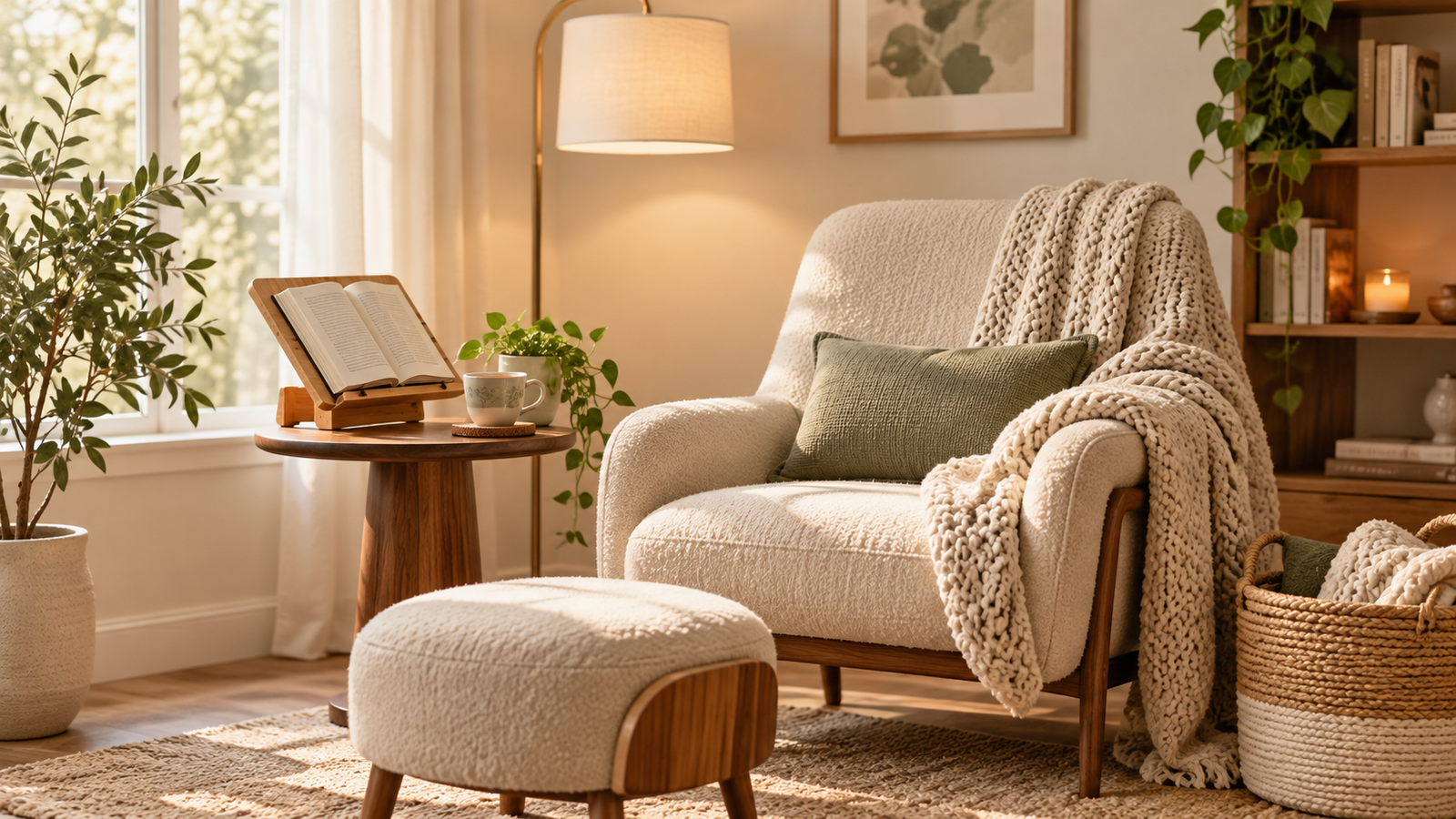
Life can feel surprisingly busy, even when we’re spending time at home. Between daily responsibilities, constant notifications, and the little things competing for our attention, finding a quiet moment to ourselves isn’t always easy.
But what if you could create a peaceful retreat without leaving your house?
A calm corner at home can be a simple, welcoming space where you step away from distractions, enjoy a good book, sip your favorite tea, or simply slow down after a long day. It doesn’t require an entire room, expensive furniture, or a complete home makeover. Sometimes, all it takes is a comfortable chair, thoughtful lighting, and a few personal touches.
The beauty of creating a cozy reading nook is that it can fit into almost any home. An unused bedroom corner, a quiet spot beside a window, or even a small area in your living room can become a relaxing place designed around your everyday needs.
And while beautiful decor can make the space more inviting, the real purpose goes beyond appearance. A thoughtfully arranged peaceful reading space can encourage you to set aside time for activities you enjoy, whether that’s reading a few chapters, writing in a journal, or taking a short break from your usual routine.
You don’t need to get every detail right from the beginning. The most meaningful spaces often come together gradually, with items that feel comfortable, practical, and personal.
In this guide, you’ll discover how to create a calm corner at home using simple layout ideas, cozy textures, practical lighting, and thoughtful accessories. We’ll also explore ways to make your reading nook work in smaller spaces, so you can create a relaxing home environment that feels inviting without adding unnecessary clutter.
The goal isn’t to design a picture-perfect corner. It’s to create a little place you’ll genuinely look forward to spending time in.
1. Choose the Right Spot for Your Calm Corner at Home
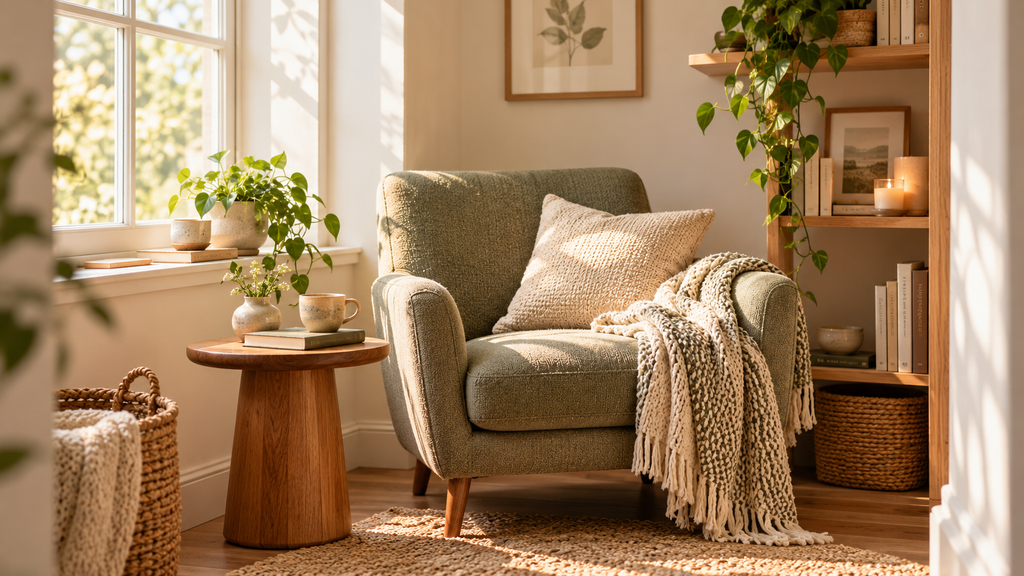
Before choosing furniture or decorative accessories, start by finding a location that feels comfortable and works naturally with your daily routine.
A successful calm corner at home doesn’t depend on having a large living space. What matters most is choosing an area where you can sit comfortably, enjoy some privacy, and spend a few uninterrupted minutes doing something you love.
Look for Natural Light and a Peaceful Atmosphere
If possible, choose a spot near a window. Natural daylight can make a cozy reading nook feel brighter, more open, and especially inviting during the morning or afternoon.
However, direct sunlight isn’t always ideal for reading, particularly when it creates glare or makes the space too warm. Light curtains or adjustable blinds can help you create a softer atmosphere.
Pay attention to the activity around your chosen location, too. A corner beside a busy hallway or television might not offer the quiet experience you’re looking for.
Instead, consider a bedroom corner, an underused section of the living room, or a comfortable spot near a bookshelf.
Make the Most of Small and Unused Spaces
You don’t need a separate room to create a relaxing reading area.
In fact, some of the most charming small reading corner ideas begin with spaces that are already available but rarely used.
Consider these possibilities:
- A bedroom corner: Ideal for quiet evening reading or a few peaceful minutes before bedtime.
- A living room nook: A practical choice if you enjoy reading while remaining close to the rest of your home.
- A window-side space: Perfect for anyone who enjoys natural light and a view of the outdoors.
- An underused alcove: A great opportunity to turn an overlooked area into something functional and inviting.
Before arranging your furniture, measure the available floor space and check that drawers, doors, and walkways remain accessible.
You should also think about how easily you’ll be able to reach your books, turn on a lamp, and sit down without rearranging other items.
Create a Gentle Sense of Separation
Your reading corner doesn’t need walls to feel like its own little retreat.
A small area rug, a floor lamp, or the placement of a comfortable chair can visually distinguish your peaceful reading space from the rest of the room.
If your home has an open floor plan, positioning the chair at a slight angle can create a more intimate atmosphere without making the surrounding area feel closed off.
The key is to define the space gently rather than filling it with unnecessary furniture.
Once you’ve chosen the right location, you’ll have a practical foundation for creating a reading nook that feels calm, welcoming, and easy to use.
2. Choose Comfortable Seating for Your Calm Corner at Home
A comfortable place to sit is one of the most important elements of a calm corner at home. After all, even the most beautiful reading nook won’t feel inviting if you constantly need to adjust your position or move somewhere else after a few minutes.
The right seating should fit your available space, support your body comfortably, and make it easy to settle in with a favorite book.
Find a Chair That Fits Your Reading Style
Before choosing a chair, think about how you naturally prefer to relax.
Do you enjoy sitting upright with a book in your hands? Or do you prefer curling up with a soft blanket and resting your feet?
An upholstered accent chair with a supportive backrest can work beautifully in a cozy reading nook, especially when paired with a small side table and adjustable lighting.
When comparing seating options, consider:
- Seat depth: Choose a depth that allows you to sit comfortably without straining to reach the backrest.
- Back support: Look for a shape that supports your preferred reading posture.
- Armrests: Comfortable armrests can help you hold a book without keeping your arms raised for long periods.
- Fabric: Soft, breathable upholstery can make the space feel pleasant throughout the year.
- Proportions: Make sure the chair fits the room while leaving enough space to move around it.
If you already have a comfortable chair at home, consider using it before purchasing something new. A simple change in placement can make familiar furniture feel surprisingly different.
Add a Footrest for Extra Comfort and Practical Storage
Sometimes, the smallest additions can make your relaxing reading area more functional.
A compact ottoman gives you somewhere to rest your feet while reading, and certain designs provide hidden storage for blankets, books, or other everyday items.
This can be particularly useful when creating a small cozy reading corner where every piece of furniture needs to serve a purpose.
For example, the Wimarsbon Storage Ottoman combines a padded footrest with storage functionality, making it an option worth considering for a compact reading space.

- Soft and Comfortable Material:The surface of small stool made of high-quality teddy fabric that is super soft to the tou…
- Pratical and Functional:The stylish storage ottoman is perfect for small space, compact enough not to be in anyone’s way…
- Unique and Stylish Design:The appearance of this leisure footrest adopts a unique design style, with the teddy velvet fa…
Rather than adding another cabinet or large storage unit, a multifunctional ottoman can help keep frequently used accessories close by while maintaining a tidy appearance.
Of course, check the dimensions and intended use before choosing one. Not every ottoman is designed to support someone sitting on it, and storage capacity varies between models.
Use Cushions and Throws Thoughtfully
Comfort doesn’t have to mean surrounding yourself with dozens of pillows.
One supportive cushion and a soft throw blanket may be enough to make your peaceful reading space feel warm and welcoming.
A lumbar cushion can provide additional support when needed, while a knitted or lightweight blanket adds texture without taking up much room.
Consider seasonal comfort as well. A breathable cotton throw may feel more pleasant during warmer months, while a thicker knitted blanket can make your reading corner especially inviting on cooler evenings.
Try combining two or three complementary textures rather than adding multiple decorative patterns. Neutral fabrics, natural fibers, and muted colors can create a cohesive appearance without overwhelming a small space.
Most importantly, arrange everything so it’s easy to use.
A reading nook should encourage you to sit down and enjoy yourself, not require several minutes of moving decorative objects before you can get comfortable.
With your seating arranged, the next step is to consider how lighting can make your corner practical for reading at different times of day.
3. Create Soft, Comfortable Lighting for Your Calm Corner at Home
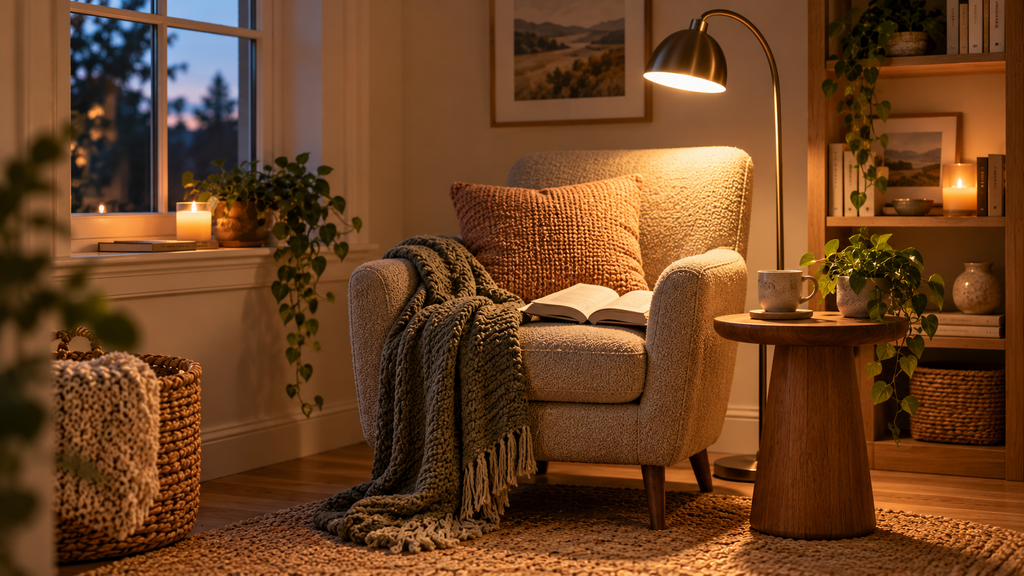
Lighting can completely change how a room feels. A reading corner that looks bright and inviting during the afternoon may need a different approach once the sun begins to set.
The goal is to balance practical reading light with a gentle atmosphere that makes your calm corner at home feel welcoming throughout the day.
Rather than relying on a single overhead fixture, think about how different sources of light can work together to create a comfortable environment.
Balance Natural Daylight With Adjustable Reading Light
During the daytime, natural light can be one of your greatest advantages.
Positioning your chair near a window allows you to enjoy the changing daylight while reading, journaling, or taking a quiet break.
However, the direction of the light matters.
If sunlight falls directly onto your book or into your eyes, it may create uncomfortable glare. Sheer curtains, adjustable blinds, or a slight change in seating position can make a noticeable difference.
As daylight fades, a dedicated reading floor lamp becomes especially useful.
Look for a lamp that offers:
- Adjustable brightness: So you can increase the light for reading and lower it when relaxing.
- A comfortable light color: Warm white lighting can create a welcoming atmosphere, while a slightly more neutral tone may make printed text easier to distinguish.
- Directional illumination: A lamp that directs light toward your book without shining directly into your eyes.
- Convenient controls: A switch or dimmer that’s easy to reach from your chair.
- A stable base: Particularly important in compact spaces or households with pets and children.
A dimmable floor lamp is a practical option for a cozy reading nook, especially when there’s limited room for a table lamp.
Layer Your Lighting for a Relaxing Atmosphere
A peaceful space often feels more inviting when its lighting has depth rather than coming from one bright source.
This approach, sometimes called layered lighting, combines functional illumination with softer background light.
For your peaceful reading corner, you might use a focused floor lamp beside the chair while allowing a gentle wall light or another existing fixture to illuminate the surrounding area.
You don’t need several new lamps to accomplish this. The idea is simply to avoid harsh contrasts between a brightly illuminated book and a completely dark room.
If you’re decorating a shared living space, consider using the room’s existing lighting before adding anything else.
Make Evening Reading More Comfortable
If you enjoy reading before bedtime, small lighting adjustments can help your corner feel more restful.
Choose a level of brightness that allows you to see the page clearly without unnecessary glare. Avoid making the room so dim that you need to strain to read.
For printed books, position the lamp so the light reaches the pages evenly. If you’re using an e-reader, adjust its screen brightness to suit the surrounding light.
A relaxing home environment should support the activity you’re enjoying rather than simply look beautiful in photographs.
Ultimately, the best lighting arrangement is one you can adjust easily as your needs change.
Once the lighting feels right, you can focus on the smaller details that make your reading corner organized, personal, and easy to enjoy every day.
4. Keep Your Calm Corner at Home Organized and Clutter-Free
A beautiful reading nook becomes much more enjoyable when everything you need has its place.
You shouldn’t have to search for your current book, move a pile of magazines, or clear a crowded table every time you want to relax.
Thoughtful reading nook organization can make your space easier to use while preserving the peaceful atmosphere you’ve worked to create.
The secret isn’t finding storage for everything you own. It’s deciding which items genuinely belong in your reading corner.
Keep Everyday Reading Essentials Within Reach
Start by considering what you normally use during a quiet reading session.
Perhaps it’s your current novel, a pair of reading glasses, a notebook, or a favorite mug.
Choose a convenient place for these everyday essentials rather than displaying your entire book collection.
A compact side table can provide enough surface space for a few useful items, while a nearby shelf or woven basket can hold accessories you don’t need immediately.
For an organized cozy reading space, try following one simple principle: keep frequently used items accessible and store everything else out of the way.
This allows the space to remain practical without looking crowded.
Use a Book Stand for Hands-Free Reading
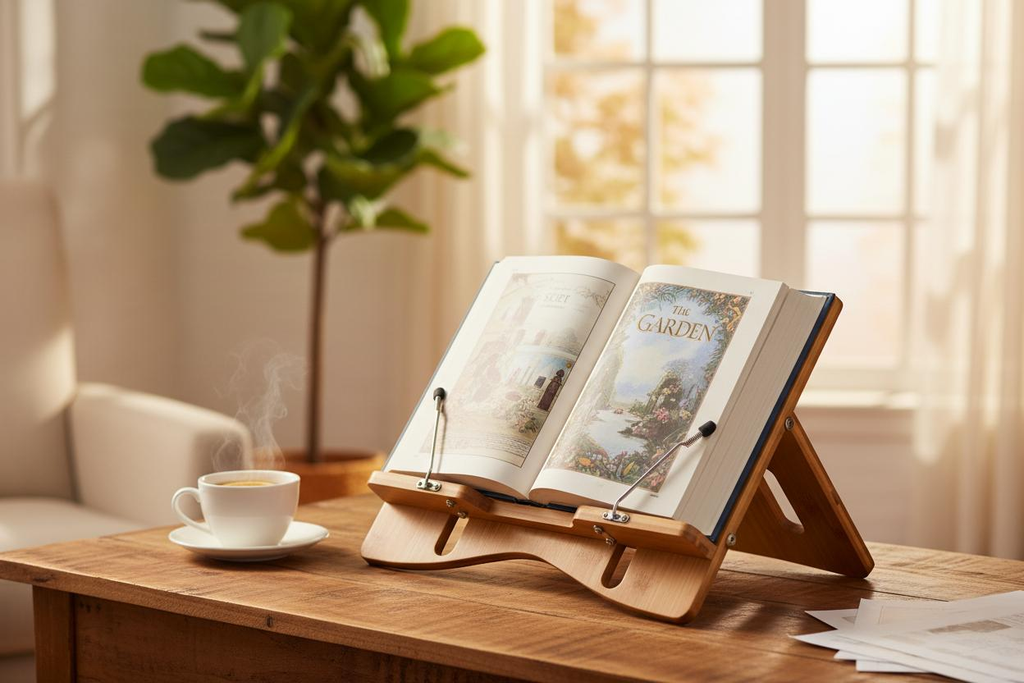
One useful accessory to consider is an adjustable book stand.
A wooden book stand can hold a book open on a table, allowing you to read without continuously supporting its weight.
This may be especially convenient when following a guided journal, reading a reference book, or keeping a favorite passage visible while taking notes.
For example, the wishacc Bamboo Book Stand offers an adjustable wooden design that can fit naturally into a reading area.

- 【PREMIUM BAMBOO & PERFECT SIZE】 Measuring 13.2″ x 9.2″, our bamboo book stand is crafted from high-quality, eco-friendly…
- 【5 ADJUSTABLE READING ANGLES】 Designed with ergonomics in mind, this adjustable book stand easily sets to 5 different vi…
- 【FOLDABLE & HIGHLY PORTABLE】 Conveniently folding down flat when not in use, this light-weight and space-friendly portab…
Its bamboo appearance also works well with warm wood furniture, neutral fabrics, and other natural materials commonly used in a cozy home reading nook.
When choosing a book stand, consider its size, viewing angle, stability, and compatibility with the books you actually use.
A lightweight stand may be suitable for paperbacks, while larger hardcover books may require something sturdier.
If your reading corner has only a narrow side table, measure the available surface before adding another accessory.
The goal is convenience, not overcrowding.
Make Storage Part of the Decor
Storage can contribute to your room’s appearance instead of feeling like an afterthought.
A woven basket beside your chair, for example, can hold an extra blanket or a few magazines while adding warmth and natural texture.
A small floating shelf may work well when floor space is limited, especially if you want to display a few favorite books without introducing another piece of furniture.
You might also repurpose something you already own, such as a decorative basket, a small tray, or a compact wooden crate.
For small reading nook storage, choose solutions that fit the actual dimensions of your space and don’t interfere with walkways.
Build a Simple Reset Habit
Even a thoughtfully arranged corner can become cluttered when everyday items accumulate.
To keep your calm corner at home inviting, spend a minute putting things back after each reading session.
Return your book to its shelf or stand, fold your blanket, and remove anything that belongs elsewhere.
This small routine helps ensure your favorite spot is ready whenever you need a quiet moment.
A well-organized reading area doesn’t need to look perfectly styled. It simply needs to feel comfortable, personal, and easy to enjoy.
Once the practical elements are in place, you can add a few finishing touches that reflect your personality and make the space feel truly yours.
5. Use Calming Colors and Natural Textures to Create a Peaceful Reading Space
The colors and materials you choose can influence the overall atmosphere of your reading corner.
While comfort and functionality provide the foundation, thoughtful decorative details help turn an ordinary spot into a place that feels personal and welcoming.
When decorating your calm corner at home, focus on creating visual harmony rather than following every new interior design trend.
A few complementary colors, pleasant textures, and meaningful objects can make a space feel complete without overwhelming it.
Choose a Color Palette That Feels Relaxing
Soft, muted colors are a popular choice for calming home decor because they can create a gentle, understated atmosphere.
Warm beige, creamy white, sage green, muted blue, and earthy brown are versatile options that work beautifully with natural materials.
However, you don’t need to repaint your walls or replace your furniture to establish a cohesive color scheme.
Start with the colors already present in your room and introduce one or two complementary shades through smaller accessories.
For example, a cream-colored chair can look beautiful with a sage green cushion and a warm beige throw. Natural wood furniture can add contrast while maintaining a welcoming appearance.
If you prefer richer colors, consider using deeper greens, warm terracotta, or soft charcoal as accents.
The most important thing is choosing a palette you genuinely enjoy looking at.
Combine Textures Without Overcrowding the Space
Texture adds visual interest, particularly when your reading nook has a relatively simple color palette.
A knitted blanket, a smooth wooden table, and a woven basket can create an appealing combination without requiring additional decorative objects.
For your cozy reading nook, experiment with different materials that serve a practical purpose.
You might combine a soft cotton cushion with a chunky knit throw or place a natural-fiber rug beneath your reading chair.
Try to avoid layering so many fabrics that your seating becomes difficult to use or maintain.
A few well-chosen textures usually create a more balanced appearance than a large collection of decorative pieces.
Bring a Touch of Nature Indoors
Natural elements can help a reading space feel connected to its surroundings.
A small leafy plant near the window, a wooden bookshelf, or a ceramic vase with dried branches can introduce subtle visual interest.
You don’t need to turn your reading corner into an indoor garden.
If you enjoy caring for houseplants, choose a variety suited to the light conditions in your selected location.
If plants aren’t practical for your home, natural materials such as wood, cotton, linen, and woven fibers can create a similar organic aesthetic.
For a peaceful home environment, consider leaving some surfaces intentionally empty. Open space gives decorative details room to stand out and makes everyday cleaning easier.
Add Personal Details That Tell Your Story
Your reading nook should feel like a reflection of your interests, not a display arranged for someone else’s approval.
A framed photograph, a favorite piece of art, or a meaningful souvenir can give the space a sense of familiarity.
If you enjoy collecting books, display a few titles that hold special meaning to you.
You might also keep a small notebook nearby for memorable quotes, personal reflections, or ideas that come to mind while reading.
These thoughtful details often contribute more to a space’s character than expensive decorations.
For additional inspiration on making everyday spaces feel more comfortable and intentional, explore our Home & Balance collection, where we share practical ideas for creating a home that supports your daily routines.
Remember That Simplicity Is Part of the Appeal
A calm corner doesn’t need to be perfectly coordinated or filled with decorative objects.
In fact, leaving a little breathing room around your furniture can make the space more comfortable and easier to maintain.
Before adding something new, ask yourself whether it improves comfort, serves a purpose, or brings genuine enjoyment.
If the answer is no, you may not need it.
The most inviting cozy reading nook ideas often have something in common: they make everyday relaxation feel uncomplicated.
With the atmosphere established, the next step is to turn your reading corner into a space you’ll actually use, even on your busiest days.
6. Turn Your Calm Corner at Home Into a Daily Wellness Ritual
Creating a beautiful reading space is a wonderful beginning, but the real value comes from how you use it.
Your calm corner at home can become more than a comfortable chair surrounded by books. It can be a familiar place where you make room for quiet activities, reconnect with your interests, and enjoy a little time away from everyday distractions.
You don’t need an elaborate wellness routine or an hour of uninterrupted free time to make that happen.
A few intentional minutes can be enough to start building a habit that fits naturally into your life.
Start With a Simple Five-Minute Reading Habit
One of the easiest ways to enjoy your peaceful reading space is to begin with a small, realistic commitment.
Instead of setting an ambitious reading goal, try spending just five minutes with a book you genuinely enjoy.
You might read a few pages while drinking your morning coffee, revisit a favorite chapter after lunch, or settle into your reading chair before bedtime.
The important part is finding a moment that feels manageable.
For example, you could connect your reading habit to something you already do:
- After breakfast: Read a few pages before starting your daily responsibilities.
- During an afternoon break: Spend five or ten minutes away from your phone.
- After dinner: Enjoy a chapter instead of immediately turning on the television.
- Before bedtime: Choose a relaxing book as part of your evening wind-down routine.
Over time, your reading corner may become a familiar reminder to slow down and enjoy something meaningful.
Explore Other Quiet Activities Beyond Reading
Although books may be the main reason you created your space, your cozy reading nook doesn’t need to serve just one purpose.
Depending on your interests, you can use it for activities that encourage reflection, creativity, or simple enjoyment.
Consider writing a few thoughts in a journal, listening to gentle music, practicing a few minutes of quiet breathing, or enjoying a warm drink without scrolling through your phone.
You might even spend a little time doing absolutely nothing.
Not every quiet moment needs to be productive.
The purpose of a personal retreat is to give yourself permission to enjoy unhurried time without turning relaxation into another obligation.
Make Your Reading Corner a Screen-Free Space
Phones and other digital devices can be useful, but constant notifications may interrupt the peaceful atmosphere you’re trying to create.
If you find yourself checking your phone every few minutes, consider leaving it somewhere else during your reading sessions.
You could also activate a focus setting or silence nonessential notifications.
This doesn’t mean technology has no place in your corner. E-readers and audiobooks, for example, can be wonderful ways to enjoy literature.
The goal is simply to make intentional choices about what receives your attention.
A mindful reading habit doesn’t require perfect concentration. It’s about gently returning your attention to the activity you’ve chosen.
Build a Daily Wellness Routine That Feels Natural
Small rituals are often easier to maintain when they fit into the life you already have.
Perhaps your self-care routine begins with preparing a cup of tea, opening the curtains, and settling into your favorite chair.
On other days, it may involve ten quiet minutes with a journal or a few pages of an inspiring book.
There’s no single right way to create a restorative routine.
Your preferences, responsibilities, and available time will influence what works best for you.
Instead of trying to follow a rigid schedule, experiment with different moments and activities until you discover what feels comfortable and sustainable.
Continue Your Wellness Journey Beyond Your Reading Corner
A peaceful reading space can be one small part of a more intentional approach to everyday living.
The same principles that help you create a welcoming corner—simplicity, comfort, and thoughtful choices—can also inspire the way you approach other daily habits.
If you’d like to explore more practical ideas for bringing balance into your routine, discover The Everyday Wellness Guide from Daily Wellbeing Path.
This guide offers additional inspiration for incorporating simple wellness habits into everyday life, without feeling the need to change everything at once.
Remember, your reading nook doesn’t need to become another project you have to manage.
Let it remain a flexible, welcoming space that adapts to your needs.
Some days, you’ll have time to enjoy several chapters. On others, a few quiet minutes may be all you want.
Both are worthwhile.
The true beauty of creating a calm corner at home is having a place that invites you to return whenever you’re ready for a little peace.
7. Final Thoughts: Create a Calm Corner at Home That Feels Like Yours
The most inviting spaces aren’t necessarily the largest, most expensive, or most beautifully decorated. They’re the ones that make everyday life a little more enjoyable.
When you create a calm corner at home, you’re giving yourself a dedicated place to enjoy simple pleasures, from getting lost in a good book to spending a few quiet moments away from a busy schedule.
Start with what you already have. Choose a location you enjoy, arrange the essentials comfortably, and allow the space to evolve as you discover what works best for you.
You might eventually add a favorite lamp, a softer cushion, or a practical accessory that makes reading more convenient. But there’s no need to purchase everything at once.
A welcoming cozy reading nook is built around your preferences, not a decorating checklist.
Whether you have an entire room or just a small corner beside a window, the goal remains the same: to create a comfortable place that encourages you to slow down, reconnect with your interests, and appreciate life’s quieter moments.
Your peaceful reading space doesn’t have to be perfect from the beginning. It simply needs to feel like a place where you belong.
And once your reading corner is ready, there’s only one thing left to do.
Choose a book, settle into your favorite chair, and enjoy a little time for yourself.
“A peaceful home isn’t about having more space. It’s about creating moments that make you feel at home.”
Cozy Reading Nook Essentials: 6 Thoughtful Amazon Finds
Creating a calm corner at home doesn’t require a complete makeover. Sometimes, a few thoughtfully chosen essentials can make your reading space more comfortable, organized, and inviting.
To help you get started, we’ve selected six practical Amazon finds that combine comfort, functionality, and cozy style.
Explore the collection below and choose the pieces that best suit your space, personal preferences, and budget.