A calm home environment does not have to begin with a renovation, a completely new decorating style, or a long list of things to buy. Often, the biggest difference comes from noticing how your home makes you feel and making a few thoughtful adjustments to the spaces you already use every day.
A room can be beautiful and still feel busy. Too many objects competing for attention, harsh lighting, uncomfortable furniture, cluttered surfaces, or even a lack of softness can quietly make a space feel less restful than it could be.
The good news is that creating a calmer home is often much simpler than it seems.
Instead of trying to transform everything at once, start by paying attention to the places where you naturally slow down: the sofa where you rest at the end of the day, the corner where you drink your morning coffee, the bedroom you return to at night, or the table where everyday life tends to collect.
Small changes in these familiar spaces can have a surprisingly noticeable effect.
You might clear one crowded surface, soften the lighting in the evening, introduce a comfortable texture, or simply give a room a little more visual breathing space. None of these changes requires a major project, but together they can make your home feel more peaceful, welcoming, and easier to live in.
Throughout this guide, we’ll look at simple ways to create that feeling without trying to make your home perfect — and without changing everything you already love about it.
If you enjoy practical ideas for creating a home that feels more comfortable and balanced, you can also explore more inspiration in our Home & Balance collection.
Reduce Visual Clutter Before Adding Anything New
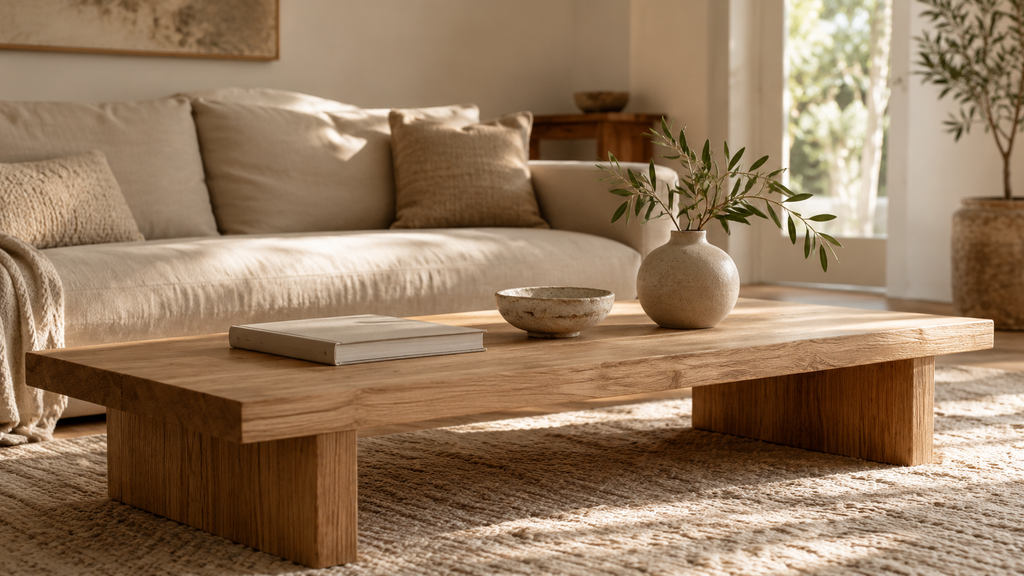
One of the simplest ways to create a calmer home is to look at what is already competing for your attention.
Countertops covered with everyday items, a coffee table filled with objects, crowded shelves, or too many decorative pieces in one area can make a room feel busier than it actually is. You do not need to remove everything or turn your home into a minimalist space. The goal is simply to give your eyes a few places to rest.
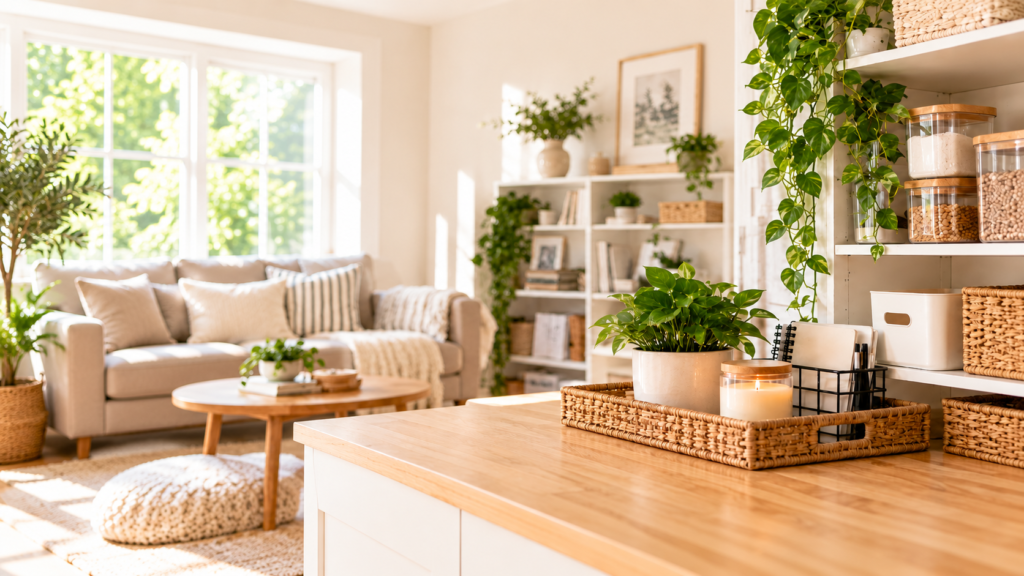
Start with one visible surface rather than an entire room. It might be the coffee table, a kitchen counter, a bedside table, or the console you see when you walk through the door.
Remove what does not need to be there, group smaller items together, and leave some open space. Even a small amount of negative space can make familiar furniture and objects feel more intentional.
This is also a good moment to reconsider what deserves to stay visible. A few objects you genuinely enjoy — a favorite book, a ceramic bowl, a small plant, or something with personal meaning — can often create more warmth than a large collection of decorative pieces.
The idea is not to create an empty home. It is to create a home where the things around you have room to breathe.
Add Soft Textures to Make the Room Feel More Inviting

A calm home is not only about what you remove. What you add can also influence how comfortable and welcoming a room feels.
Soft textures are one of the easiest ways to change the mood of a space without replacing furniture or redecorating an entire room. A cushion, a throw, a soft rug, or even a fabric lampshade can introduce warmth while keeping the overall look simple.
If your sofa already works well in the room, for example, you may not need to change it at all. Adding one or two cushions in warm neutral tones can soften the space and make it feel more inviting.
For a similar look, these soft beige faux fur pillow covers on Amazon are an easy way to introduce texture without adding strong colors or busy patterns.
The key is restraint. You do not need layers of cushions, blankets, and decorative accessories everywhere. Choose a few textures that feel pleasant and work naturally with the colors already in your home.
Neutral shades such as cream, beige, warm white, soft taupe, and muted earthy tones can be especially easy to combine. Rather than making the room feel heavily decorated, they can add subtle depth while allowing the space to remain visually quiet.
Think of texture as a way to make a room feel comfortable before it even needs to look “styled.”

- Wool Fur Top, Velvet Back, Inserts Not Included.
- Premium Softness on Both Sides: Experience luxury throw pillow covers that feel expensive with soft faux fur front and c…
- Built to Last: Sturdy construction with reinforced stitching and reliable zippers. Customers reflect our decorative pill…
Use Softer Lighting to Change the Mood of a Room
Lighting can completely change how a familiar room feels, especially later in the day.
Bright overhead lighting may be practical when you are cleaning, cooking, or working, but it can feel unnecessarily harsh when you are trying to slow down in the evening. Creating a calmer atmosphere can be as simple as changing which lights you use at different times of the day.
During daylight hours, make the most of natural light whenever possible. Open curtains, avoid blocking windows with unnecessary objects, and allow daylight to become part of the room rather than relying on artificial lighting throughout the day.
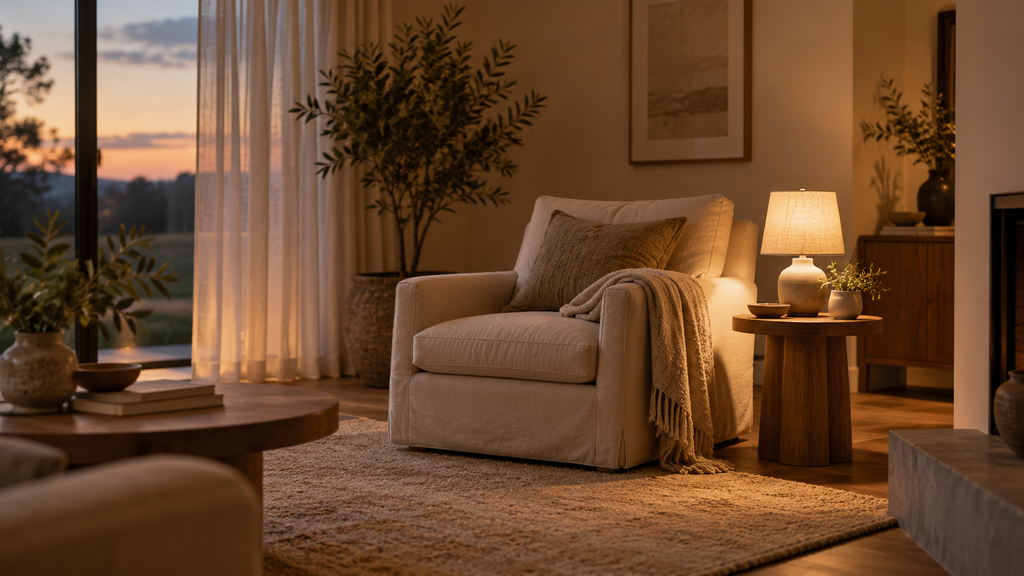
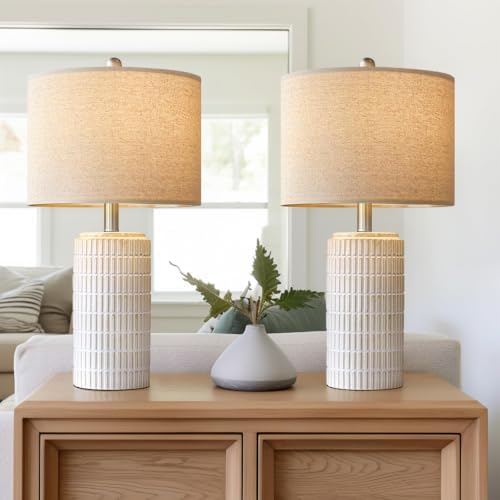
In the evening, try using smaller sources of warm light instead of illuminating the entire room from above. A table lamp beside the sofa, a floor lamp in a quiet corner, or a small bedside lamp can create softer pools of light and make the room feel more intimate.
You do not need every corner to be equally bright. In fact, a little variation between light and shadow can give a room more depth and help it feel less stimulating.
Even changing the bulb in a lamp you already own can make a noticeable difference. Warmer light tends to create a softer atmosphere than very cool, bright light, making this one of the simplest changes to experiment with before buying anything new.
Create One Comfortable Place to Slow Down
A calmer home does not require every room to feel perfectly arranged. Sometimes, having just one comfortable place where you naturally want to slow down is enough to change how you experience your home.
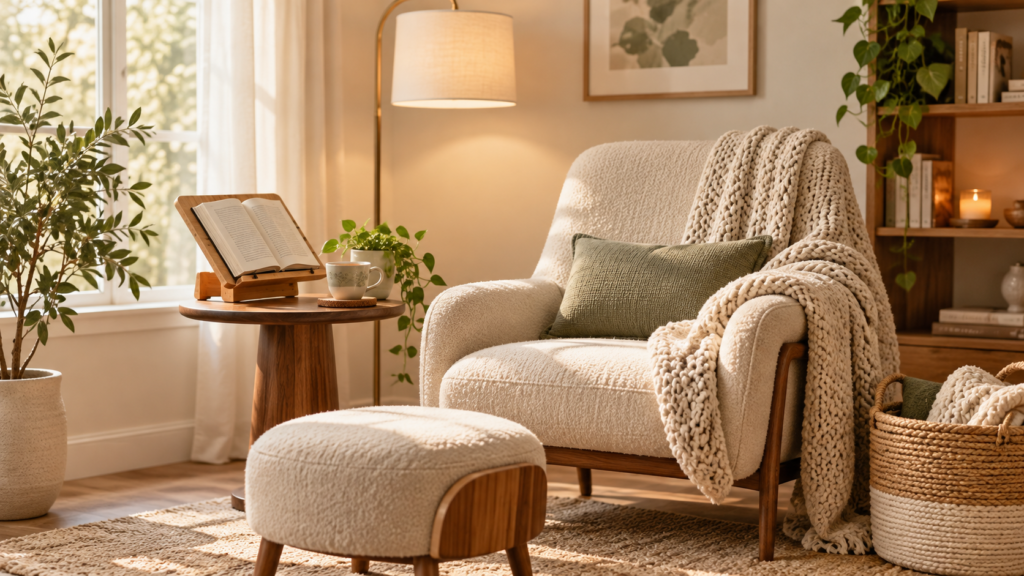
Think about where you tend to relax at the end of the day. It might be one end of the sofa, a favorite chair near a window, or a quiet corner where you can read, enjoy a cup of tea, listen to music, or simply sit for a few minutes without doing anything else.
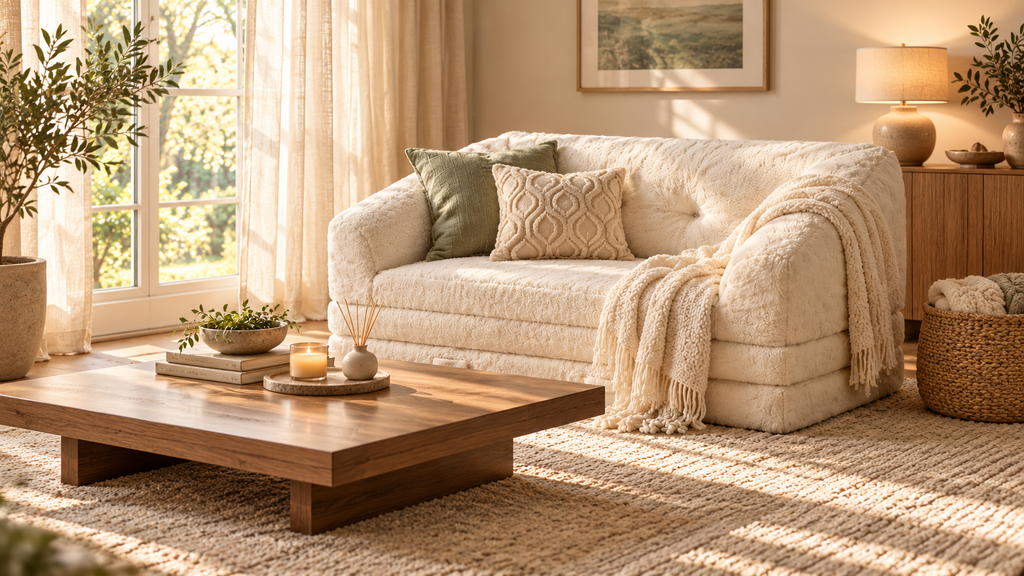
Instead of redesigning the entire room, focus on making that one spot genuinely comfortable.
Keep what you need nearby, remove unnecessary clutter around it, and pay attention to how the furniture feels as well as how it looks. A comfortable seat, soft texture, gentle lighting, and enough open space around you can create a small sense of retreat even in an ordinary living room.
If you are already considering a more flexible seating option, a neutral piece such as this beige convertible loveseat and floor sofa on Amazon can offer a cozy place to unwind while also adapting to smaller living spaces or occasional guests.
But buying something new is not the goal. If you already have a sofa or chair you enjoy, start there. A calmer space often comes from making better use of what you already own rather than continually adding more.
The most important question is simple: does this part of your home make you want to stay for a while?

- 2-IN-1 CONVERTIBLE SOFA BED: Turn everyday seating into a comfortable sleeping space with this versatile sofa bed. Use i…
- FOLDABLE DESIGN FOR MULTIPLE USES: The flexible folding structure makes it easy to switch between a compact boneless lov…
- COZY SEATING WITH BUILT-IN SUPPORT: Designed with padded integrated armrests and a supportive backrest, this boneless co…
Use a Rug to Give the Room a Sense of Calm and Connection
Sometimes a room feels unsettled not because there is anything wrong with the furniture, but because each piece seems to exist on its own.
A rug can quietly change that.
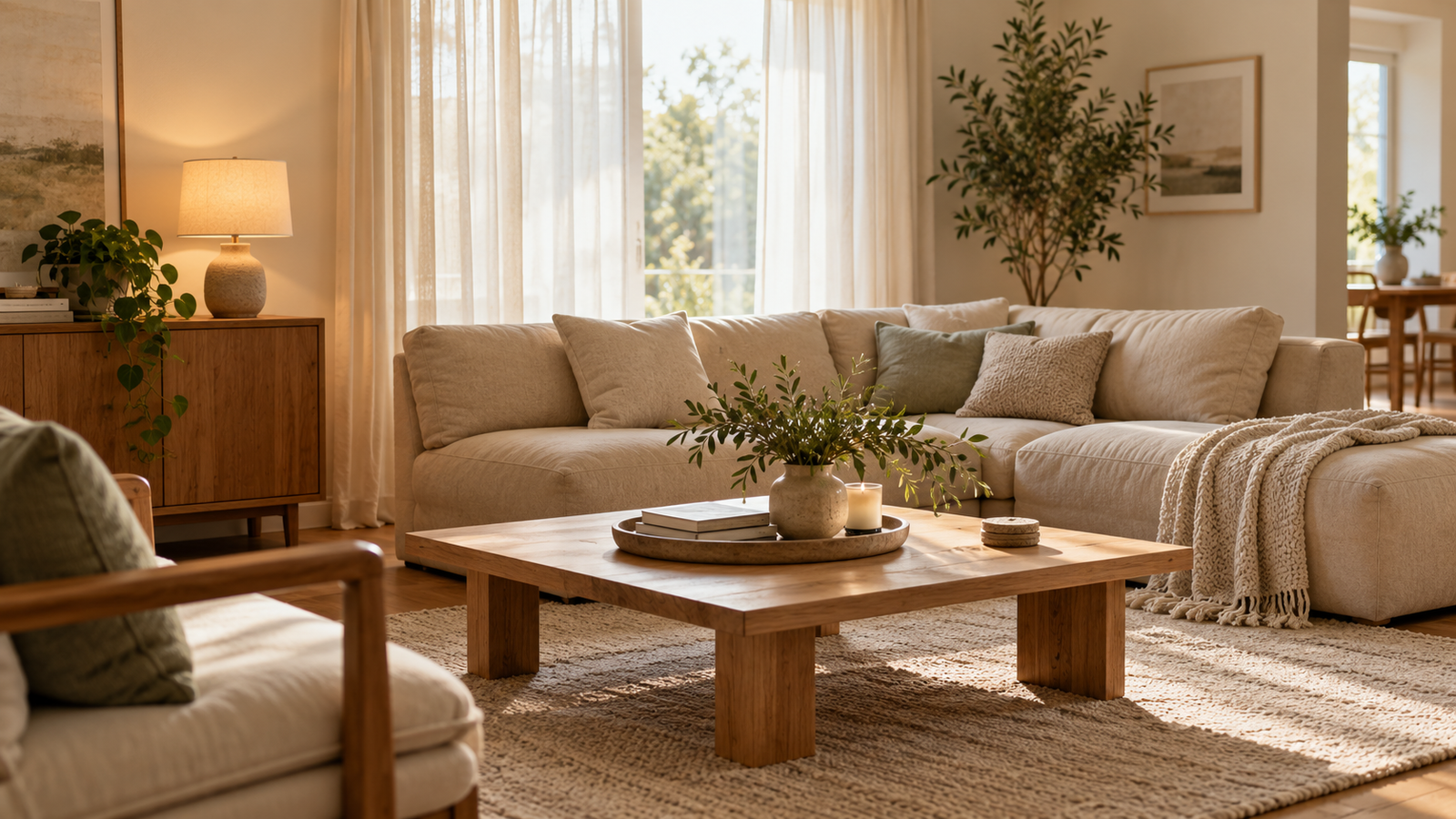
By visually connecting the sofa, coffee table, and surrounding furniture, it can help define the living area and make the space feel more intentional. This can be especially useful in open-plan rooms, where different areas share the same floor and need a little visual structure.
You do not necessarily need a bold pattern or a rug that becomes the center of attention. For a calmer look, soft neutrals and subtle patterns can work beautifully because they add texture without creating too much visual competition.
Size also matters. A rug that is large enough to relate to the main pieces of furniture usually feels more grounded than one that seems to float alone in the middle of the room.
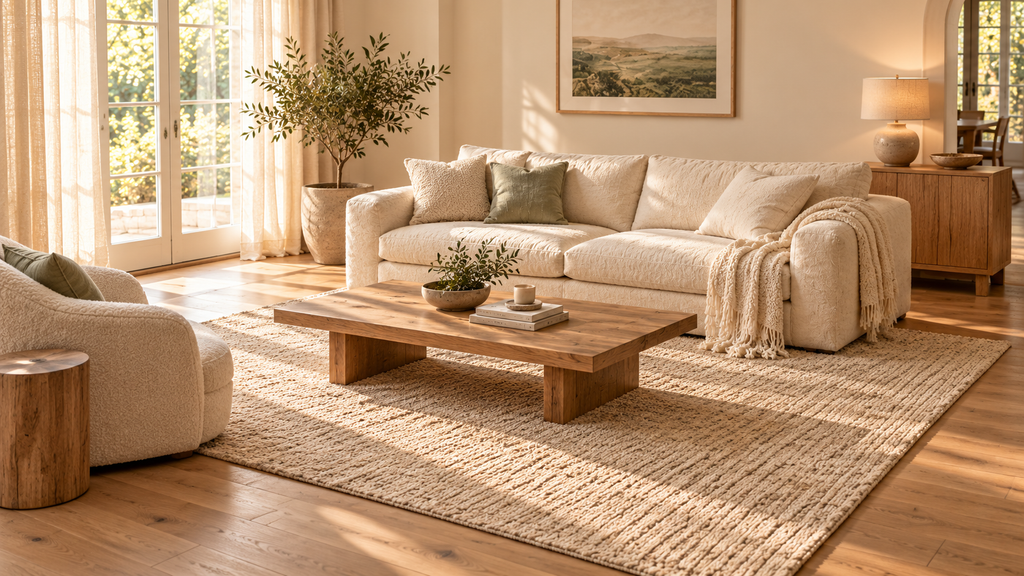
If you like the soft neutral look we are creating here, this beige low-pile washable area rug on Amazon is one example of how you can introduce subtle texture while keeping the overall palette quiet.
And if you already have a rug, try repositioning it before replacing it. Sometimes simply adjusting how it sits beneath the furniture is enough to make the entire seating area feel more connected.
The goal is not to make everything match perfectly. It is to create enough visual continuity that the room feels settled rather than fragmented.
Bring in Natural Materials for a Warmer, Calmer Feel
A room can have a beautiful neutral palette and still feel a little cold if every surface is smooth, synthetic, or highly polished.
Natural materials can soften that feeling.
Wood, linen, cotton, woven fibers, ceramic, and small touches of greenery introduce subtle variations in texture and tone. They do not need to dominate the room. Even one or two natural elements can make a space feel warmer and more grounded.
Wood is particularly easy to introduce because it works beautifully with the soft neutrals we have already discussed. A wooden tray, side table, shelf, or coffee table can add warmth without introducing another strong color into the room.
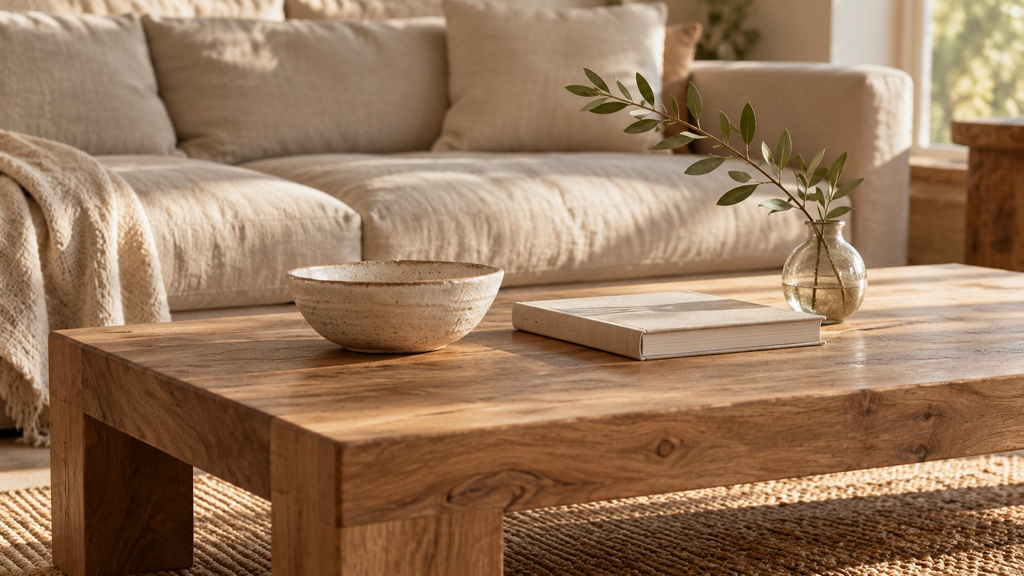
If you are looking for a larger piece to anchor a seating area, this large natural solid wood coffee table on Amazon is an example of how a simple natural material can become part of the room without making the space feel overly decorated.
The surface itself does not need much styling. In fact, keeping it simple often works better: a favorite book, a small ceramic piece, or a vase with a single branch may be enough.
Natural materials also work best when they are allowed to look natural. Different wood tones do not have to match perfectly, and handmade ceramics do not need to look identical. Those small variations can keep a neutral room from feeling flat or overly controlled.
The goal is not to recreate a perfectly coordinated showroom. It is to make your home feel comfortable, personal, and connected to materials that bring a little warmth into everyday life.
Reduce the Background Noise You Barely Notice
A home can look peaceful and still feel surprisingly busy.
Sometimes the source is not visual at all. A television playing in the background, constant phone notifications, appliances humming nearby, or several sounds competing at once can create a sense of activity even when you are trying to rest.
You do not need to make your home completely silent. Instead, notice which sounds are intentional and which ones have simply become part of the background.
Try turning off the television when no one is actively watching it. Leave your phone in another room for a little while. Close the door to a noisy appliance if you can, or simply allow a few quiet minutes between one activity and the next.
You can also think about the sounds you want to hear.
An open window on a quiet morning, gentle music while preparing dinner, rain outside, or even the familiar sounds of someone moving around the kitchen can make a home feel alive without making it feel overwhelming.
The difference often comes down to choice. When every sound is competing for your attention, home can feel restless. When you become more intentional about what fills the background, the same space may begin to feel noticeably calmer.
Create Small Habits That Help Your Home Stay Calm
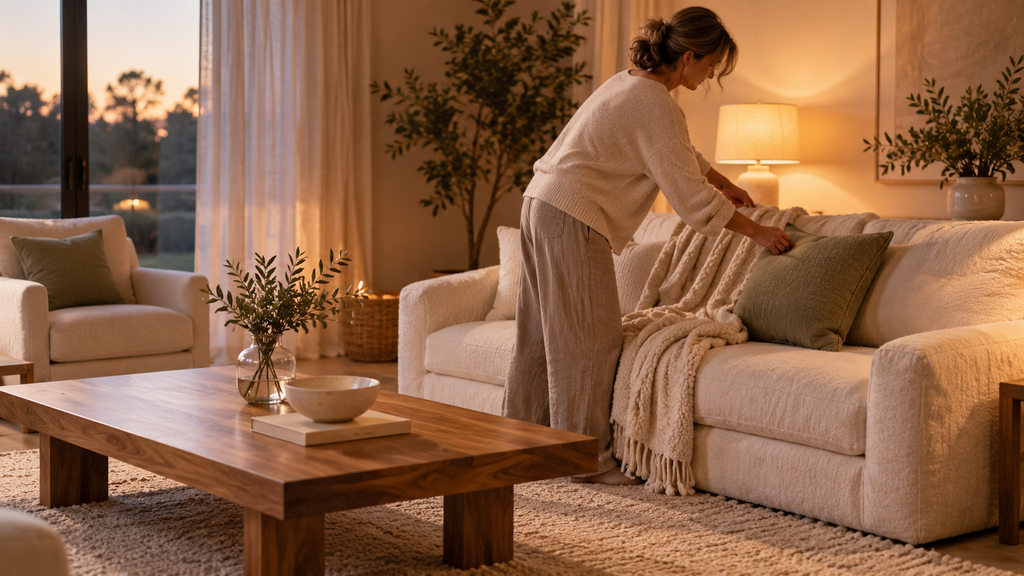
A calm home environment is easier to maintain when a few simple habits become part of everyday life.
The goal is not to keep every room perfectly organized. A home is meant to be lived in, and dishes, shoes, mail, blankets, bags, and everyday objects will naturally move through it. What makes a difference is having small ways to reset those spaces before the clutter begins to feel overwhelming.
One of the easiest habits is a short evening reset. Before settling down for the night, spend a few minutes returning things to where they belong. Clear the coffee table, straighten the sofa, put away anything that accumulated during the day, and prepare one or two areas for the morning ahead.
You can do the same with the places that tend to collect clutter. Instead of trying to organize an entire room, pay attention to one recurring trouble spot — perhaps the kitchen counter, the entryway, or the chair that somehow becomes home to everything that has nowhere else to go.
Giving frequently used items a simple place to return to can make these resets much easier.
It also helps to avoid turning tidying into an all-or-nothing task. Five intentional minutes can often make a room feel noticeably different, and repeating that small action is usually more manageable than waiting until the entire house needs attention.
Over time, these little resets can become less about “keeping the house perfect” and more about creating a gentle transition between different parts of your day.
A calmer home is not one that never gets messy. It is one that can return to a comfortable baseline without requiring a major effort every time.
Let Your Home Feel Lived-In, Not Perfect
Creating a peaceful home does not mean removing every sign of everyday life.
A book left beside your favorite chair, a blanket folded over the sofa, a mug waiting on the kitchen counter, or a pair of shoes near the door can all be part of a home that feels comfortable and welcoming.
The difference is not between a perfect home and a messy one. It is often between a space that feels manageable and one that constantly asks for your attention.
This is why trying to recreate perfectly styled rooms can sometimes work against the feeling you are actually looking for. When every cushion has to stay in exactly the right position and every surface needs to remain untouched, the home can begin to feel like something you maintain rather than somewhere you live.
Instead, decide what “calm enough” looks like for you.
Maybe it means keeping the main surfaces relatively clear while allowing a basket of everyday things nearby. Perhaps it means making the bed most mornings but not worrying when you do not. Or it might simply mean having one room that feels peaceful even when another part of the house is busy.
A calm home environment should support everyday life, not compete with it.
When your space feels comfortable, functional, and personal, small imperfections become much less important. The goal was never to create a home that always looks ready for a photograph.
It is to create one that feels good to come back to.
A Calmer Home Can Begin With What You Already Have
Creating a calm home environment does not require a complete makeover or a home filled with perfectly coordinated furniture and decor.
It can begin with something much smaller: clearing one surface, changing the way you use your lighting, creating a comfortable place to rest, softening a room with texture, or simply becoming more intentional about what you allow to compete for your attention.
Choose one change that feels realistic for your home and start there.
Over time, those small decisions can shape a space that feels less demanding and more supportive of the way you actually want to live.
Your home does not need to become a different place.
Sometimes, it simply needs a little more room for you to feel at ease in it.
“A calm home isn’t created all at once. It grows from small choices that make everyday life feel a little easier.”
Simple Products to Help Create a Calmer Home
You certainly do not need to buy everything new to create a more peaceful space. But if you are already looking for a few practical additions, we’ve gathered some simple options that complement the ideas in this guide.
The selections below focus on soft lighting, comfortable textures, simple organization, and everyday details that can help make a room feel warmer and more inviting without requiring a major change.