An organized home is not necessarily a perfect home.
It is a home where everyday things are easier to find, easier to put away, and easier to manage.
That is why simple home organization habits can make such a noticeable difference.
You do not need to reorganize every room, buy a collection of storage containers, or spend an entire weekend decluttering.
Small habits repeated regularly can help keep clutter from building up and make ordinary routines feel less frustrating.
A basket where things tend to collect.
A five-minute reset at the end of the day.
A place for keys, bags, papers, and frequently used items.
These simple systems can gradually create a more organized home without requiring constant effort.
If your home already feels visually busy or difficult to manage, our guide to 10 Small Ways to Make Your Home Feel Less Overwhelming offers a good starting point for simplifying the spaces around you.
The habits below focus on everyday organization rather than major decluttering projects.
They are designed to fit into real homes, busy schedules, and changing routines.
You can start with one.
Keep the ones that make life easier.
And let your home organization routine grow from there.
1. Give Everyday Items a Consistent Home
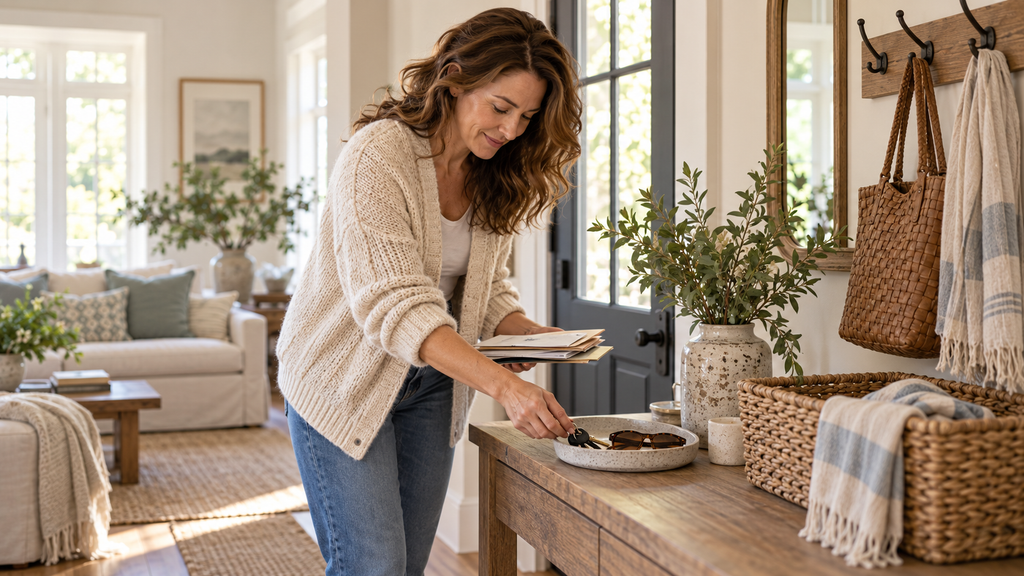
One of the simplest home organization habits is deciding where frequently used items belong.
Keys, bags, mail, chargers, shoes, and other everyday objects tend to create clutter when they do not have a clear place to return to.
A consistent home for these items makes putting them away easier and finding them later less frustrating.
Start with the things you use most
You do not need to organize the entire house at once.
Begin with the items that regularly end up on counters, tables, or chairs.
Maybe that means creating a small tray for keys.
A basket for mail.
A hook for a bag.
A drawer for chargers.
These small decisions can make an organized home feel much easier to maintain.
Keep the storage close to where the item is used
A storage solution works best when it is convenient.
If keys are always dropped near the door, that is probably where their storage belongs.
If charging cables are used beside the sofa, keeping them nearby makes more sense than storing them in another room.
Practical home organization habits work with everyday behavior instead of forcing a complicated system.
Make returning things easy
The easier something is to put away, the more likely the habit will last.
Open baskets, hooks, trays, and simple drawers can often work better than storage that takes several steps to use.
The goal is not hidden perfection.
It is creating a home where everyday items are easier to manage.
A consistent place for frequently used things can reduce visual clutter and save small amounts of time throughout the day.
2. Reset One Surface at a Time
A home can start to feel cluttered very quickly when everyday items collect on visible surfaces.
Kitchen counters, dining tables, coffee tables, bathroom counters, and entryway consoles often become temporary landing zones for things that do not have an immediate place to go.
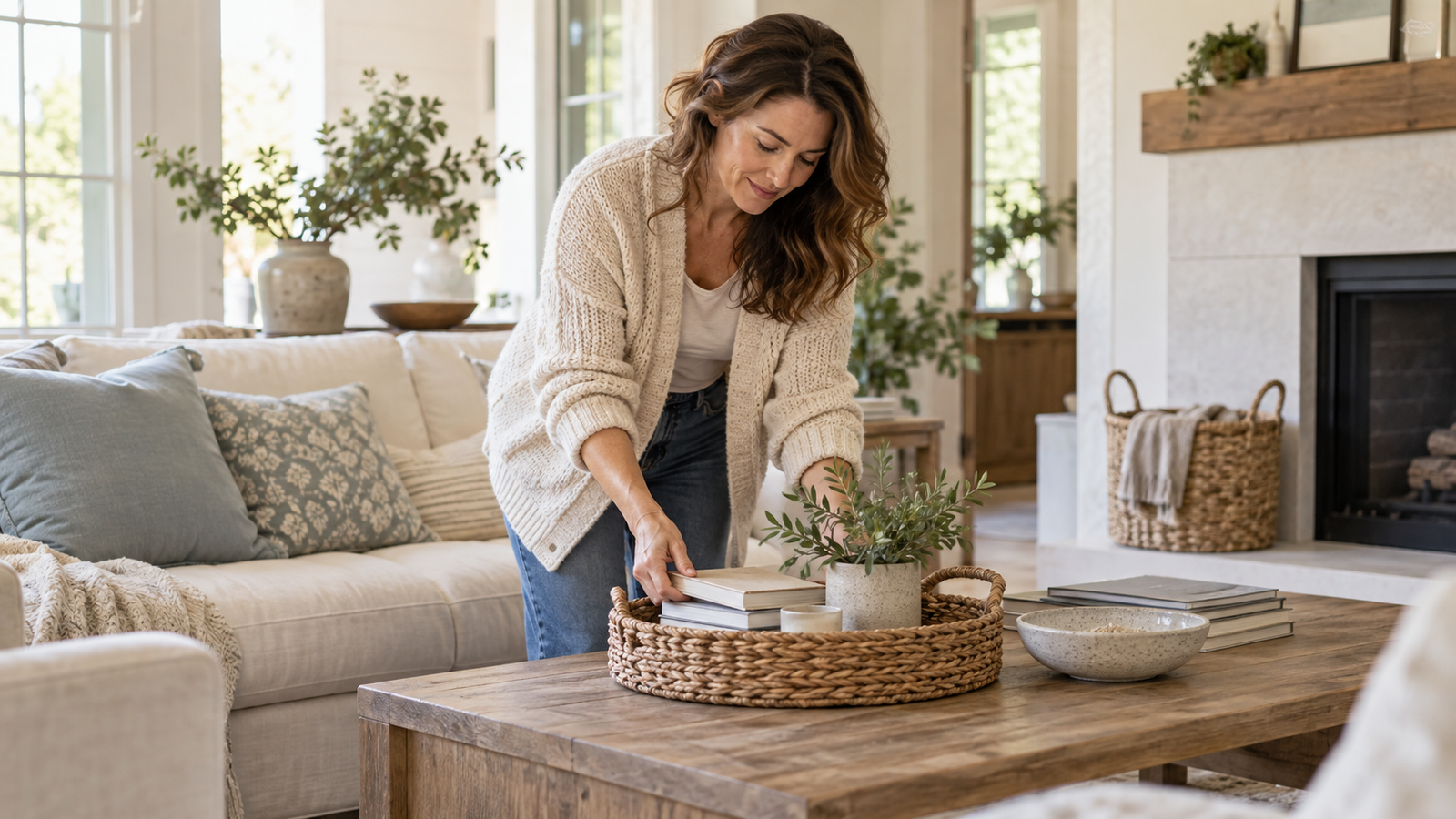
One of the most practical home organization habits is resetting just one surface at a time.
Choose the surface that affects you most
You do not need to clear every room.
Start with the surface you notice most often.
Maybe it is the kitchen counter where mail, bottles, and small appliances gather.
Maybe it is the dining table that slowly turns into a storage space.
Maybe it is the bathroom counter.
Clearing one visible area can make an organized home feel noticeably calmer, even when the rest of the room is not perfect.
Remove what does not belong there
Look at the surface and ask a simple question:
Does this item need to live here?
Some things may already have another home.
Others may need one.
The goal is not to make the surface completely empty.
It is to keep only what is useful or appropriate for that space.
Make the reset quick
A surface reset should not become a major cleaning session.
Five minutes may be enough.
Return a few things to their places.
Throw away what is no longer needed.
Straighten what remains.
This kind of small home organization routine is easier to repeat because it does not require much time or energy.
Let one clear area create momentum
A single clear surface can change how a room feels.
It gives the eye somewhere to rest and makes the space feel more manageable.
That does not mean the whole house needs to look minimal.
It simply means one small area is no longer asking for attention.
Over time, this can become one of the easiest simple organization habits to maintain.
3. Use Baskets and Trays to Contain Small Clutter
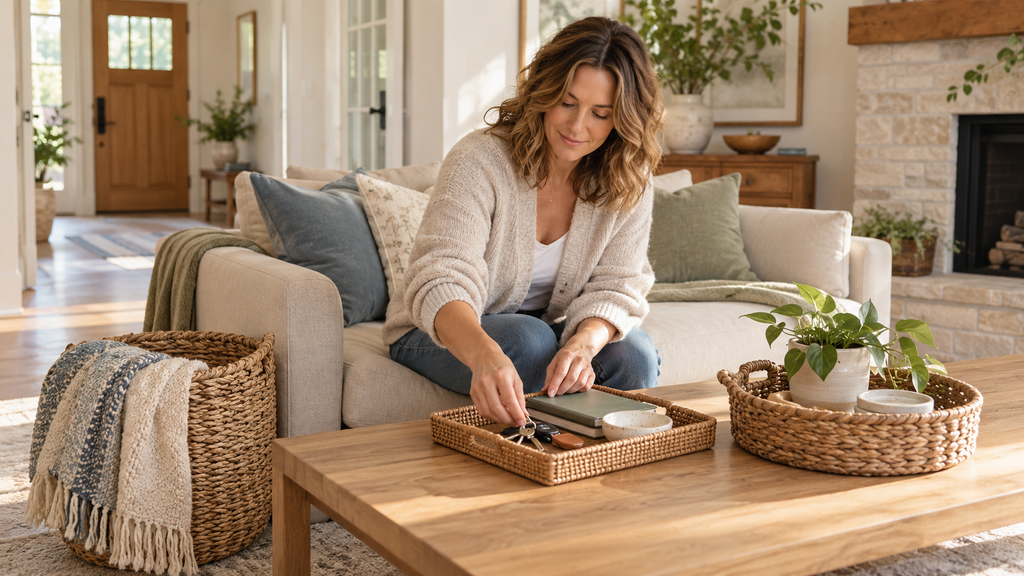
Small items are often what make a room feel more cluttered than it really is.
Remote controls, chargers, mail, notebooks, keys, toiletries, and other everyday objects can quickly spread across surfaces when they do not have a simple place to go.
Using baskets and trays is one of the easiest home organization habits because it gives these small items a clear boundary.
Group Similar Items Together
Instead of letting several small objects spread across a table or counter, group them by purpose.
A tray can hold keys and sunglasses near the door.
A basket can contain chargers or electronics.
A small container can keep bathroom essentials together.
This kind of simple grouping helps create a more organized home without requiring a complicated storage system.
Use Containers Where Clutter Naturally Collects
The best place for a basket or tray is usually where the mess already happens.
If papers collect on the kitchen counter, give them a designated tray.
If blankets are always left on the sofa, keep a basket nearby.
If shoes gather near the entrance, create a simple spot for them there.
Practical everyday home organization works best when it supports the way people already use the space.
Avoid Overfilling
Containers can reduce clutter, but they can also hide too much.
If a basket becomes too full, it may simply turn into another place where things disappear.
Keep categories simple and review them occasionally.
The purpose is to make items easier to manage, not harder to find.
Optional Organization Resource
If you want more ideas for creating practical storage systems and making frequently used spaces easier to manage, Practical Kitchen + Organization is an optional resource you can explore.
Although it focuses on kitchen organization, many of the same ideas about grouping, storage, and creating functional spaces can be useful throughout the home.
This page contains an affiliate link. We may earn a commission at no extra cost to you.
Baskets and trays are simple tools, but they can make home organization habits easier to maintain by giving small everyday items a clear place to belong.
4. Create a Simple Drop Zone Near the Door
Many small messes begin the moment you walk into the house.
Keys get left on the counter.
Bags land on chairs.
Shoes gather near the entrance.
Mail follows you into another room.
Creating a simple drop zone near the door is one of those home organization habits that can make everyday routines much easier.
Keep the setup practical
A drop zone does not need to be a full entryway system.
A small tray, a hook, a basket, or a narrow shelf may be enough.
The goal is to give frequently used items a clear landing place as soon as you come home.
That can help prevent clutter from spreading into other rooms.
Store only what belongs there
Try to keep the area focused on the things you actually use when leaving or entering the house.
That may include keys, sunglasses, a bag, a light jacket, or a few pieces of mail.
If too many unrelated items collect there, the drop zone can quickly become another cluttered surface.
Simple everyday home organization works best when each area has a clear purpose.
Make leaving the house easier too
A useful drop zone helps in both directions.
It gives incoming items somewhere to land, but it can also make mornings easier because important things are already near the door.
You spend less time searching for keys, bags, or other essentials.
That is one of the reasons small simple organization habits can have such a practical effect on daily life.
Reset the area regularly
Even a good system needs a quick reset.
Take a minute every few days to remove old papers, return misplaced items, and clear anything that does not belong there.
This keeps the drop zone useful instead of allowing it to become another pile.
A small entrance system can support an organized home by stopping clutter before it moves farther inside.
5. Put Frequently Used Items Where You Can Reach Them Easily
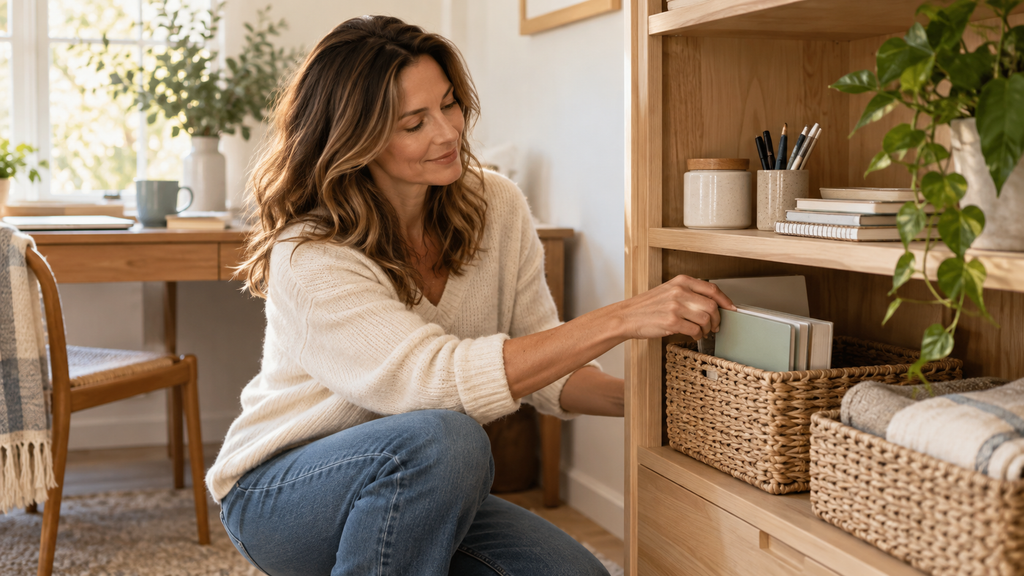
A home may look organized and still feel inconvenient to use.
One of the most practical home organization habits is keeping frequently used items close to where you actually need them.
When everyday objects are easy to reach, routines become faster and putting things away becomes easier too.
Organize for use, not appearance
The most attractive storage solution is not always the most practical one.
If you use something every day, storing it on a high shelf, in the back of a cabinet, or inside several containers may create unnecessary effort.
Think about how often you use an item before deciding where it belongs.
A more organized home should make ordinary tasks easier.
Keep everyday items within reach
Frequently used items might include:
- cooking utensils;
- coffee or tea supplies;
- cleaning cloths;
- toiletries;
- charging cables;
- pet supplies;
- notebooks or pens.
These items do not all need to stay visible.
They simply need to be stored somewhere convenient.
Move occasional items out of prime space
Storage areas that are easiest to reach are valuable.
Use them for things you rely on regularly.
Seasonal items, special serving pieces, backup supplies, and rarely used objects can usually live farther away.
This simple change can make cabinets, drawers, and shelves much easier to navigate.
Let convenience support the habit
When an item is easy to take out and easy to put back, organization requires less effort.
That is what makes simple organization habits sustainable.
The goal is not to create a home where everything is hidden.
It is to create a home where the things you use most often are positioned to support everyday life.
6. Do a Five-Minute Reset Before the Day Ends
One of the easiest home organization habits to maintain is a short reset at the end of the day.
Five minutes can be enough to return a few items to their places, clear one surface, and prepare the home for the next morning.
The goal is not to finish every household task.
It is simply to reduce the amount of clutter waiting for you tomorrow.
Focus on what will make the biggest difference
You do not need to move through every room.
Choose the areas that affect your daily routine most.
That might mean clearing the kitchen counter.
Folding a blanket.
Putting shoes away.
Returning remote controls to a tray.
Moving dishes to the kitchen.
A few small actions can help an organized home feel easier to maintain.
Keep the reset short
The five-minute limit matters.
If the reset turns into a full cleaning session, it becomes much harder to repeat.
Set a natural stopping point and let anything less important wait.
That keeps the habit simple enough for busy evenings.
Make it part of your evening rhythm
A short home reset can fit naturally into the transition between the active part of the day and a quieter evening.
If you are already working on making nights feel calmer, our guide to a restful evening routine offers more ideas for creating a gentler end to the day.
Let tomorrow begin with less visual noise
Waking up to one clear surface or a room that feels slightly more settled can make the morning feel easier.
You do not need the entire house to be organized.
You only need to leave a little less for tomorrow.
That is what makes this one of the most realistic simple organization habits for everyday life.
7. Keep Similar Items Together
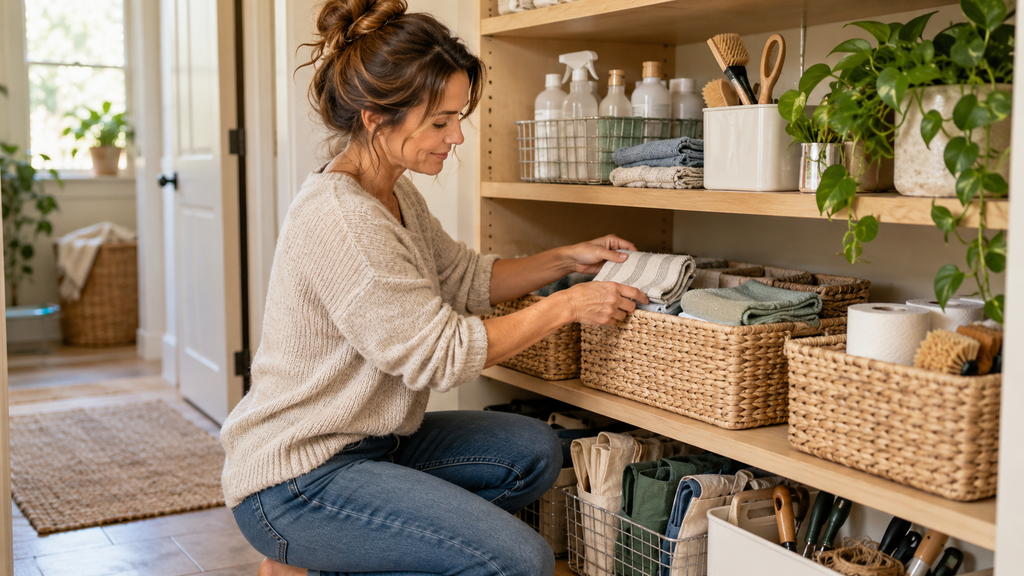
One of the most useful home organization habits is grouping similar items in the same general area.
When related things are scattered across different drawers, cabinets, or rooms, everyday tasks take longer and clutter tends to return more quickly.
Keeping categories together can make an organized home feel much easier to use.
Create simple categories
You do not need dozens of labels or complicated systems.
Broad categories are often enough.
That might mean keeping:
- cleaning supplies together;
- batteries and small tools together;
- pet supplies together;
- extra toiletries together;
- office supplies together;
- reusable bags together.
The goal is to make it easier to remember where things belong.
Store categories where they are most useful
Similar items do not always need to be stored in the same room.
They should be stored where they make the most sense.
For example, everyday cleaning supplies may belong near the kitchen or laundry area, while bathroom-specific supplies can stay closer to the bathroom.
Good everyday home organization is practical, not rigid.
Avoid creating categories that are too specific
If every item has its own tiny category, organizing can become harder instead of easier.
Simple groups are easier to maintain.
A basket for cleaning cloths is often more realistic than separating them by size, material, or purpose.
A drawer for basic tools may work better than several small containers for every type of item.
Make returning things almost automatic
When similar items live together, putting them away requires less thought.
You already know where they belong.
That is one reason simple organization habits become easier to maintain over time.
The system reduces small decisions instead of creating more of them.
Perfeito. Vamos para o Hábito 8.
Aqui eu não colocaria imagem nova, porque o bloco anterior já teve uma. Também não colocaria afiliado neste ponto.
PARTE 9 — PARA COPIAR NO ARTIGO
8. Make Decluttering Part of Normal Life
Decluttering does not have to be a major project.
One of the most sustainable home organization habits is removing small things regularly instead of waiting until a room feels completely overwhelming.
A few items at a time can be enough.
Notice what is no longer useful
As you move through everyday routines, pay attention to things that are no longer serving a purpose.
That might be:
- an empty container;
- an outdated paper;
- a duplicate kitchen tool;
- clothing you no longer wear;
- a broken household item;
- something that has been sitting unused for months.
You do not need to create a large decluttering session every time.
Small decisions can keep clutter from accumulating.
Use everyday moments
Decluttering can happen naturally while you are already doing something else.
You may notice an expired product while organizing a bathroom drawer.
You might remove a duplicate utensil while putting dishes away.
You may find old paperwork while resetting a surface.
These small moments make everyday home organization feel less demanding.
Keep an easy exit point
If it helps, keep a small donation bag or box somewhere convenient.
When you notice an item you no longer want, you already know where it can go.
Once the bag is full, move it out of the house.
This keeps decluttering from turning into another pile waiting for attention.
Avoid aiming for a perfectly minimal home
The goal is not to own as little as possible.
It is to reduce the things that make your spaces harder to use.
An organized home can still be warm, personal, and full of things you enjoy.
Good declutter habits simply make room for the things that support everyday life.
9. Organize Around Your Real Routines
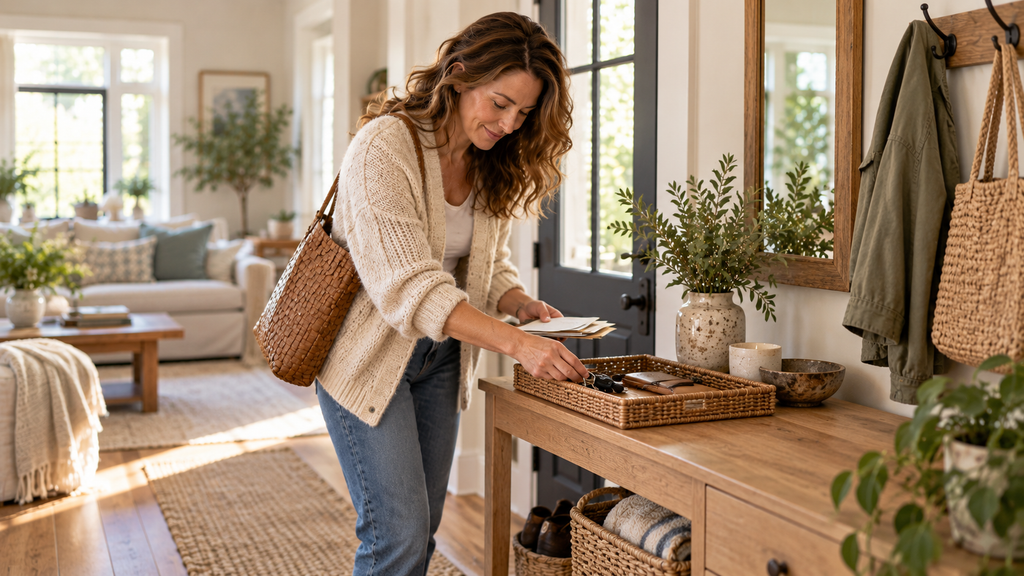
One of the most effective home organization habits is building systems around what you already do.
A home can look beautifully organized and still be difficult to maintain if the system does not match your actual routine.
The goal is not to copy someone else’s setup.
It is to make your own home easier to use.
Pay attention to where things naturally land
If bags always end up on the same chair, that tells you something.
If mail always collects on the kitchen counter, that tells you something too.
Instead of fighting those patterns, use them as clues.
Maybe that chair needs a nearby hook.
Maybe the counter needs a small tray.
Maybe shoes need a basket closer to the door.
This is what makes everyday home organization more realistic.
Make the system fit the people who live there
Different households need different solutions.
A family with children will organize differently from someone living alone.
A home with pets may need storage for leashes, food, toys, or grooming supplies.
A small apartment may need multi-purpose storage.
An organized home should support the people living in it, not force them into a system that looks good but feels inconvenient.
Choose habits that are easy to repeat
If a system takes too many steps, it is less likely to last.
Open baskets, accessible shelves, simple labels, and easy-to-reach storage often work better than complicated setups.
The best simple organization habits reduce effort.
They do not create more of it.
Let organization support the rest of your life
Home organization is not really about having perfect shelves.
It is about making daily routines smoother.
That same principle applies beyond the home.
If you are trying to build routines that fit real life instead of adding more pressure, our guide to a personal wellbeing routine follows the same practical approach.
Good home organization habits work best when they support the life you are already living.
Perfeito. Vamos fechar os 10 hábitos com o último bloco.
Aqui eu não colocaria nova imagem, porque o bloco 9 já teve uma. Também não colocaria novo afiliado; já temos um afiliado bem encaixado no artigo e não precisamos forçar outro.
PARTE 11 — PARA COPIAR NO ARTIGO
10. End the Day With a Home Reset That Feels Good
A simple evening reset can help your home feel easier to return to the next morning.
This does not need to be a full cleaning routine.
A few quiet minutes can be enough to put away what is out of place, clear one or two surfaces, and leave the most-used spaces feeling a little more settled.
That is what makes it one of the most realistic home organization habits to maintain.
Focus on visible areas
Start with the places you will notice first the next day.
That might be the kitchen counter.
The coffee table.
The entryway.
The bathroom sink.
You do not need to reset every room.
Choose the areas that make the biggest difference to how the home feels.
Keep the routine gentle
The point is not to end the day with more work.
Put away a few things.
Fold a blanket.
Return dishes to the kitchen.
Straighten one surface.
Then stop.
A simple home organization routine should help the space feel calmer without making the evening feel busier.
Make the reset pleasant
Small details can make the habit easier to repeat.
You might lower the lights.
Put on quiet music.
Open a window for a few minutes.
Carry a basket through the room and return misplaced items as you go.
The reset does not need to feel like a chore.
It can become a small transition between the active part of the day and a quieter evening.
Leave something ready for tomorrow
Once the space feels settled, prepare one small thing that will make the next day easier.
Place your keys where they belong.
Set out a mug.
Clear the table.
Leave the entryway ready.
These tiny actions help an organized home support tomorrow without turning tonight into another planning session.
The best home organization habits are often the ones that quietly make the next day feel easier.
Let Home Organization Habits Stay Simple
A more organized home is rarely created by one big weekend project.
It usually comes from small decisions repeated often enough to make everyday life easier.
A place for the things you use most.
One clear surface.
A short reset.
Simple categories.
Storage that works with your real routines.
These home organization habits are useful because they reduce friction instead of adding more rules.
You do not need to change every room at once.
Start with the habit that would solve the most annoying part of your day.
Keep it practical.
Notice whether it makes the space easier to use.
Then build from there.
An organized home does not need to be perfect.
It simply needs to support the people who live there and make ordinary routines feel a little easier to manage.
A well-organized home is one that makes everyday life easier to move through.