A home can feel overwhelming long before it becomes truly messy.
Sometimes it is the kitchen counter that never seems to stay clear. Sometimes it is the pile of things waiting by the stairs, the chair that quietly collects clothes, or the number of small objects competing for attention every time you walk into a room.
If you want to make your home feel less overwhelming, you do not necessarily need a major decluttering weekend, new storage furniture, or a perfectly organized system.
Often, what helps most is reducing a few sources of friction and visual noise.
A calm home is not a home where nothing is ever out of place. It is a space where everyday life feels reasonably easy to manage—where the things you use have somewhere to go, the rooms you spend the most time in are not constantly asking for attention, and small resets prevent clutter from building into a much larger project.
That is where simple home habits can make a noticeable difference.
Instead of trying to declutter your home all at once, it can be more useful to focus on one surface, one recurring problem, or one small routine at a time. The goal is not minimalism for its own sake. It is to create less clutter in the places that affect your day most.
Your surroundings are also part of the larger rhythm of everyday wellbeing. If you are working on habits that feel more realistic and supportive overall, our guide to a personal wellbeing routine that fits your real life explores that bigger picture.
The ten ideas below are intentionally small. None requires a complete home makeover, and most can be adapted to the way you already live.
The aim is simply to make your home feel less overwhelming, one manageable change at a time.
1. Clear One Surface You See Every Day
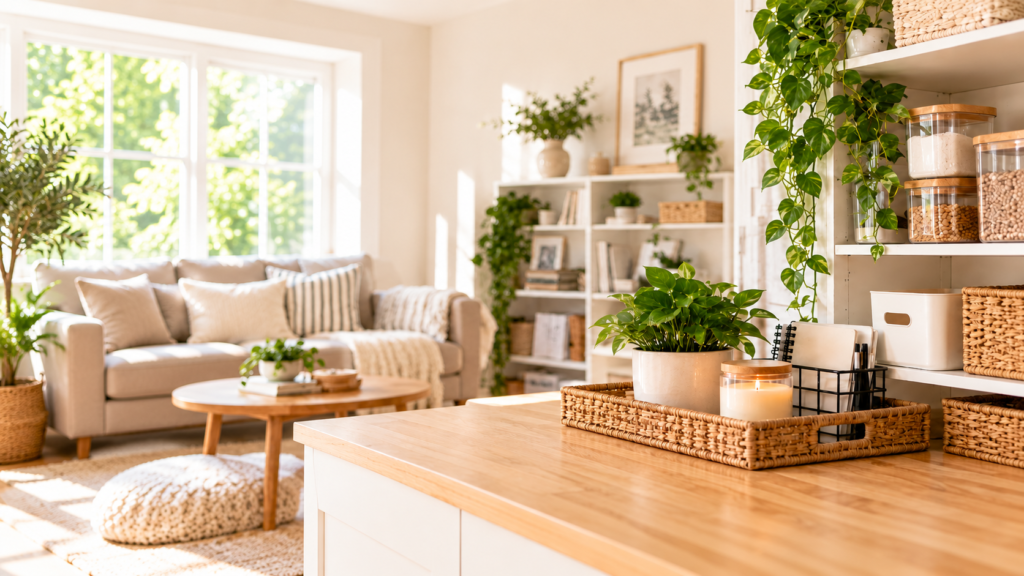
One of the fastest ways to make your home feel less overwhelming is to choose one visible surface and give it some breathing room.
It could be the kitchen counter, the dining table, the coffee table, the entryway console, or the top of a dresser.
You do not need to clear every surface in the house.
Start with the one you notice most.
A crowded surface tends to collect more clutter because it already feels unfinished. Mail gets dropped there. Keys land there. A cup stays longer than it should. One small pile becomes another.
Clearing that space can create an immediate sense of relief.
Decide what actually belongs there
Look at the surface and separate the things that belong from the things that simply landed there.
A lamp may belong.
A fruit bowl may belong.
A notebook you use every day may belong.
But unopened mail, random chargers, receipts, empty packaging, and items that need to return to another room probably do not.
This is where home organization becomes easier when it stays practical.
You do not need a complicated storage system. You simply need fewer things competing for attention in one visible area.
Give everyday items a landing place
If the same objects keep returning to that surface, they may need a better home.
Keys can go in a small bowl near the door.
Mail can go into one tray.
Chargers can stay in a drawer.
Bags can have one hook or one chair that is intentionally used for them.
The goal is not to hide everything.
It is to make everyday objects easier to put away so that less clutter builds up naturally.
Protect the surface with a quick reset
Once the area is clear, give it a one-minute reset at the end of the day.
Put away anything that does not belong.
Wipe the surface if needed.
Then stop.
This small habit is much easier to maintain than waiting until the room feels chaotic enough to require a longer cleaning session.
A calm home often begins with one area that feels visually quiet.
2. Give the Things You Use Most a Real Home
One reason a home starts to feel chaotic is that frequently used items do not have a clear place to return to.
Shoes collect by the door.
Chargers move from room to room.
Mail sits on the counter.
Bags end up on chairs.
The same small objects keep creating visual noise because they never really have a destination.
If you want to make your home feel less overwhelming, give the things you use most a simple, consistent home.
Start with the repeat offenders
Notice which items seem to move around constantly.
That might be:
- keys;
- handbags or backpacks;
- shoes;
- chargers;
- mail;
- reusable water bottles;
- headphones;
- dog leads;
- everyday paperwork.
You do not need to organize the whole house.
Focus first on the objects that repeatedly create mess.
Make the storage easy to use
A storage solution only works if it is convenient enough to use every day.
A hook near the door is often better than a closet shelf across the house.
A small basket can work better than a complicated drawer system.
A tray for mail is more realistic than expecting every piece of paper to be filed immediately.
Good home organization is less about having more containers and more about making the right action easier.
If putting something away takes too many steps, it is more likely to stay out.
Store things where they are actually used
The most useful place for an item is often close to where you naturally reach for it.
Keep chargers near the places where devices are used.
Store blankets near the sofa.
Keep cleaning cloths where spills usually happen.
Place everyday shoes near the entrance instead of forcing them into a distant storage area.
This kind of practical thinking creates simple home habits without requiring much effort.
The easier it is to put something back, the more likely the space is to stay manageable.
Aim for less friction, not perfect order
A calm home does not need everything hidden behind doors.
Some things can stay visible if they are contained and easy to use.
A basket can hold blankets.
A tray can hold keys.
A bowl can collect small everyday objects.
The goal is not to create a showroom.
It is to create less clutter by making everyday items easier to manage.
When frequently used things have a real place to return to, the house begins to feel more settled without requiring constant tidying.
3. Create a Five-Minute Reset for the Busiest Room
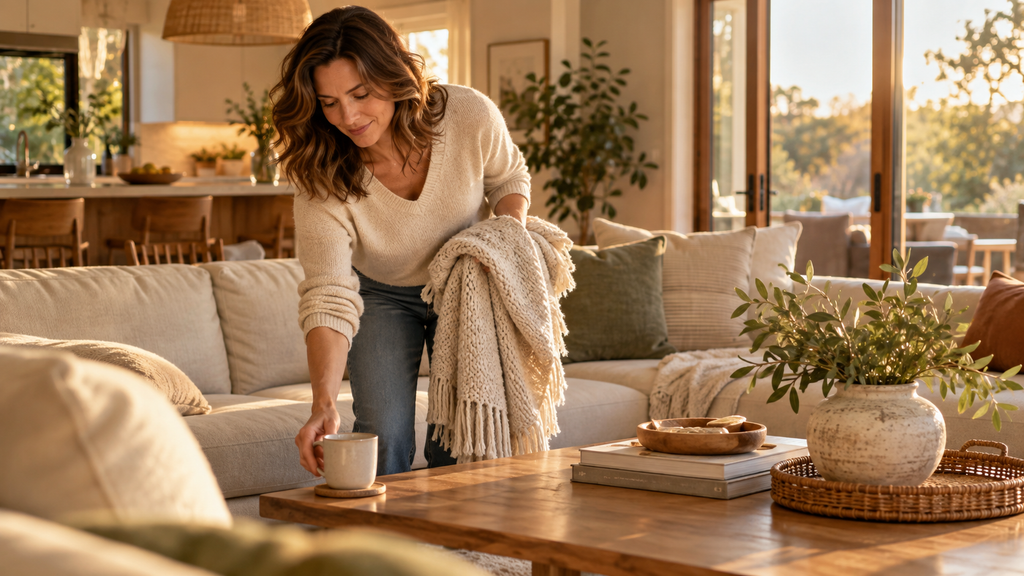
If you want to make your home feel less overwhelming, choose the room that gets the most daily use and give it a short reset at a consistent time.
For many homes, that will be the kitchen or living room.
The point is not to clean the entire space.
It is to restore enough order that the room feels ready for the next part of the day.
Focus on what changes the room fastest
In the kitchen, that might mean:
- loading the dishwasher;
- clearing the main counter;
- putting food away;
- wiping the table;
- returning a few items to their places.
In the living room, it could be:
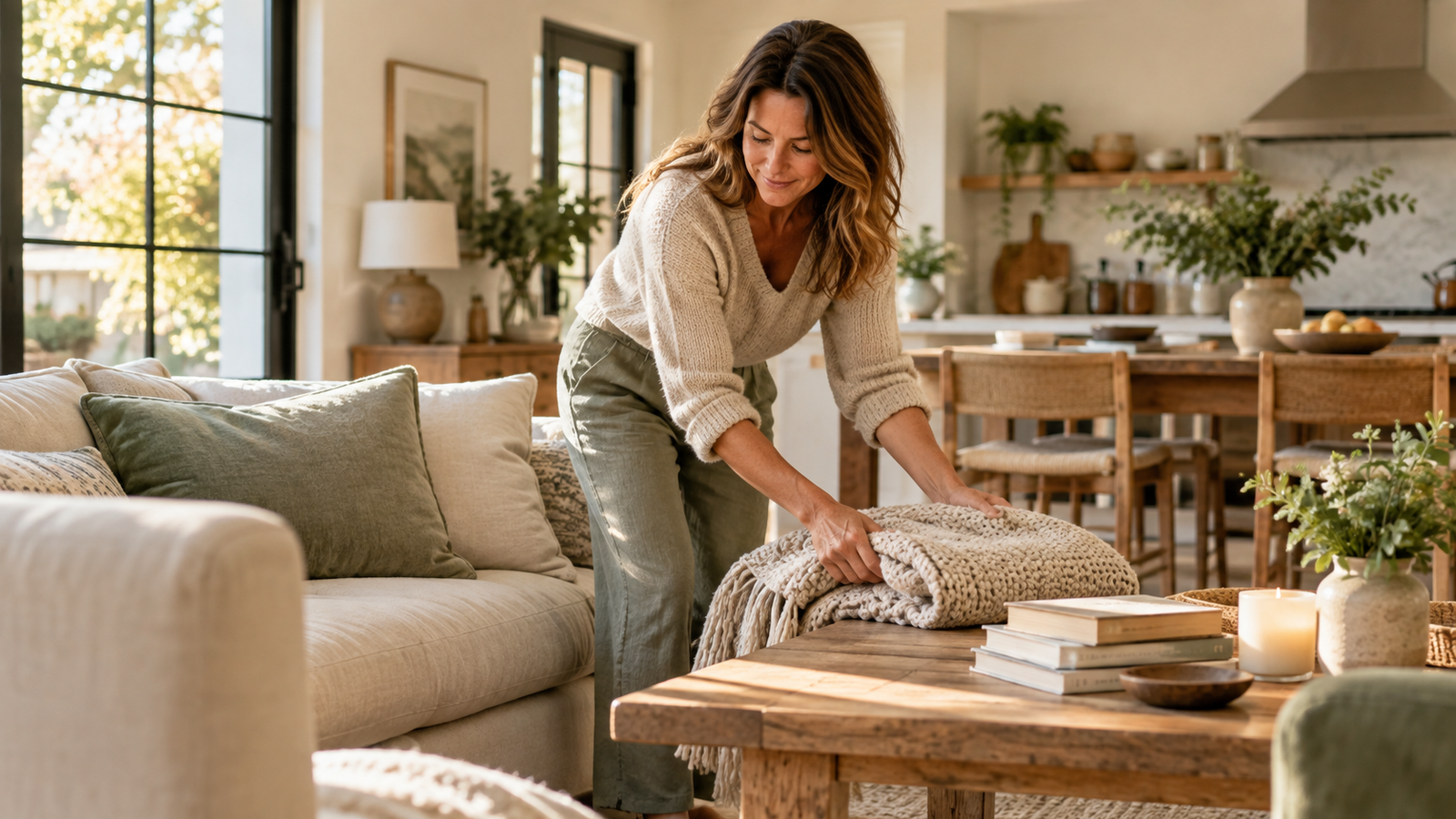
- folding blankets;
- collecting cups;
- straightening cushions;
- putting away remote controls;
- returning shoes, bags, or toys to their usual spots.
A five-minute reset works because it targets the things you see first.
Use a natural transition point
The reset is easier to remember when it happens after something that already exists in your routine.
You might do it:
- after dinner;
- before turning off the kitchen lights;
- before sitting down for the evening;
- before going upstairs;
- before starting your bedtime routine.
That makes the habit feel less like another task and more like a small closing step.
Stop before it becomes cleaning
This matters.
A quick reset should not turn into wiping cabinets, reorganizing drawers, or vacuuming the entire room.
If you notice a bigger task, leave it for another time.
The goal is to create a calm home through small, repeatable actions—not to turn every evening into a cleaning session.
Over time, this kind of habit can create less clutter because small messes are handled before they become larger ones.
A short reset also pairs naturally with an evening routine. If you already use a gentle evening reset, this five-minute home reset can become one simple part of that transition.
4. Reduce What Stays in Sight
One of the simplest ways to make your home feel less overwhelming is to reduce the number of things competing for attention.
A room can be technically organized and still feel busy if every surface, shelf, and corner is full.
Visual clutter does not always come from mess.
Sometimes it comes from too many useful things being visible at the same time.
Choose what deserves to stay out
Look at the surfaces you see most often.
Which items are actually used every day?
Which ones are there because you like seeing them?
Which ones are simply waiting to be moved?
You do not need to remove everything.
A few practical objects, a plant, a lamp, a book, or something meaningful can make a room feel warm and lived-in.
The goal is not to create an empty space.
It is to make the space easier for your eyes to process.
Give collections a boundary
Books, beauty products, kitchen tools, toys, papers, and decorative objects can all feel more manageable when they have a visible limit.
That limit might be:
- one tray;
- one shelf;
- one basket;
- one small section of a counter;
- one drawer.
A boundary helps prevent a category from slowly expanding across the room.
This is a practical form of home organization because it creates a clear stopping point.
Rotate instead of displaying everything
If you enjoy decorative objects, books, photos, or seasonal pieces, you do not have to give them up.
Try rotating them.
Keep a smaller number visible and store the rest for later.
When you bring them back, they often feel fresh again.
This can create less clutter without requiring you to get rid of things you still enjoy.
Let a little empty space remain
An empty corner of a table or shelf is not wasted space.
It gives the room visual breathing room.
That can make a calm home feel more intentional without making it cold or overly minimal.
If you want to declutter your home without turning it into a major project, reducing what stays in sight is a gentle place to begin.
You are not deciding what you must own.
You are simply deciding what needs to be visible right now.
5. Create One Drop Zone Near the Door

If you want to make your home feel less overwhelming, pay attention to what happens in the first few feet after you walk through the door.
This is where keys get dropped, bags land on chairs, shoes collect, mail piles up, and small everyday items begin to spread into the rest of the house.
A simple drop zone can keep that clutter contained.
Give everyday items one clear destination
You do not need a large entryway or custom storage.
A small setup can work just as well.
Depending on your space, you might use:
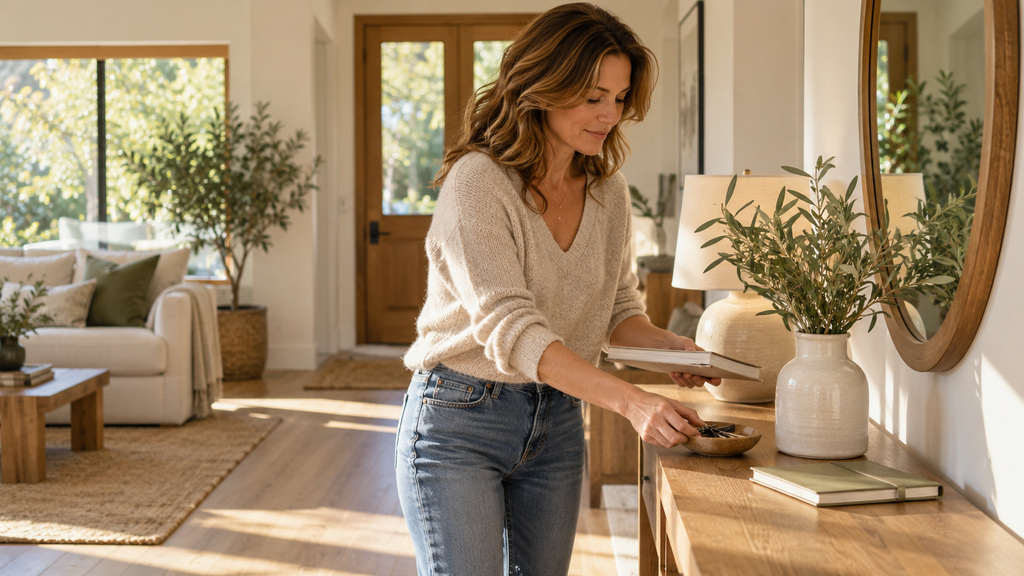
- a bowl or tray for keys;
- one hook for a bag;
- a small basket for mail;
- a shoe mat or basket;
- a place for sunglasses or headphones;
- one hook for a dog leash or umbrella.
The important part is consistency.
When the same objects return to the same place every day, home organization becomes much easier.
Keep the drop zone small
A drop zone can become cluttered too if it turns into a place for everything.
Give it a boundary.
One tray.
One basket.
A few hooks.
If something does not belong in that small area, move it somewhere else.
This helps create less clutter without requiring you to reorganize the entire entrance.
Reset it when you come home
A useful drop zone works in both directions.
When you arrive, place things where they belong.
When you leave, you know exactly where to find them.
That small rhythm can make mornings easier too. If searching for keys, bags, or everyday essentials tends to create rush, our guide to a calmer morning routine offers more ways to reduce that kind of friction.
A calm home often starts with a calmer entrance.
When the first space you see feels manageable, the rest of the house can feel easier to settle into.
6. Make One Everyday Task Easier
A home can feel overwhelming because of one small task that keeps returning unfinished.
Laundry sits in a basket for days. Mail collects on the counter. Cleaning products are stored too far from where they are used. Dishes pile up because unloading the dishwasher never seems to happen at the right time.
If you want to make your home feel less overwhelming, choose one recurring task and make the process easier.
Look for unnecessary steps
Ask yourself where the friction is.
Do you carry laundry across the house because the hamper is in the wrong place?
Do papers pile up because there is no obvious place to sort them?
Do cleaning supplies live in one central closet even though you use them in several different rooms?
Sometimes the solution is not more discipline.
It is changing the setup.
Move useful things closer to where they are needed
Keep a small laundry basket where clothes naturally come off.
Store a cleaning cloth near the bathroom sink.
Keep reusable shopping bags close to the door or wherever you usually prepare to leave.
Place recycling where packaging actually gets opened.
Small changes like these support simple home habits because they reduce the effort required to finish everyday tasks.
Make the next action obvious
A task is easier to complete when you know exactly what happens next.
Instead of creating one large pile of mail, separate what needs action from what can be recycled immediately.
Instead of leaving clean laundry in a basket, decide whether folding or hanging it right away works better for your household.
Instead of storing several half-used products in different places, bring similar items together.
Good home organization often comes down to making the next step clear.
Fix one frustration before adding another system
It is tempting to buy containers or reorganize an entire room when something is not working.
Try solving the specific problem first.
If shoes are always in the way, give shoes a better place.
If clean towels never make it back to the bathroom, change where they are folded or stored.
If papers constantly collect on the dining table, create one simple paper station.
A calm home becomes easier to maintain when the systems follow your real behavior instead of asking you to constantly work against it.
One easier task can remove a surprising amount of daily friction.
7. Use Baskets and Trays to Contain, Not Hide

If you want to make your home feel less overwhelming, containment can help—but only when it makes everyday items easier to see, use, and return.
A basket or tray can give loose objects a boundary.
It can keep remote controls together, hold everyday beauty products, collect mail, contain children’s items, organize cleaning supplies, or keep chargers from spreading across a surface.
The key is to use containers to create order, not to make clutter disappear temporarily.
Give each container one clear purpose
A basket works best when you know what belongs inside it.
One basket for blankets.
One tray for keys.
One container for cleaning cloths.
One box for cables.
When too many unrelated things share the same container, it can quickly become another place you avoid looking inside.
Clear categories make home organization easier to maintain.
Keep containers small enough to manage
Large baskets can become invisible storage problems.
They hold a lot, which often means they keep filling.
Smaller containers create natural limits.
When the basket is full, it becomes obvious that something needs to be returned, used, donated, or moved elsewhere.
This can help create less clutter without requiring a major decluttering project.
Let useful items stay accessible
Not everything needs to be hidden behind a cabinet door.
If you use something every day, a beautiful tray or open basket may be more practical than storing it somewhere inconvenient.
The goal is not to remove every visible object.
It is to make the visible objects feel intentional and contained.
Avoid buying storage before solving the problem
Storage products can feel like the answer when a room feels busy.
But adding more baskets does not automatically make a space easier to manage.
Before buying anything, ask:
What exactly needs a home?
Where do I naturally use it?
Would a container actually help?
Sometimes the best solution is a basket.
Sometimes it is simply owning fewer things in that category.
A calm home does not depend on perfect storage. It depends on systems that make sense for the way you live.
8. Create One Calm Corner

You do not need an entire perfectly organized room to make your home feel less overwhelming.
Sometimes one small area is enough to change how a space feels.
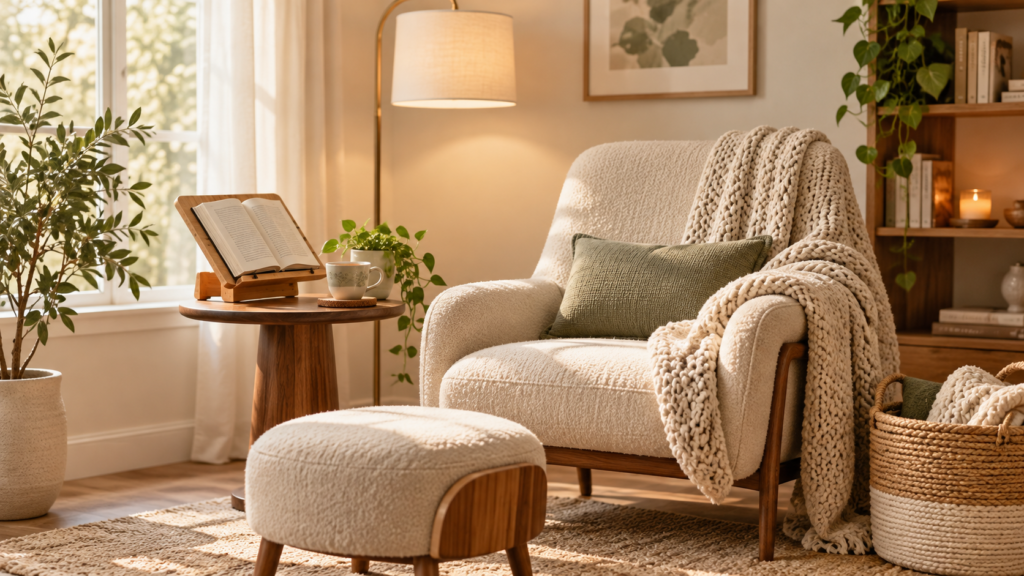
A calm corner can be a chair beside a window, one end of the sofa, a small reading nook, or even a quiet spot at the kitchen table.
The point is not to create a decorative display.
It is to give yourself one place in the home that feels visually simple and easy to use.
Keep the space intentionally light
Choose only what supports the purpose of the area.
That might be:
- a comfortable chair;
- a small lamp;
- one book;
- a ceramic mug;
- a soft blanket;
- a notebook and pen;
- a small plant.
You do not need to fill every surface.
Leaving some empty space helps the area feel calmer.
This is one of the simplest ways to create a calm home without trying to reorganize everything at once.
Give the corner a purpose
A quiet corner works best when it has a clear use.
Maybe it is where you read.
Maybe it is where you have coffee before the rest of the house wakes up.
Maybe you sit there for a few minutes after work, write in a notebook, listen to music, or simply take a break.
The more naturally you use the space, the less likely it is to become another surface that collects clutter.
Optional Audio Resource
If you enjoy using audio during a quiet reading, reflection, or focus moment, The Genius Wave is one optional digital audio resource you can explore.
It can simply be treated as another listening option for a few minutes of quiet time at home, rather than something your routine depends on.
This page contains an affiliate link. We may earn a commission at no extra cost to you.
Protect the corner from becoming storage
A calm space can quickly turn into a holding area for laundry, bags, paperwork, or things that do not have another home.
Give it a quick reset whenever you notice that happening.
Put the book back.
Remove the empty cup.
Fold the blanket.
Move unrelated objects elsewhere.
These tiny resets support simple home habits and help preserve one area that feels easy on the eyes.
You do not need every room to feel calm at once.
Sometimes one peaceful corner is enough to remind you how you want the rest of the home to feel.
9. End the Day With One Small Home Reset
If you want to make your home feel less overwhelming, the end of the day is a useful moment to close a few small loops before they become tomorrow’s clutter.
This does not mean cleaning the whole house at night.
Choose one small reset that helps the space feel more settled.
That might be:
- clearing the kitchen counter;
- putting cups in the dishwasher;
- folding the blanket on the sofa;
- returning shoes to the entryway;
- putting away mail or paperwork;
- clearing the bedside table.
The goal is simply to leave one part of the home a little calmer than you found it.
Choose the reset that helps tomorrow most
Think about the space you see first in the morning.
If the kitchen affects your mood, clear the main counter.
If the entryway becomes chaotic, return keys, bags, and shoes to their places.
If the living room tends to collect clutter, reset the coffee table and sofa before heading to bed.
These simple home habits can create a sense of closure without adding another long task to the evening.
Let the house become quieter too
Once the practical reset is finished, allow the environment to slow down.
Turn off unnecessary lights.
Put away a few visual distractions.
Lower the television volume or switch it off.
Leave the room in a way that feels finished enough for the night.
A calm home often has less to do with perfect organization and more to do with creating clear transitions between activity and rest.
Optional Evening Resource
If you enjoy using a guided resource to help the evening slow down, Breathing for Sleep is an optional tool for exploring breathing and relaxation techniques before bed.
It can be used as part of a quieter evening transition after the practical tasks of the day are finished.
This page contains an affiliate link. We may earn a commission at no extra cost to you.
A small evening reset can prevent less clutter from turning into tomorrow’s larger mess.
It also creates a gentle boundary between managing the home and simply being in it.
10. Decide What “Good Enough” Looks Like
If you want to make your home feel less overwhelming, one of the most helpful things you can do is decide what “good enough” means for your home.
Not every room needs to look finished.
Not every surface needs to stay empty.
Not every basket needs to be perfectly arranged.
A home is a place where people cook, rest, get ready, work, eat, drop things, pick them back up, and move through ordinary days.
That means some level of mess is normal.
Choose your non-negotiables
Instead of trying to keep everything under control, decide which small things make the biggest difference.
Maybe you feel better when the kitchen counter is clear.
Maybe the living room feels calmer when blankets are folded and cups are gone.
Maybe the entryway works best when shoes and keys are in their places.
Those few priorities can guide your home organization without turning the entire house into a constant project.
Let some things wait
A laundry basket can wait until tomorrow.
A drawer can stay imperfect.
A stack of books does not need to become a decluttering project tonight.
Learning to leave low-priority tasks alone can help create a calm home just as much as organizing can.
The goal is not to eliminate every sign of daily life.
It is to reduce the things that genuinely make the space harder to use or harder to enjoy.
Stop before tidying becomes endless
There will always be another shelf, drawer, or closet that could be improved.
That does not mean it needs attention today.
Set a stopping point.
Finish the small reset you planned, then move on with your evening.
This is one of the most useful simple home habits because it protects your time as much as your space.
Let the home support the people who live there
A home should make everyday life easier.
If a system looks beautiful but is difficult to maintain, it may not be the right system.
If an open basket works better than a hidden drawer, use the basket.
If a chair is where you naturally place your bag, consider adding a hook nearby instead of fighting the habit every day.
If a room feels calmer with fewer objects on display, keep fewer things visible.
The most useful changes are the ones that fit your real routines.
You do not need perfect order to make your home feel less overwhelming.
You need enough clarity, enough breathing room, and enough practical systems that your home stops feeling like one more thing asking to be managed.
Simple Finds to Help Create a Calmer, More Organized Home
A few practical tools can make everyday organization easier when they solve a specific problem in your space. Here are six useful finds to consider for containing everyday items, creating simple drop zones, and reducing visual clutter around the home.
As an Amazon Associate, we earn from qualifying purchases.


Small Changes Can Make Home Feel Lighter
You do not need a dramatic makeover to make your home feel less overwhelming.
The biggest difference often comes from smaller choices repeated consistently: clearing one surface, giving everyday items a real home, reducing what stays in sight, creating a simple drop zone, resetting one busy room, and deciding what “good enough” looks like for the people who actually live there.
These changes work because they remove friction.
They make it easier to find what you need, easier to put things away, and easier to move through the day without every room asking for attention.
A calm home is not a perfectly styled home.
It is a home that feels usable.
It supports your routines instead of complicating them.
It gives you places to land, places to pause, and enough visual breathing room that daily life feels a little less demanding.
Start with the area that bothers you most.
Choose one small change.
Let that change settle before adding another.
Over time, simple home habits can create less clutter, easier routines, and a space that feels more comfortable to live in.
You do not have to organize everything.
You only need to make the next part of home life a little easier.
- A calmer home often begins with one small space asking less from you.