
Building healthier habits does not have to mean changing your entire schedule or following a complicated routine. Sometimes, the easiest way to make a positive change is to connect a small new action to something you already do every day. This simple approach is known as habit stacking for beginners, and it can make healthy daily habits feel more natural and manageable.
Think about your morning coffee, brushing your teeth, preparing breakfast, or sitting down at your desk. These familiar activities already have a place in your day. By using them as reminders for small healthy habits, you can begin building consistency without relying entirely on motivation or creating a completely new daily wellness routine.
For example, you might fill your water bottle after making your morning coffee, stretch for two minutes after closing your laptop, or write one sentence in a journal before going to bed. These simple habit stacking examples show how everyday moments can become opportunities to build healthy habits without adding unnecessary pressure.
The goal is not to create a perfect schedule or accomplish everything at once. Instead, the habit stacking technique encourages you to start with one realistic action, connect it to an established routine, and allow that connection to become more familiar through repetition.
In this guide, you will discover seven practical ways to use habit stacking for beginners, avoid common mistakes, and create a simple approach to healthier daily routines that fits your real life.
What Is Habit Stacking and How Does It Work?

Habit stacking for beginners is a simple technique that involves connecting a new habit to an activity you already perform regularly. Instead of trying to remember an entirely new task, you use an established part of your routine as a natural reminder to take a small additional action.
The concept builds on a practical idea: familiar routines can provide useful cues for new behaviors. When an activity already happens consistently, it gives you a recognizable moment to introduce another small action.
For example, imagine that you prepare coffee every morning. Rather than setting a separate reminder to drink more water, you could decide to fill your water bottle immediately after making your coffee. Over time, preparing coffee may become a familiar cue for your new hydration habit.
A simple habit stacking formula is:
After I [existing habit], I will [new habit].
You can apply this formula to many everyday activities:
- After brushing my teeth, I will stretch for two minutes.
- After preparing breakfast, I will fill my water bottle.
- After sitting down at my desk, I will write my top priority for the day.
- After putting away my dinner dishes, I will prepare something useful for tomorrow.
- After changing into my pajamas, I will read two pages of a book.
These habit stacking examples demonstrate how small healthy habits can become part of your existing schedule without requiring a complete lifestyle transformation.
The key is to choose an activity that already happens regularly and connect it to a new action that feels easy enough to repeat. A clear connection between the two activities may reduce the effort of remembering what to do next.
For anyone trying to build healthy habits, this approach offers a flexible starting point. You do not need an elaborate tracking system, a strict schedule, or a long list of goals. One familiar cue and one manageable action are enough to begin.
1. Start With a Habit You Already Do Every Day
One of the easiest ways to practice habit stacking for beginners is to begin with something you already do consistently. This familiar activity becomes your starting point, making it easier to remember the new habit you want to introduce.
Think about the routines that happen almost automatically throughout your day. You might brush your teeth every morning, prepare a cup of coffee, sit down at your desk, eat lunch, or turn off the lights before going to bed.
These everyday actions can serve as reliable reminders because they are already part of your schedule.
How to Choose Your First Habit Anchor
In the habit stacking technique, an existing activity that reminds you to perform a new action is often called an anchor habit.
A useful anchor habit should be easy to recognize, happen regularly, and fit naturally with the new behavior you want to build.
For example, consider these simple combinations:
- After brushing your teeth in the morning, take three slow breaths.
- After preparing your coffee, fill a reusable water bottle.
- After sitting down at your desk, write one important task for the day.
- After finishing lunch, take a short walk.
- After putting your phone on its charger at night, read a few pages of a book.
The most effective starting point is not necessarily the healthiest or most impressive activity. It is the one you already perform reliably.
If you regularly forget to do something, it may not be the best anchor for a new habit. Instead, look for an activity that already feels familiar and predictable.
Make the New Habit Small Enough to Repeat
Once you have chosen your anchor, connect it to a new action that requires very little time or effort.
If your goal is to move more, begin with one or two minutes of gentle stretching rather than committing to a long workout. If you want to practice journaling, start by writing a single sentence instead of filling an entire page.
These small healthy habits can help make your daily wellness routine feel more approachable, especially when you are just getting started.
For example, if you would like to read more often, you could place a book somewhere visible and read two pages after your evening tea. A simple wishacc Adjustable Bamboo Book Stand can help keep your reading material accessible, allowing you to prepare your reading space ahead of time.

- 【PREMIUM BAMBOO & PERFECT SIZE】 Measuring 13.2″ x 9.2″, our bamboo book stand is crafted from high-quality, eco-friendly…
- 【5 ADJUSTABLE READING ANGLES】 Designed with ergonomics in mind, this adjustable book stand easily sets to 5 different vi…
- 【FOLDABLE & HIGHLY PORTABLE】 Conveniently folding down flat when not in use, this light-weight and space-friendly portab…
The purpose of habit stacking is not to add pressure to your schedule. It is to make a positive action easier to remember by connecting it to something you already do.
Start with one anchor, choose one small action, and give yourself time to become familiar with the new sequence before adding another habit.
2. Keep Your New Habit Small and Specific
One of the most important principles of habit stacking for beginners is choosing a new habit that feels easy enough to repeat. When your first step is simple and clearly defined, it becomes easier to connect that action to an existing routine.
Many people begin with ambitious goals, such as exercising every morning, reading an entire chapter before bed, or completely changing their eating habits. While these goals may sound motivating, they can become difficult to maintain when everyday responsibilities get in the way.
A more practical approach is to make your new habit small, specific, and realistic.
Instead of deciding to exercise more, you might stretch for two minutes after brushing your teeth. Rather than promising to journal every evening, you could write one sentence after putting your phone on its charger.
These small healthy habits give you a clear action to practice without requiring a major change to your schedule.
Turn a General Goal Into a Simple Daily Action
A useful habit stacking technique is to replace a broad intention with an action you can recognize and complete.
Here are a few examples:
- General goal: Drink more water. Small action: Fill your water bottle after preparing your morning coffee.
- General goal: Move more often. Small action: Stretch for two minutes after closing your laptop.
- General goal: Eat more balanced meals. Small action: Add a serving of fruit to your breakfast after preparing your usual meal.
- General goal: Practice mindfulness. Small action: Take three slow, comfortable breaths after sitting down in your favorite chair.
- General goal: Develop a reading habit. Small action: Read two pages after making your evening tea.
Notice how every example connects a familiar activity to one clearly defined behavior.
This makes the next step easier to identify and removes some of the uncertainty that can make healthy daily habits difficult to maintain.
Focus on Consistency Before Increasing the Effort
When you begin a new daily wellness routine, it can be tempting to increase your goals as soon as you experience a few successful days.
However, there is no need to rush.
If two minutes of stretching fit comfortably into your morning, continue with those two minutes while you become familiar with the routine. If writing one sentence feels manageable, allow that simple practice to develop before expecting yourself to fill an entire journal page.
The purpose is to create a familiar connection between your existing habit and your new action.
As the routine becomes easier to remember, you can decide whether increasing the time or effort would genuinely benefit you.
Building healthy habits is not about completing the longest possible list of activities. It is about finding realistic practices that support your wellbeing and fit into your everyday life.
A Gentle Next Step for Your Wellness Journey
Habit stacking can be a useful starting point, but a balanced lifestyle involves more than one technique. Everyday choices around nourishment, movement, rest, and personal routines can work together to support your overall wellbeing.
If you would like practical guidance for exploring these areas at your own pace, The Everyday Wellness Guide offers an approachable way to think about healthier routines, with a companion workbook to help you turn ideas into everyday actions.
You do not have to transform every part of your life at once. Choose one small habit, give it a place in your existing routine, and allow yourself to build from there.
3. Make Your New Habit Easy to Remember
One of the biggest challenges when building healthy daily habits is remembering to practice them, especially when your schedule is busy or unpredictable. Even a small action can be forgotten when it has not yet become a familiar part of your routine.
This is where habit stacking for beginners becomes particularly useful. By connecting a new action to something you already do regularly, you create a recognizable reminder without having to depend entirely on motivation.
However, choosing a reliable habit anchor is only part of the process. Your surroundings can also help make the new behavior easier to remember.
A few thoughtful changes to your environment can provide visible reminders and make everyday wellness habits feel more accessible.
Use Visual Cues to Support Your New Routine
A visual cue is an object or reminder that helps you notice when it is time to perform a particular action.
For example, placing a book beside your favorite chair can remind you to read after your evening tea. Keeping a journal near your bedside lamp may encourage you to write a short reflection before turning off the light.
Here are several simple ways to create helpful visual reminders:
- Keep a reusable water bottle beside your coffee maker to remember your hydration habit.
- Place comfortable walking shoes near the door if you want to take a short walk after lunch.
- Leave a notebook on your desk to encourage a brief planning session before starting work.
- Keep a book within reach of your evening relaxation space.
- Place a small reminder near your bathroom mirror to encourage a mindful breathing pause after brushing your teeth.
These small adjustments can make your habit stacking routine easier to follow because the objects you need are already visible and accessible.
The goal is not to fill your home with reminders. Instead, choose one or two meaningful cues that support the habits you are currently practicing.
Make the Next Action Convenient
A new habit may be easier to repeat when you remove unnecessary steps before beginning.
If you want to follow a short stretching routine after finishing work, prepare a comfortable space where you can move safely. If your goal is to practice guided breathing after sitting down for an evening break, keep the resources you use within easy reach.
For example, a Lamicall Flexible Phone Holder for Bed & Desk can keep your phone positioned while you follow a short guided stretching or relaxation session without needing to hold the device.

- 【5-Direction Mounting Base】 Designed with a modular 5-slot base, this gooseneck phone holder supports multiple mounting …
- 【Flexible Mechanical Arm】 The multi-layer carbon steel arm with adjustable joint knobs provides flexible positioning for…
- 【Wide-Range Desk Clamp】 The desk phone holder clamp opens up to 90mm to fit desks, headboards, nightstands, and other fu…
The important part is not the accessory itself, but the convenience of having your setup ready when your chosen habit anchor occurs.
You can apply the same principle to other small healthy habits. Preparing a journal and pen the night before, keeping walking shoes accessible, or setting out a book in advance can reduce the number of decisions you need to make.
Avoid Creating Too Many Reminders
Although visual cues can be helpful, adding reminders everywhere may eventually make them less noticeable.
If you are beginning with one new habit, focus on creating a single clear reminder in the place where that action naturally belongs.
For example, if you want to write one sentence after preparing your morning coffee, keeping your journal beside your usual breakfast spot may be more practical than placing reminder notes throughout the house.
As your daily wellness routine becomes more familiar, you can gradually adjust your environment to support other habits.
The purpose of the habit stacking technique is to simplify your routine, not make it more complicated.
When your surroundings make the next action easy to notice and begin, practicing your new habit may require less effort and become a more natural part of everyday life.
4. Create a Habit Stack That Fits Your Real Life
A successful habit stacking routine should fit into your everyday life rather than require you to reorganize your entire schedule. Whether your mornings are busy, your work hours change, or your evenings feel unpredictable, you can still find small opportunities to build healthy habits.
One of the advantages of habit stacking for beginners is its flexibility. Instead of depending on a strict timetable, you connect your new habit to an activity that already happens naturally during your day.
For example, you might not always eat breakfast at the same time, but you probably have a familiar moment when you prepare your first drink, sit down to work, or brush your teeth.
These everyday activities can become reliable starting points for small healthy habits, even when the rest of your schedule changes.
Build Habits Around Activities, Not Perfect Schedules
When creating a daily wellness routine, it can be tempting to assign an exact time to every activity.
You might decide to stretch at 7:00 a.m., journal at 8:00 p.m., or take a walk at precisely noon. However, when life becomes busy, those time-based plans may be harder to follow.
Habit stacking offers another approach: use a familiar event as your reminder.
Consider these practical habit stacking examples:
- Morning: After brushing your teeth, take a minute to stretch your shoulders and neck gently.
- Workday: After finishing a scheduled meeting, stand up and move around briefly.
- Mealtime: After preparing lunch, fill a glass of water to enjoy with your meal.
- Evening: After putting away your dinner dishes, prepare one small thing for the following day.
- Bedtime: After changing into your pajamas, read a few pages of a book.
Each example uses something familiar to create an opportunity for a simple, manageable action.
The purpose is not to complete every example. Choose the one that fits your current lifestyle and begin there.
Adjust Your Habit Stack When Your Routine Changes
Even well-established routines can change because of travel, family responsibilities, work demands, or unexpected events.
When your usual habit anchor is unavailable, you can choose another familiar activity that serves the same purpose.
For example, if you normally practice a short breathing exercise after your morning coffee but are traveling and do not follow that routine, you could connect the exercise to brushing your teeth instead.
If your usual afternoon walk is not practical on a particularly busy day, you might take a brief movement break after finishing a work task.
This flexibility allows you to maintain the intention behind your healthy daily habits without treating every change as a setback.
The important distinction is to keep the new action clear and small, even when you need to change the activity that reminds you to do it.
Choose Habits That Support Your Personal Wellbeing
Not every healthy habit needs to involve exercise, food, or productivity. Your daily wellness routine can also include small moments that support relaxation, personal reflection, and meaningful connections.
For example, you could send a thoughtful message to someone after your lunch break, write down something you appreciate after turning off your computer, or spend a few quiet minutes outdoors after finishing a household task.
A balanced routine is not necessarily a busy routine. It is one that makes room for activities that matter to you.
If you would like more ideas for creating realistic routines, explore our Wellbeing collection, where you can find practical guidance for everyday balance and healthier lifestyle choices.
As you experiment with the habit stacking technique, pay attention to which combinations feel natural and which require too much effort.
Keep the habits that work, adjust the ones that do not, and remember that building a sustainable routine is a gradual process rather than a race toward perfection.
5. Track Your Progress Without Making It Complicated
When you begin practicing habit stacking for beginners, keeping track of small actions can help you understand what is working and where you might need to make adjustments.
However, tracking your progress should not become another demanding task on your daily schedule. The purpose is to notice your efforts, recognize patterns, and make your healthy daily habits easier to maintain over time.
You do not need an elaborate planning system or a perfectly completed calendar. A simple notebook, a few checkmarks, or a short weekly reflection may be enough to help you stay connected to your goals.
Choose a Simple Way to Track Your Habits
The best tracking method is one that feels convenient and easy to use consistently.
For example, if your goal is to drink a glass of water after preparing breakfast, you could place a small checkmark on a calendar each day you complete the action.
If you are building a journaling habit, you might write the date at the top of each entry and add a sentence about how the practice felt.
Here are a few simple ways to monitor your habit stacking routine:
- Daily checkmarks: Mark each day you complete your chosen habit.
- Short journal entries: Write one or two sentences about your experience.
- Weekly reflections: Look back at what worked well and what felt difficult.
- Habit tracking calendars: Use a simple visual chart to recognize patterns.
- Personal reminders: Keep a brief note about why the habit matters to you.
You do not need to use every method. Choose one approach that fits naturally into your existing daily wellness routine.
Notice Patterns Instead of Chasing Perfection
One of the most useful benefits of tracking small healthy habits is learning when a particular habit stack works best.
You may discover that stretching after brushing your teeth feels natural, while trying to stretch after finishing work is less reliable because your evenings often change.
Or perhaps journaling after your morning coffee feels easier than writing just before bedtime.
These observations can help you make practical adjustments without abandoning your goals.
Remember that missing a day does not erase your previous efforts. Instead of focusing on maintaining a perfect streak, consider what might make the habit easier to return to tomorrow.
A flexible approach can help keep habit tracking supportive rather than stressful.
Review Your Progress Once a Week
A brief weekly review can give you a clearer understanding of how your new routines are developing.
Set aside a few minutes to consider three simple questions:
- Which habit felt easiest to remember this week?
- Which habit was more difficult to complete, and why?
- What small adjustment could make next week feel easier?
Your answers do not need to be detailed. Even a few honest observations can help you improve your approach.
For example, if you regularly forget to read after dinner, you might move your book to a more visible location or choose a different anchor, such as making your evening tea.
This kind of reflection makes the habit stacking technique more adaptable to your real life.
If you enjoy writing as part of your routine, a few minutes of reflection can also become a habit stack of its own. You could review your weekly progress after preparing your Sunday morning coffee or before planning the week ahead.
The goal is to build healthy habits with greater awareness, not to measure every moment of your day.
Small, consistent observations can help you recognize what supports your wellbeing and make thoughtful adjustments as your routine evolves.
6. Make Habit Stacking Enjoyable and Rewarding
Building healthy daily habits is not only about discipline or following a carefully planned routine. The experience itself matters, too. When a new habit feels pleasant, meaningful, or personally rewarding, you may find it easier to return to that activity regularly.
For anyone exploring habit stacking for beginners, this means looking beyond the action itself and considering how it fits into the moments you already enjoy.
A new habit does not have to feel like another responsibility. By connecting it to something familiar and enjoyable, you can create a more inviting experience that supports your everyday wellbeing.

Pair New Habits With Moments You Already Enjoy
Think about the activities that bring a little comfort or satisfaction to your day. Perhaps you enjoy your morning coffee, listening to relaxing music, spending time outdoors, or settling into a comfortable chair in the evening.
These familiar moments can become opportunities to introduce small healthy habits.
Here are a few practical habit stacking examples:
- Morning coffee: After preparing your favorite drink, spend one minute writing something you appreciate.
- Favorite music: After turning on a relaxing playlist, practice a few gentle stretches.
- Lunch break: After finishing your meal, take a short walk somewhere pleasant, when practical.
- Evening tea: After preparing your tea, read two pages of a book.
- Bedtime routine: After turning down the lights, take a few slow, comfortable breaths.
These combinations connect a new action to something that already feels familiar, rather than requiring you to create an entirely separate routine.
Choose activities you genuinely enjoy and allow the new habit to become part of that experience.
Recognize Small Wins Without Expecting Perfection
When practicing the habit stacking technique, it can be helpful to acknowledge your progress, even when the action seems small.
Completing two minutes of stretching, writing one sentence in a journal, or remembering to refill your water bottle may not feel like a major achievement. However, each completed action represents an opportunity to reinforce your new routine.
You do not need to reward yourself with purchases or elaborate celebrations. A simple moment of recognition can be enough.
For example, you might take a moment to appreciate that you followed through on your intention, add a checkmark to your habit tracker, or reflect on how the activity fits into your day.
Rather than measuring success only by how much you accomplish, notice whether your new habit is becoming easier to remember and repeat.
This gentle approach can make building healthy habits feel more encouraging and less demanding.
Connect Your Habits to What Matters to You
A daily wellness routine becomes more meaningful when your actions reflect something you personally value.
If spending time with loved ones matters to you, consider sending a thoughtful message after your afternoon break.
If you value quiet moments, you might connect a brief mindfulness practice to your evening routine.
If feeling more organized helps you enjoy your mornings, preparing one small item for the following day may become a useful habit after dinner.
The goal is not to follow someone else’s ideal schedule. It is to create small healthy habits that support the kind of everyday life you want to build.
You can also change your habit combinations as your interests and priorities evolve. What feels helpful today may look different several months from now.
Ultimately, habit stacking for beginners works best as a flexible practice rather than a rigid set of rules.
When your new habits feel manageable, personally meaningful, and pleasant enough to repeat, they have a better opportunity to become familiar parts of your everyday routine.
7. Know How to Restart When You Miss a Day
Even when you create a realistic routine, there will be days when your plans change. Work responsibilities, family commitments, travel, tiredness, or unexpected events can interrupt the habits you are trying to build.
One of the most helpful lessons in habit stacking for beginners is understanding that consistency does not require perfection. Missing a day does not mean your progress has disappeared or that you need to start your entire wellness journey again.
Instead of treating an interruption as a failure, you can use it as an opportunity to understand what happened and make your new habit easier to practice.
Building healthy daily habits is a gradual process, and flexibility can make that process feel more manageable.
Return to Your Original Habit Anchor
When you miss a day, one of the simplest ways to restart is to return to the familiar activity you originally chose as your reminder.
For example, if your habit stack involves drinking a glass of water after preparing your morning coffee, you do not need to create a complicated plan to make up for yesterday.
Simply return to that same connection the next time you prepare your coffee.
The same approach works with other habit stacking examples:
- If you forgot to stretch after brushing your teeth, try again the following morning.
- If you missed your evening reading routine, return to reading two pages after making your tea.
- If you skipped your journaling habit, write one sentence after your next familiar morning activity.
- If you missed a short movement break, use your next scheduled work break as an opportunity to move.
The goal is to make restarting feel simple rather than turning it into another demanding task.
Make Your Habit Smaller When Life Gets Busy
Sometimes a new habit becomes difficult to maintain because it requires more time or effort than your current schedule allows.
If you planned to read ten pages every evening but regularly feel too tired, try reading just one page.
If a five-minute stretching routine feels unrealistic during a busy week, consider one minute of gentle movement instead.
These adjustments do not mean you are abandoning your goals. They allow you to maintain a manageable connection between an existing activity and a new behavior.
With the habit stacking technique, the reminder and the action should work together naturally. When one part becomes difficult, consider making the action simpler or choosing a more reliable anchor.
A sustainable daily wellness routine should leave room for changing circumstances.
Learn From Interruptions Without Judging Yourself
If you find yourself repeatedly missing the same habit, take a moment to explore why.
Perhaps the activity you chose as your anchor does not happen as consistently as you expected. Maybe the new habit requires equipment that is not easily accessible, or the action feels too demanding at that particular time of day.
Ask yourself:
- Does my existing habit happen regularly enough to be a reliable reminder?
- Is my new habit small enough to complete on a busy day?
- Do I have everything I need ready when it is time to begin?
- Would another moment in my routine make this habit easier?
Your answers can help you make thoughtful changes without giving up on the habit itself.
For example, if you continually forget to journal before bed, you might find that writing one sentence after breakfast is more practical.
The habit remains the same, but its connection to your everyday routine becomes more realistic.
Focus on Returning, Not Catching Up
When you miss a few days, avoid putting pressure on yourself to compensate by doing more than usual.
If your goal is to take a short walk after lunch, there is no need to schedule several extra walks simply because you missed one.
Return to the small action you originally planned and continue from there.
For people learning habit stacking for beginners, this flexible mindset can help keep healthy routines approachable and less overwhelming.
Small healthy habits do not need to happen perfectly to be worth practicing. What matters is creating opportunities to return to the actions that support your wellbeing.
Each time you reconnect a useful habit with a familiar activity, you give yourself another chance to strengthen that routine.
Progress is not always a straight line. Sometimes, the most valuable skill is simply knowing how to begin again.
A Simple 7-Day Habit Stacking Plan for Beginners
Now that you understand how habit stacking for beginners works, the next step is putting the technique into practice. You do not need to change your entire lifestyle or introduce several new routines at once.
A simple seven-day plan can help you choose one small action, connect it to an existing habit, and discover what works best for your everyday life.
Rather than adding a different habit every day, this beginner-friendly plan focuses on practicing one habit stack throughout the week. Each day gives you an opportunity to make the connection clearer, easier, and more realistic.
Day 1: Choose One Existing Habit
Start by identifying an activity you already perform consistently.
This could be brushing your teeth, preparing your morning coffee, sitting down at your desk, or getting ready for bed.
Choose an activity that happens naturally and is easy to recognize.
Today’s action: Write down one existing habit that could serve as your daily reminder.
Day 2: Add One Small Healthy Habit
Choose a new action that supports your wellbeing and requires very little effort.
For example, you might drink a glass of water, stretch gently for one minute, write a sentence in a journal, or read two pages of a book.
Connect the new behavior to the existing habit you selected yesterday.
Today’s action: Complete this sentence: “After I [existing habit], I will [new habit].”
Day 3: Prepare Your Environment
Make your chosen habit easier to remember by preparing what you need in advance.
If your new habit involves reading, keep your book nearby. If you want to drink water, place a glass or reusable bottle somewhere convenient.
A visible reminder can help you notice when it is time to take action.
Today’s action: Prepare one simple visual cue that supports your new habit stack.
Day 4: Practice Without Adding More
Today, focus on repeating the same small action rather than introducing another habit.
Notice whether your existing activity reminds you to complete the new behavior naturally.
If you forget, consider whether a clearer reminder would help.
Today’s action: Practice your habit stack once and notice how easy or difficult it feels.
Day 5: Make the Experience Enjoyable
Look for a simple way to make your new routine more pleasant.
You might choose a comfortable place to read, enjoy a quiet moment after your morning drink, or practice gentle movement while listening to relaxing music.
The goal is to create an experience you can look forward to rather than another task you feel obligated to complete.
Today’s action: Add one enjoyable detail to your existing habit stack.
Day 6: Adjust What Is Not Working
Reflect on your experience so far.
Does your chosen anchor happen consistently? Is the new habit small enough to complete even on a busy day?
If the connection feels inconvenient, consider choosing another familiar activity or reducing the effort required.
Today’s action: Make one small adjustment if your current habit stack needs improvement.
Day 7: Reflect and Choose Your Next Step
At the end of the week, take a few minutes to review what you have learned.
You do not need seven perfect days to benefit from this exercise.
Consider these questions:
- Which part of my habit stack felt most natural?
- What helped me remember my new action?
- What made the routine more difficult?
- Would I like to continue practicing this same habit next week?
Today’s action: Choose whether to continue with your current habit stack or adjust it for the coming week.
What to Do After Your First Seven Days
Completing this seven-day plan does not mean your habit should already feel automatic. Developing healthy daily habits takes practice, and the time required can vary depending on the person, the behavior, and the circumstances.
If your habit stack still requires attention, continue practicing the same small action for another week.
Once the connection feels familiar and manageable, you can consider introducing another habit that supports your personal wellbeing.
Remember that a sustainable daily wellness routine is not measured by how many activities you complete. It is shaped by the small choices you can realistically return to.
The habit stacking technique works best when it helps you create a routine that feels supportive, flexible, and appropriate for your everyday life.
Take Your Healthy Habits Further With The Everyday Wellness Guide
Learning habit stacking for beginners is a practical first step toward building healthier daily routines. By connecting small actions to familiar activities, you can begin making thoughtful changes without completely reorganizing your life.
But everyday wellbeing involves more than remembering a new habit. The way you approach nourishment, movement, rest, and personal routines can also influence how manageable and balanced your days feel.
If you are ready to explore these areas more deeply, The Everyday Wellness Guide offers a thoughtful next step.
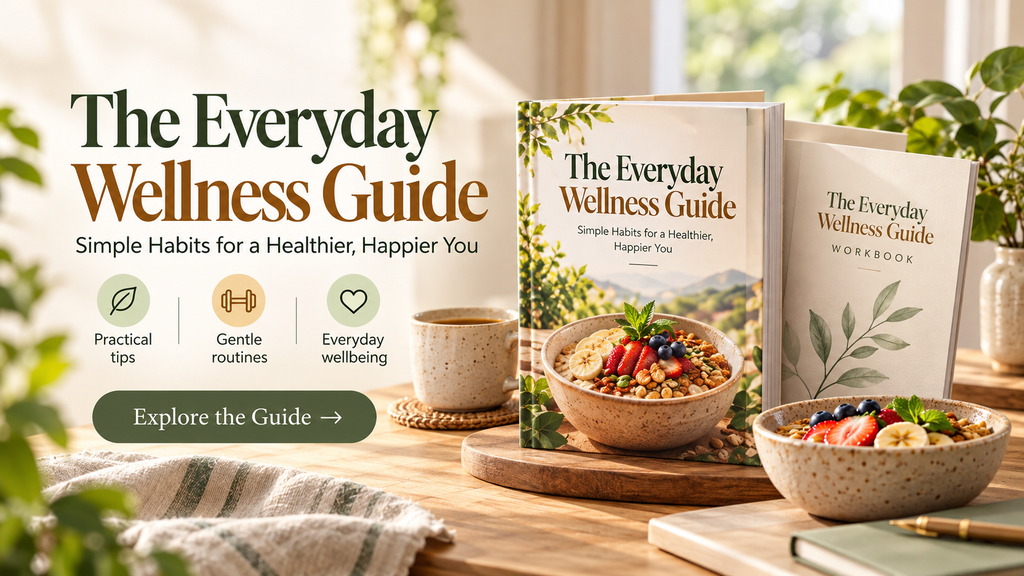
A Practical Guide to Everyday Wellness
Created for people who want a more realistic approach to wellbeing, The Everyday Wellness Guide brings together practical ideas for making healthier choices without relying on strict schedules or complicated lifestyle changes.
Inside the guide, you can explore:
- Everyday nourishment: Practical ways to approach balanced eating and make food choices feel more manageable.
- Gentle movement: Ideas for incorporating physical activity into ordinary routines.
- Rest and recovery: Thoughtful approaches to creating more supportive daily and evening habits.
- Mindful living: Simple opportunities to slow down, reflect, and bring more intention into everyday life.
- Sustainable routines: Ways to approach healthy daily habits with greater flexibility and less pressure.
The guide also includes a companion workbook designed to help you reflect on your priorities, organize your ideas, and take small, practical steps toward your personal wellness goals.
Turn Small Intentions Into Everyday Actions
Understanding the habit stacking technique is useful, but putting your intentions into practice is where your personal routine begins to take shape.
Perhaps you want to create calmer mornings, make more thoughtful food choices, move more regularly, or build an evening routine that helps you unwind.
Instead of attempting everything at once, you can begin with the area that matters most to you and gradually explore other aspects of your wellbeing.
The Everyday Wellness Guide complements the strategies in this article by offering a broader perspective on everyday wellness and practical tools for approaching change at your own pace.
Your Next Step Toward a More Balanced Everyday Life
You do not need a perfect routine to begin taking better care of yourself. Small decisions, realistic expectations, and a willingness to adjust can help you create habits that fit the life you actually live.
If you would like more guidance and a companion workbook to support your next steps, discover what is included in The Everyday Wellness Guide.
Explore The Everyday Wellness Guide →
Conclusion: Build Healthy Habits One Small Step at a Time
Building healthier routines does not require a complete lifestyle transformation. Often, meaningful progress begins with one simple decision: connecting a small new action to something you already do every day.
As you have discovered throughout this guide, habit stacking for beginners offers a practical way to introduce healthy daily habits without depending on complicated schedules, constant reminders, or unrealistic expectations.
Whether you want to drink more water, move more regularly, develop a reading habit, or create a few moments of mindfulness, the process begins with choosing a familiar activity and adding one manageable action.
The most important lesson is to keep your approach realistic. Start small, prepare your environment, notice what works, and allow yourself to make adjustments when life changes.
You do not need to practice every habit perfectly or introduce several new routines at once. A single useful habit, repeated when possible, can become a valuable part of your everyday life.
If you are unsure where to begin, return to the simple habit stacking formula:
After I [existing habit], I will [new habit].
Choose one activity you already perform consistently, connect it to a small action that supports your wellbeing, and practice that connection over the coming days.
Remember that building healthy habits is not about doing more every day. It is about making thoughtful choices that fit your needs, priorities, and lifestyle.
Your next step can be as simple as choosing one habit today and giving it a familiar place in your routine.
Small beginnings deserve attention, and a healthier, more balanced everyday life can start with the choices you make one moment at a time.
“Lasting habits often begin with small actions connected to the moments we already live every day.”
6 Simple Tools to Make Habit Stacking Easier
Practicing habit stacking for beginners does not require expensive equipment or complicated systems. However, a few practical tools can make healthy daily habits easier to remember, organize, and maintain.
From simple planners and visual reminders to hydration essentials and morning routine accessories, the following selection brings together six helpful products that may support different parts of your daily wellness routine.
Choose the tools that genuinely fit your lifestyle. The goal is not to buy everything, but to make the small habits you want to build more convenient and enjoyable.