
A more enjoyable life does not always come from making big changes.
Often, it begins with a few small lifestyle changes that make everyday routines feel easier, more organized, and less demanding.
That might mean creating a simpler morning rhythm.
Preparing one thing the night before.
Keeping frequently used items within reach.
Planning meals with less pressure.
Or protecting a few quiet minutes during the day.
None of these changes needs to be dramatic.
The goal is not to redesign your entire life.
It is to notice where small adjustments can reduce friction and make ordinary days feel a little better.
These simple lifestyle habits can also help create a more organized life because they reduce the number of decisions, forgotten tasks, and repeated frustrations that build up throughout the week.
If you are already trying to create routines that fit your real life, our guide to a personal wellbeing routine explores a similar approach: starting small, keeping things realistic, and choosing habits that actually support your day.
The ten ideas below are designed to be flexible.
You can try one.
Keep what works.
Change what does not.
And let these small lifestyle changes become part of a daily rhythm that feels more manageable, intentional, and enjoyable.
1. Make One Part of Your Morning Easier
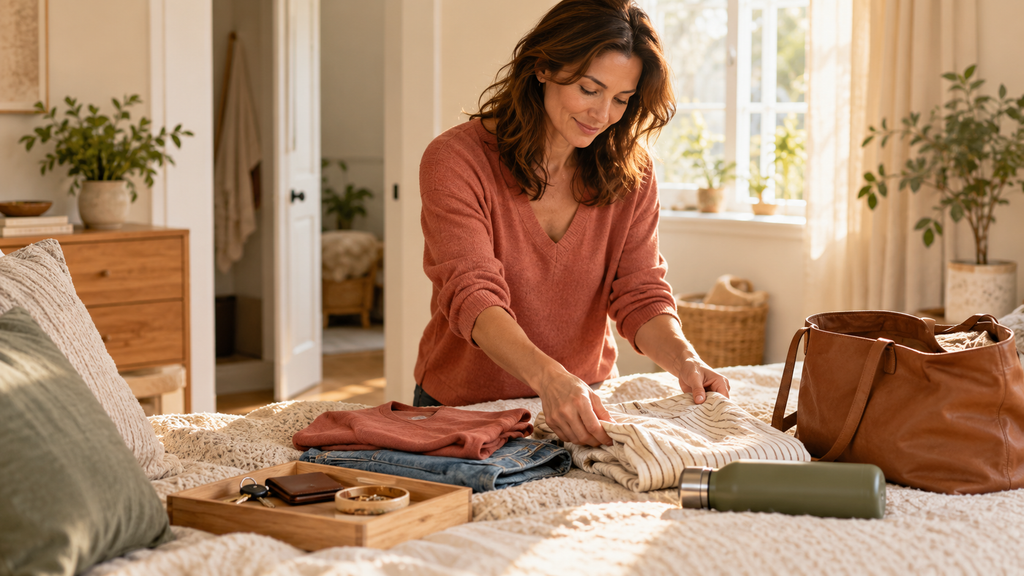
One of the most useful small lifestyle changes is making one part of your morning require less thought.
Mornings often feel rushed not because there is too much to do, but because too many small decisions happen at once.
What will you wear?
What will you eat?
Where are your keys?
What do you need to take with you?
Reducing even one of those decisions can make the start of the day feel noticeably smoother.
Choose the part that creates the most friction
You do not need to redesign your entire morning.
Notice what regularly slows you down.
Maybe choosing clothes takes too long.
Maybe breakfast feels improvised.
Maybe you spend several minutes looking for something you need.
Pick one recurring problem and make it easier.
That could mean setting out clothes the night before, deciding on a simple breakfast, or keeping your essentials in the same place.
Keep the solution simple
A helpful routine should reduce effort, not create another system to manage.
If preparing the night before takes twenty minutes, the solution may be too complicated.
Try something smaller.
Five minutes of preparation can often be enough to support a more organized life.
Let the change support the rest of your day
When the morning begins with fewer unnecessary decisions, it can feel easier to move into the rest of the day.
If mornings are one of the areas you want to improve, our guide to a calmer morning routine offers more ideas for creating a smoother start without overhauling your life.
A few simple lifestyle habits at the beginning of the day can make everything that follows feel more manageable.
2. Give Everyday Items a Place That Makes Sense
Another useful example of small lifestyle changes is giving frequently used items a place that feels natural.
Keys, chargers, bags, papers, sunglasses, and other everyday objects often create more friction than we realize when they are constantly moved from one place to another.
A simple home for these items can save time and reduce small moments of frustration throughout the day.
Organize around real behavior
The best place for an item is usually close to where you already use it.
If keys are always dropped near the door, create a place for them there.
If chargers are used beside the sofa or bed, keep them nearby.
If paperwork tends to collect on the kitchen counter, give it a simple tray instead of expecting it to travel somewhere less convenient.
That kind of practical organization supports a more organized life because it removes unnecessary steps.
Make putting things away easy
Storage does not have to be complicated.
A hook, basket, drawer, tray, or small container may be enough.
The easier it is to return something to its place, the more likely the habit will last.
This is one of those simple lifestyle habits that works quietly in the background.
You spend less time searching.
Surfaces stay clearer.
And everyday routines become slightly easier to manage.
Let your home support the habit
If you want more ideas for creating practical systems around the house, our guide to home organization habits explores simple ways to make everyday spaces easier to use and maintain.
The goal is not perfect organization.
It is creating small systems that make daily life feel less scattered.
3. Plan Meals Around Ease, Not Perfection

One of the most practical small lifestyle changes is making food decisions simpler.
Meals do not need to be elaborate to feel satisfying.
A few familiar breakfasts, easy lunches, and flexible dinners can reduce the amount of planning required during a busy week.
The goal is not to create a perfect meal plan.
It is to make everyday food easier to manage.
Repeat what already works
You do not need a completely different meal every day.
Repeating a few reliable options can save time, reduce decision fatigue, and make grocery shopping more predictable.
Maybe you keep two or three breakfast ideas in rotation.
A few easy lunches.
Several dinners that use overlapping ingredients.
This kind of flexibility can support a more organized life without making food feel rigid.
Prepare a few useful basics
Simple ingredients can do a lot of work.
Cooked grains.
Washed fruit.
Roasted vegetables.
Eggs.
A simple protein.
A sauce or dressing you enjoy.
Having a few basics ready can make it easier to put meals together without starting from zero every time.
If you want a broader structure for this, our guide to a weekly meal rhythm explores how to organize food preparation in a flexible way.
Optional Recipe Resource
If you would like more ideas for quick everyday meals, 100 Quick & Healthy Recipes is an optional recipe resource you can explore.
It includes ideas for breakfast, lunch, dinner, snacks, and desserts, which can be useful when you want more variety without making meal planning more complicated.
This page contains an affiliate link. We may earn a commission at no extra cost to you.
Keep meals flexible
A simple meal plan should leave room for real life.
Some days you will cook.
Some days you will use leftovers.
Some days you may choose something easier.
That flexibility is part of what makes small lifestyle changes sustainable.
Food routines work best when they support the week you are actually having.
4. Protect a Short Quiet Moment During the Day
One of the most overlooked small lifestyle changes is creating a few minutes with less noise and fewer inputs.
The day does not need to stop completely.
You simply need a short moment when nothing new is demanding your attention.
That might happen with a cup of coffee, a short walk, a few quiet minutes by a window, or a pause between tasks.
Keep the pause realistic
You do not need thirty minutes.
Five or ten minutes may be enough.
The important part is creating a small break from constant messages, decisions, and activity.
This can help a busy day feel less crowded and support a more intentional rhythm.
Let the moment stay simple
You do not need to turn the pause into another habit to track.
Sit.
Stretch.
Look outside.
Listen to something calm.
Write a few lines.
Or simply do nothing for a moment.
These kinds of simple lifestyle habits can make everyday life feel more enjoyable because they create space instead of adding another responsibility.
Optional Quiet-Time Audio Resource
If you enjoy listening to audio during a short quiet break, The Genius Wave is one optional digital resource you can explore.
It can simply be used as background listening during a few minutes of quiet or reflective time, rather than something your routine depends on.
This page contains an affiliate link. We may earn a commission at no extra cost to you.
Make quiet part of everyday wellbeing
A quiet moment does not need to solve anything.
Its value can simply be in giving your attention a short break.
If you want more ideas for bringing small moments of awareness into daily life, our guide to mindful daily habits explores simple ways to create a calmer routine.
A few protected minutes can become one of those small lifestyle changes that quietly improves the way the day feels.
5. Make Your Evening Easier Before It Begins

A calmer evening often starts before the day is fully over.
One of the most useful small lifestyle changes is preparing a few simple things in advance so the evening does not begin with more decisions, clutter, or unfinished tasks.
You do not need to organize everything.
A little preparation can be enough.
Close a few small loops
Before the evening settles in, take care of one or two things that tend to follow you into the night.
That might mean clearing the kitchen counter.
Putting away work materials.
Charging your phone.
Preparing tomorrow’s bag.
Or writing down one task you do not want to forget.
These small actions can help create a smoother transition from the active part of the day into a quieter one.
Make the evening feel easier to enter
If the room feels calmer and fewer things are demanding attention, it becomes easier to slow down.
That can support a more organized life without creating a rigid routine.
The goal is not to finish everything.
It is to make the evening feel less crowded.
Keep the preparation short
Five or ten minutes may be enough.
Once the useful tasks are done, stop.
A helpful routine should make life easier, not stretch the working day into the night.
These simple lifestyle habits work best when they create more space instead of taking more from you.
Let the evening have a softer beginning
If you want more ideas for slowing the pace at the end of the day, our guide to a restful evening routine offers simple ways to create a quieter transition into the night.
A few small lifestyle changes before the evening begins can make the rest of the night feel more manageable and enjoyable.
6. Make One Everyday Space Easier to Use
One of the most helpful small lifestyle changes is improving a space you use every day.
It does not have to be an entire room.
A kitchen counter, entryway, bathroom shelf, desk, or bedside table can make daily routines feel easier when it is arranged around how you actually use it.
Start with the space that creates the most friction
Think about where small frustrations happen repeatedly.
Maybe the kitchen counter is always crowded.
Maybe the entryway collects bags and shoes.
Maybe your bathroom shelf is difficult to use.
Maybe your desk gathers too many unrelated things.
Choose one area and make it easier to move through.
Keep only what supports the space
An everyday area works better when the items nearby belong there.
Remove things that regularly get in the way.
Keep frequently used objects easy to reach.
Use a tray, basket, drawer, or small container if that helps define the space.
These simple lifestyle habits can support a more organized life without turning your home into a perfectly styled environment.
Organize for function first
The goal is not to make the space look like a magazine photo.
It is to make the space easier to use.
A practical setup may look simple.
That is fine.
If the area helps you complete an everyday task with less effort, it is working.
Let one useful space create momentum
Improving one small area can make it easier to notice what would help elsewhere.
If you want more ideas for creating practical systems at home, our guide to home organization habits offers simple ways to make everyday spaces easier to maintain.
A few small lifestyle changes in the spaces you use most can make daily routines feel noticeably smoother.
7. Reduce One Source of Daily Friction
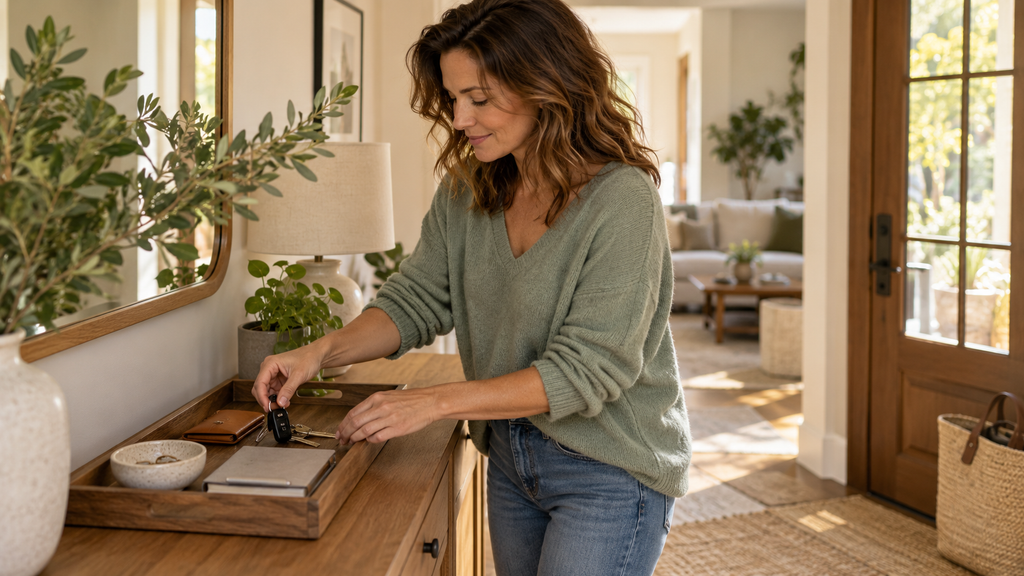
Some parts of everyday life feel harder than they need to.
A drawer that never closes properly.
A bag that is never packed when you need it.
A charger that is always missing.
A meal that requires too many last-minute decisions.
One of the most effective small lifestyle changes is identifying one repeated frustration and making it easier.
Notice what annoys you more than once
Daily friction is often small, which is why it is easy to ignore.
But when the same inconvenience happens again and again, it adds up.
Pay attention to what regularly slows you down or makes a routine feel more complicated.
That can show you where a simple change might have the biggest effect.
Change the setup, not just the habit
Sometimes the problem is not a lack of discipline.
Sometimes the environment is simply making the task harder.
If you always forget something before leaving the house, keep it near the door.
If paperwork piles up, create one place for it.
If dinner decisions feel exhausting, keep a short list of easy meals.
This kind of adjustment can support a more organized life because it removes unnecessary effort.
Keep the solution smaller than the problem
You do not need to completely redesign the routine.
Solve the part that creates the most friction.
A hook.
A tray.
A reminder.
A basket.
A short checklist.
A more convenient storage spot.
These simple lifestyle habits often work because they make the easier choice more obvious.
Let small fixes accumulate
One solved frustration may not transform the entire day.
But several small improvements can gradually make everyday life feel smoother.
That is the real strength of small lifestyle changes.
They do not need to be dramatic to be useful.
8. Create a Short Weekly Reset
One of the most useful small lifestyle changes is setting aside a short moment each week to reset a few areas of life before they start to feel overwhelming.
This does not need to become a long planning session.
A simple weekly reset can be enough to help you feel more prepared for the days ahead.
Focus on a few practical areas
Choose the things that tend to create the most stress when they are left until the last minute.
That might include:
- checking your calendar;
- planning a few meals;
- clearing one cluttered surface;
- preparing a short grocery list;
- organizing a bag or workspace;
- checking what needs attention during the week.
The goal is not to control every detail.
It is to reduce the number of surprises.
Keep the reset short
Twenty minutes may be enough.
If the reset becomes too detailed, it can start to feel like another task to avoid.
Choose a few priorities and stop when they are done.
This keeps the habit realistic.
Use the reset to simplify decisions
A short weekly review can make daily routines feel lighter because some decisions have already been made.
You know what meals you may prepare.
You know which appointments are coming.
You know which areas need attention.
That can support a more organized life without requiring a strict schedule.
Let the reset support, not control, the week
A weekly reset should create flexibility.
It should not make the week feel rigid.
Leave room for plans to change.
Leave room for easier days.
Leave room for real life.
That flexibility is what makes small lifestyle changes easier to maintain over time.
9. Protect Time for Something You Enjoy

A more organized life should not only make room for responsibilities.
It should also make room for things that feel enjoyable.
One of the most meaningful small lifestyle changes is protecting a little time for something you genuinely like doing.
That might be reading, gardening, cooking, walking, listening to music, calling someone you care about, or simply sitting somewhere comfortable without needing to be productive.
Keep enjoyment on the calendar too
It is easy to organize the week around tasks, appointments, errands, and obligations.
Enjoyable activities are often left for “when there is time.”
That usually means they happen less often.
You do not need a long block of free time.
Even twenty or thirty minutes can make a difference when it is treated as part of the week rather than an afterthought.
Choose something that actually feels good
The activity does not need to look productive.
It does not need to improve a skill.
It does not need to become another goal.
The point is simply to make space for something you enjoy.
That can support everyday wellbeing by making daily life feel less centered on what needs to be completed.
Let the habit stay flexible
Some weeks you may have more time.
Other weeks you may have less.
That is fine.
The habit is not about maintaining a perfect schedule.
It is about remembering that an organized life can include enjoyment as well as structure.
Protect the space without overplanning it
You do not need to design the entire activity in advance.
Sometimes the best plan is simply to leave a little room in the day and decide what feels good when the time comes.
That flexibility can help small lifestyle changes feel supportive instead of restrictive.
10. End the Day With Less Unfinished Noise
One of the most helpful small lifestyle changes is giving the day a clearer ending.
Unfinished tasks, open tabs, scattered items, and reminders can make the evening feel mentally crowded even when the day is technically over.
A short closing routine can help reduce that noise.
Finish only what truly needs finishing
You do not need to complete every task before the day ends.
Choose what will genuinely make tomorrow easier.
That might mean putting away a few things, writing down one reminder, closing the laptop, or preparing something you will need in the morning.
The goal is not productivity.
It is closure.
Give unfinished tasks somewhere to go
If something still needs attention, write it down.
A short note can keep the task from circling in your mind.
Once it is written, let it belong to tomorrow.
This small habit can support a more organized life because it creates a clear boundary between today and what comes next.
Reduce visual noise too
Sometimes the environment keeps the day feeling unfinished.
Clear one surface.
Put away a few loose items.
Turn off unnecessary lights.
Leave the space slightly calmer than you found it.
These simple lifestyle habits can make the evening feel more settled without requiring a full reset.
Let the day be complete enough
Not every day needs a perfect ending.
Some evenings will still feel messy.
That is normal.
A few small lifestyle changes can help create more closure, but they do not need to eliminate every unfinished detail.
The goal is simply to end the day with less noise and a little more space.
Let Small Lifestyle Changes Stay Small

A more organized and enjoyable life does not have to begin with a complete reset.
It can start with a few small lifestyle changes that make ordinary days easier to move through.
A simpler morning.
An easier meal routine.
A quieter pause.
A more functional space.
A short weekly reset.
A little more room for something you enjoy.
These changes matter because they reduce friction without asking you to become a different person.
You do not need to adopt all ten ideas at once.
Choose the one that would make your current routine feel a little easier.
Keep it simple.
Notice whether it helps.
Then build from there.
A more organized life often grows from small decisions that are realistic enough to repeat.
And when those decisions leave more room for ease, enjoyment, and intention, everyday life can begin to feel better without needing to look completely different.
Everyday Comfort & Routine Essentials
Small comforts can make everyday routines feel easier and more enjoyable. Here are a few practical finds that can help create a calmer, more comfortable rhythm at home.
As an Amazon Associate, we earn from qualifying purchases.




A better daily rhythm is often built from small changes that ask less and support more.