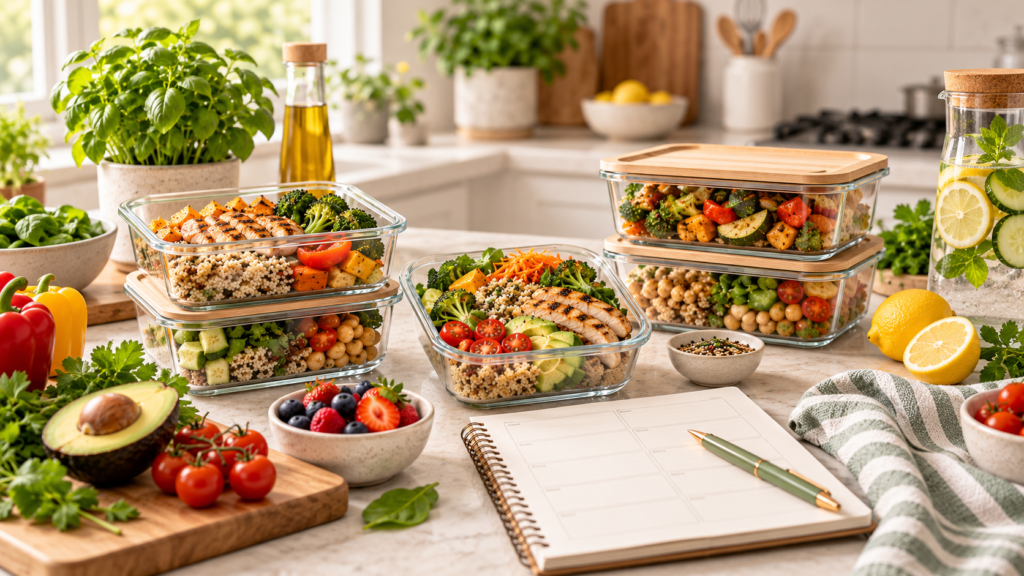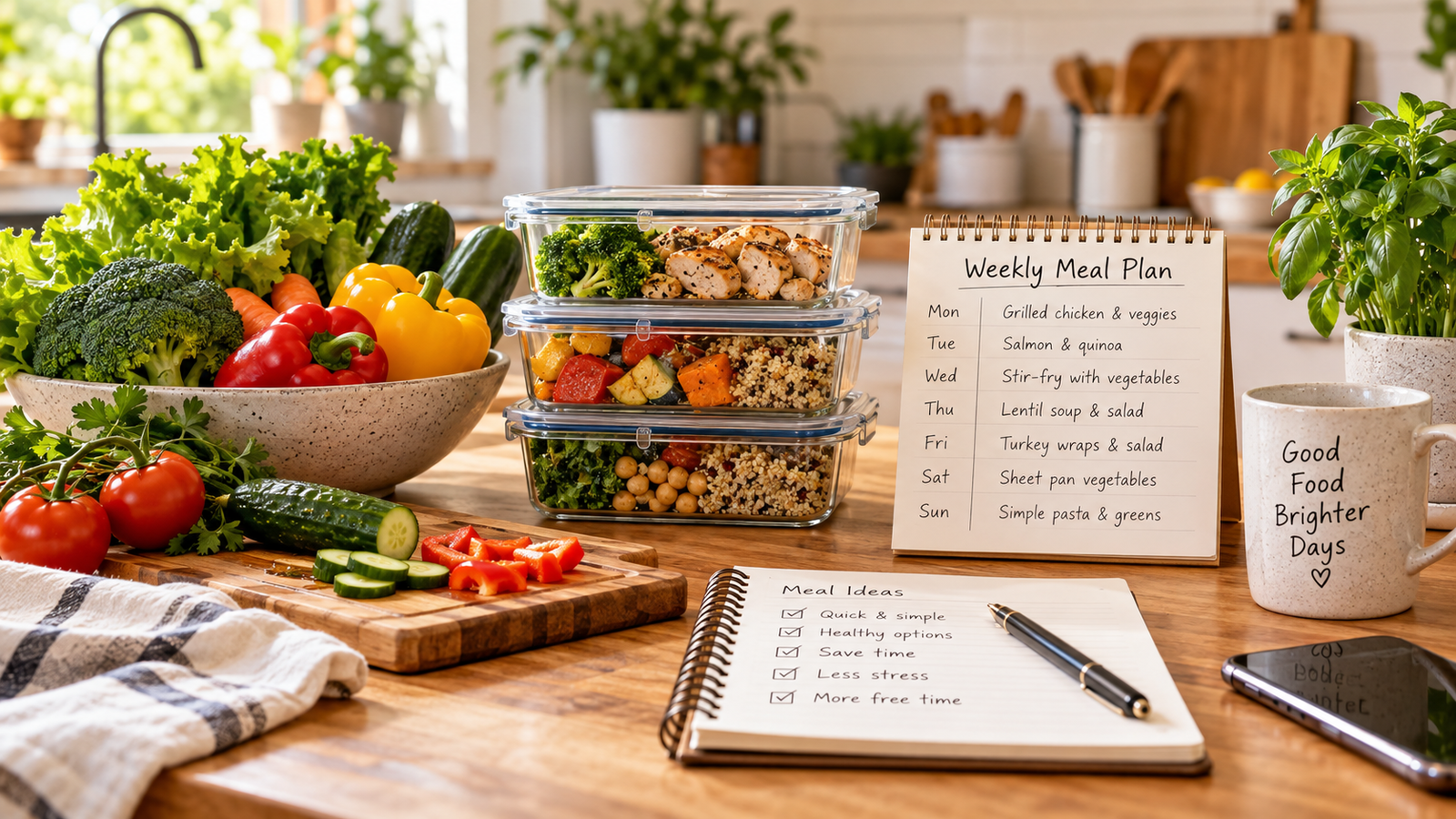
Some weeks feel harder than they should, not because the meals themselves are complicated, but because the decisions never stop.
What should you make for dinner tonight? Do you have anything ready for lunch tomorrow? Is there enough in the fridge to put something together quickly, or are you starting from nothing again?
A weekly meal rhythm can make those questions feel much lighter.
Instead of treating every meal as a separate problem to solve, a weekly meal rhythm gives your week a little structure. It creates a simple pattern for shopping, preparing, and repeating a few reliable meals so that food feels easier to manage in everyday life.
This does not mean planning an elaborate menu for seven perfect days. It does not mean batch-cooking everything on Sunday or eating the exact same meals every week.
It means creating a flexible food routine that helps you save time, reduce last-minute decisions, and make regular meals feel more manageable.
For some people, that rhythm may be built around themes such as soup night, pasta night, or leftover lunch. For others, it may simply mean keeping a few dependable ingredients on hand and knowing how they will be used over the next several days.
The point is not to make meals more rigid. It is to make them easier.
A good weekly meal rhythm helps you spend less time wondering what to cook, less money on groceries you do not use, and less energy trying to improvise every single day.
It also gives everyday meals a calmer place within your routine. When food decisions are lighter, the week often feels lighter too.
Why a Weekly Meal Rhythm Saves More Time Than a Perfect Meal Plan
A traditional meal plan can be useful, but it often works best when life is predictable.
Real life is not always predictable.
Plans change. Appetite changes. Schedules move around. Some evenings leave room for cooking, while others call for something fast and simple. That is why a weekly meal rhythm can be more practical than a strict plan.
A rhythm gives you guidance without forcing every day to look the same.
You might decide that Mondays are for a quick skillet meal, Tuesdays are for something built around leftovers, Wednesdays are for a sheet-pan dinner, and Fridays are for the easiest option in the house. You are not locking yourself into a precise menu as much as creating a pattern you can return to.
That pattern saves time in several ways.
First, it reduces decision fatigue. You do not have to start from zero every time someone asks what is for dinner.
Second, it helps with grocery shopping. When you know the general shape of the week, it becomes easier to buy ingredients with a purpose.
Third, it encourages reuse. A cooked grain, a roasted vegetable, or a simple protein can show up in more than one meal rather than being prepared once and forgotten.
Most importantly, a weekly meal rhythm supports consistency without demanding perfection.
If one dinner changes, the whole system does not fall apart. You simply move with the week and return to the rhythm at the next meal.
That is what makes it useful: it is structured enough to save time and flexible enough to survive real life.
How to Build the Foundation of a Weekly Meal Rhythm

The easiest way to build a weekly meal rhythm is to stop thinking in terms of perfect plans and start thinking in terms of repeatable patterns.
A good rhythm usually begins with a few simple decisions.
How many dinners do you realistically cook in a normal week? Which meals tend to create the most stress? When do you usually have time to shop, prep, or cook? Which meals need to be quick, and which ones can be a little more relaxed?
These questions matter because the best meal rhythm is not the most ambitious one. It is the one that matches the shape of your actual week.
For some households, the foundation may be three cooked dinners, one leftover night, one simple convenience meal, and a few easy lunch options. For others, it may mean repeating a short list of dependable meals and rotating them in slightly different ways.
A weekly meal rhythm works best when it includes three basic layers:
1. A small group of reliable meals
These are the meals you can make without much thought.
They do not need to be exciting every time. They need to be practical, familiar, and easy enough to repeat. A pasta dish, a grain bowl, tacos, soup, roasted vegetables with protein, or a simple stir-fry can all become part of this core rotation.
When you rely on meals you already know how to make, the week becomes easier to manage.
2. A few flexible ingredients
Instead of buying ingredients for completely separate meals, choose items that can be used in more than one way.
For example, cooked rice or quinoa can support several lunches or dinners. Roasted vegetables can go into bowls, wraps, or side dishes. Chicken, beans, eggs, greens, yogurt, pasta, tortillas, and a few sauces can help multiple meals come together without requiring a long shopping list.
This kind of overlap saves both time and money.
3. A loose rhythm for the week
The structure does not need to be rigid, but it helps to know the general shape of your food week.
You might naturally settle into something like:
- one meal made from ingredients you already have;
- one tray-bake or sheet-pan dinner;
- one pasta or grain-based meal;
- one leftover meal;
- one very easy fallback option for a busier night.
That kind of rhythm keeps the week moving without forcing every dinner to be planned in exact detail.
This is also where meal planning connects with the bigger picture of a personal wellbeing routine. When meals feel more predictable, the rest of daily life often feels less rushed too.
The most important thing is to keep the foundation small enough that you can maintain it.
If the system feels too complicated, it usually will not last. If it feels realistic, it becomes something you can return to week after week with much less effort.
Turn Your Weekly Meal Rhythm Into a Smarter Grocery List
Once you know the general shape of your week, grocery shopping becomes much easier.
Instead of walking through the store trying to imagine seven completely different meals, you can shop around the ingredients your weekly meal rhythm actually uses.
Start by checking what is already at home.
Look through the refrigerator, freezer, and pantry before writing the shopping list. You may already have rice for a grain bowl, frozen vegetables for a quick dinner, pasta that only needs a sauce and something fresh, or ingredients that should be used before buying more.
This simple check helps prevent duplicate purchases and gives existing food a purpose.
Shop for ingredients that can do more than one job
Versatile ingredients make a weekly food routine much easier to maintain.
A bag of greens might become part of a lunch bowl, a side salad, and a wrap.
Roasted vegetables can work alongside dinner one night and become part of lunch the next day.
Cooked chicken might be served with vegetables, added to a grain bowl, or tucked into a tortilla.
The same principle works with beans, eggs, potatoes, rice, pasta, yogurt, herbs, and simple sauces.
You are not trying to make every ingredient stretch across the entire week. You are simply giving more of what you buy a clear second use.
Leave room for food you already have
A weekly plan does not need seven brand-new dinner ideas.
Before adding another meal to the grocery list, ask whether one evening could use leftovers, freezer food, or ingredients already waiting in the pantry.
This creates breathing room in the week and reduces the chance of fresh food being forgotten.
It also gives you flexibility when plans change.
If Tuesday’s dinner moves to Wednesday, you still have space in the rhythm rather than an entire menu that suddenly needs rearranging.
Keep one backup meal in reserve
Every week benefits from one dinner that requires very little thought.
It might be eggs and toast, pasta with a simple sauce, a freezer meal, soup with bread, quesadillas, or another combination your household genuinely likes.
A backup meal is not a failed meal plan.
It is part of the plan.
Knowing there is something easy available can prevent a busy evening from turning into another last-minute grocery trip or an expensive decision made when everyone is already hungry.
The most useful shopping list is not the longest or most detailed one. It is the one that reflects how you actually cook, what you already have, and how much energy you realistically want to spend on meals that week.
Prep Components, Not Seven Complete Meals

One of the easiest ways to make a weekly meal rhythm more practical is to prepare a few useful components instead of trying to cook every meal in advance.
Full meal prep can work beautifully for some people, but it is not the only way to save time.
Preparing a handful of flexible ingredients gives you structure while still leaving room to decide what sounds good later in the week.
You might cook a pot of rice or quinoa, roast a tray of vegetables, wash and dry greens, prepare a simple protein, chop a few raw vegetables, or mix a dressing you enjoy.
None of these ingredients has to belong to one specific meal.
That is the advantage.
Think in building blocks
Imagine opening the refrigerator and already having several useful pieces ready.
Cooked grains can become the base of a bowl, a side dish, or part of a quick lunch.
Roasted vegetables can be served alongside dinner, folded into eggs, added to pasta, or used in a wrap.
A prepared protein can move between salads, sandwiches, bowls, and simple plates.
Even something as small as washed fruit or chopped vegetables can make an everyday meal easier to assemble.
The goal is not to fill the refrigerator with identical containers.
It is to reduce the amount of work standing between you and a meal.
Choose prep tasks that actually save you time
Not every ingredient needs to be prepared ahead.
Some foods are already quick.
There is little benefit in turning a five-minute task into a formal meal-prep project.
Instead, notice which steps regularly slow you down.
If washing and chopping vegetables is the reason you avoid using them on busy nights, do some of that work earlier.
If cooking grains always feels like one step too many at lunchtime, prepare a larger batch once.
If you often reach dinner with no protein ready, prepare enough for more than one meal.
A useful prep session should solve the parts of cooking that create the most friction in your own week.
Keep the amount realistic
Preparing too much food can create a different kind of problem.
A refrigerator full of containers may look organized on Sunday and feel overwhelming by Thursday if nobody wants to eat what is inside.
Start smaller than you think you need.
Two or three prepared components are often enough to make several meals easier without locking you into a menu.
You can always prepare more later in the week.
A weekly meal rhythm works best when it gives you options rather than obligations.
Use a Simple Formula Instead of Searching for New Recipes
A weekly meal rhythm becomes much easier when every meal does not require a new recipe.
Searching for ideas can be enjoyable, but doing it several times a week creates more decisions, more ingredients, and often more food waste.
A simple meal formula can give you enough structure to put dinner together without starting from scratch.
One useful approach is to think in four parts:
Start with a base
This could be rice, quinoa, pasta, potatoes, bread, tortillas, or another staple you already use regularly.
The base gives the meal structure and can often be prepared ahead or kept in the pantry.
Add a protein
Depending on your preferences, this might be chicken, fish, eggs, beans, lentils, tofu, yogurt, or another familiar option.
You do not need a different protein every night.
Repeating a few reliable choices can make grocery shopping and preparation much simpler.
Add produce
Fresh, frozen, or roasted vegetables can all work.
Some nights that may mean a salad. Other nights it may be broccoli from the freezer, roasted carrots, tomatoes, greens, or vegetables left from another meal.
Fruit can also be an easy addition to breakfast, lunch, or a lighter meal.
Finish with flavor
This is the part that helps familiar ingredients feel different.
A simple sauce, herbs, lemon, pesto, salsa, yogurt dressing, vinaigrette, spices, or grated cheese can change the direction of a meal without changing every ingredient.
For example, the same cooked grain, roasted vegetables, and protein might become a Mediterranean-style bowl one night and a completely different meal later in the week simply by changing the sauce and toppings.
That is where flexibility begins to save time.
You are not constantly reinventing dinner. You are using a small group of ingredients in ways that still feel varied enough to enjoy.
Repeat the structure, not necessarily the exact meal
This is an important distinction.
A weekly meal rhythm does not have to mean eating the same dinner every Tuesday forever.
You can repeat the structure while changing the details.
A bowl may use rice one week and quinoa the next.
A quick pasta night may include tomatoes and spinach one week, then broccoli and another sauce the following week.
A sheet-pan meal can change according to the vegetables and protein you already have.
The framework stays familiar while the food remains flexible.
That balance can make meal planning feel much less demanding.
Instead of asking, “What new recipe should I make tonight?” you begin asking, “What can I build from what I already have?”
That is often a much easier question to answer.
Build in a Leftover Strategy
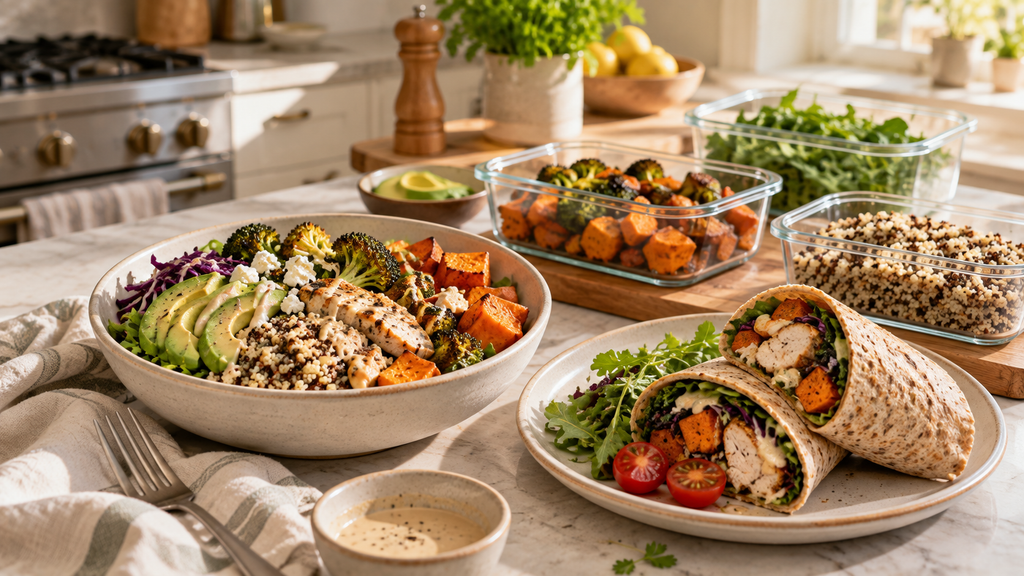
Leftovers become much more useful when they are planned into the week instead of treated as an afterthought.
A weekly meal rhythm works best when yesterday’s food has somewhere to go.
That does not mean eating the exact same plate two days in a row. It means giving cooked ingredients a second purpose.
Roasted vegetables from dinner can become part of a grain bowl the next day.
Cooked chicken can move into a wrap, salad, or sandwich.
Rice can become the base of a quick lunch or be turned into a different dinner with vegetables, eggs, or another protein.
A pot of soup can become an easy lunch when the rest of the week gets busy.
The key is to think one step ahead.
Cook once, use twice
When you prepare something that reheats well, consider whether making a little extra will save time later.
This works especially well with:
- grains;
- roasted vegetables;
- soups;
- cooked proteins;
- beans or lentils;
- simple sauces;
- baked dishes that portion easily.
The goal is not to create large amounts of food just for the sake of it.
It is to make enough that one cooking session can support more than one meal.
Change the format
Repetition feels less repetitive when the same ingredient appears in a different format.
A roasted vegetable side can become a wrap filling.
A piece of cooked salmon can become part of a salad.
Leftover rice can become a bowl with greens and a different sauce.
Beans from dinner can become part of lunch the next day.
Changing the format helps the meal feel new without requiring a completely new set of ingredients.
Keep leftovers visible
One of the easiest ways for food to be forgotten is to hide it behind larger containers or push it to the back of the refrigerator.
Keep ready-to-use leftovers where you can see them.
Clear containers can help.
So can labeling food with the day it was cooked, especially if several things are stored at once.
A visible leftover is much more likely to become tomorrow’s lunch than something forgotten in the back of a shelf.
Plan one flexible meal each week
Leaving one meal intentionally open can make the entire week easier.
Instead of planning a brand-new dish, use that meal to finish what is already available.
This might become a bowl night, a wrap night, a “use what we have” dinner, or simply a mix of leftovers that work well together.
That one flexible meal can reduce waste and create space in the fridge before the next grocery trip.
A weekly meal rhythm becomes more efficient when food has a second life built into the plan.
Create a Simple Weekly Flow
Once you understand the pieces of a weekly meal rhythm, the next step is giving them a place in the week.
The goal is not to create a rigid schedule. It is simply to decide when the main food decisions will happen so they do not keep showing up every day.
A simple flow might look like this:
Step 1: Check what you already have
Before planning anything, look through the refrigerator, freezer, and pantry.
Notice what needs to be used soon.
Check whether you already have grains, pasta, canned beans, frozen vegetables, sauces, eggs, or other basics that can support several meals.
This step can prevent unnecessary shopping and often gives you the first few ideas for the week.
Step 2: Choose a few main meals
You do not need to plan every breakfast, lunch, and dinner.
Start with the meals that usually create the most stress.
For many households, that means dinner.
Choose three or four main meals and leave space for leftovers, a backup dinner, or a change of plans.
If you already know one evening will be busy, give that night the easiest meal from the beginning.
Step 3: Build the grocery list around overlap
Once you know the basic meals, look for ingredients that appear more than once.
Maybe spinach works in eggs, pasta, and a lunch bowl.
Perhaps tortillas can become wraps one day and quesadillas another.
A container of yogurt may work for breakfast and also become the base of a simple dressing.
This overlap makes the grocery list shorter and gives ingredients more than one purpose.
Step 4: Prep only the parts that will help
Choose one short preparation window.
That might happen after grocery shopping, on a weekend afternoon, or whenever your schedule gives you a little breathing room.
Do the tasks that save the most time later.
Wash produce.
Cook a grain.
Roast vegetables.
Prepare a protein.
Mix a sauce.
You do not need to prepare everything.
A useful prep session should make future meals easier without using up an entire day.
Step 5: Let the middle of the week guide you
By the middle of the week, take another quick look at what is left.
What needs to be used first?
Which prepared ingredients are still available?
Are there enough leftovers for lunch or a flexible dinner?
This is the point where the rhythm becomes adaptable.
If plans changed, rearrange the remaining meals instead of abandoning the whole week.
Step 6: Finish before starting again
Toward the end of the week, use what remains before automatically buying more food.
A leftover bowl, soup night, eggs with vegetables, sandwiches, or another simple combination can help clear the refrigerator and reduce waste.
Then the next weekly rhythm begins with a cleaner picture of what you actually need.
Your week does not need to start on Sunday
There is no rule that meal planning has to happen on a particular day.
If Wednesday is your easiest shopping day, build the rhythm around Wednesday.
If you work weekends and have more time on Monday, start there.
The best schedule is the one that matches the way your household already moves.
A weekly meal rhythm should make food easier to manage, not force your week into somebody else’s calendar.
Make Breakfast and Lunch Easier Too

A weekly meal rhythm becomes much more useful when it supports more than dinner.
Breakfast and lunch are often the meals people expect to “figure out later,” which can lead to rushed choices, skipped meals, or buying something simply because nothing is ready.
You do not need elaborate plans for either one.
A few dependable options can remove a surprising amount of daily decision-making.
Keep breakfast repetitive on purpose
Breakfast is one of the easiest meals to simplify.
You might rotate between two or three options you genuinely enjoy, such as eggs and toast, yogurt with fruit, oatmeal, or a simple smoothie.
Repeating breakfast is not boring if it makes mornings easier.
You can still change toppings, fruit, bread, or other details without rebuilding the entire meal every day.
The goal is to know that breakfast is available without needing to think about it from scratch.
Build lunch from what dinner already created
Lunch becomes easier when it has a relationship with the rest of your weekly food rhythm.
Leftover roasted vegetables can go into a bowl.
Cooked chicken can become a sandwich or wrap.
Rice, greens, beans, and a simple dressing can become lunch in a few minutes.
Soup can be reheated.
A portion of dinner can simply become tomorrow’s lunch if that works for you.
This approach reduces the need to prepare an entirely separate category of meals.
Keep a few quick additions available
Some foods make simple breakfasts and lunches easier to complete.
Depending on what you enjoy, that could include fruit, yogurt, eggs, cheese, nuts, bread, tortillas, greens, canned beans, or other ingredients that require little preparation.
The purpose is not to stock every possible option.
It is to have enough familiar foods available that a meal can come together without another grocery trip.
Optional Nutrition Resource
For readers who already use dietary supplements and are interested in exploring an amino-acid product, Advanced Amino Formula is one optional resource to consider.
This is separate from the meal-planning approach discussed in this article and is not intended to replace everyday food. Review the product information and ingredients carefully, and speak with a qualified health professional if you have questions about whether a supplement is appropriate for you.
This section contains an affiliate link. If you choose to make a purchase through it, we may earn a commission at no extra cost to you.
The simpler breakfast and lunch become, the easier it is for the whole weekly meal rhythm to feel manageable.
You are no longer planning twenty-one separate meals.
You are building a smaller set of dependable options that can work together throughout the week.
Plan for the Nights When Cooking Is Not Going to Happen
A weekly meal rhythm becomes much more useful when it includes the nights when cooking simply is not realistic.
Maybe you get home later than expected.
Maybe the day takes more energy than usual.
Maybe plans change, someone is not hungry at the same time, or the ingredients you intended to use no longer sound appealing.
Those nights are not a failure of the plan.
They are part of the week.
Keep one or two low-effort meals available
A backup meal should require very little thought.
It might be:
- soup and bread;
- eggs and toast;
- a simple sandwich;
- quesadillas;
- pasta with an easy sauce;
- frozen vegetables with rice and eggs;
- a freezer meal you actually enjoy.
The best backup option is something you would be happy to eat, not something you keep only because it feels responsible.
If the fallback meal is unappealing, you are much more likely to ignore it when you are tired.
Make convenience part of the system
Convenience food can have a useful place in a realistic meal routine.
Frozen vegetables, canned beans, jarred sauce, pre-washed greens, rotisserie chicken, frozen grains, or another easy ingredient can shorten the distance between “there is nothing ready” and “dinner is on the table.”
The point is not to make every meal from scratch.
The point is to make the week workable.
Know which nights deserve the easiest meal
If you already know Thursday is usually exhausting, do not give Thursday the most complicated dinner.
Place the easiest meal where you are most likely to need it.
That might mean leftovers after a long workday, a freezer meal on the night of an evening commitment, or a simple sandwich-and-soup dinner when time is tight.
A weekly meal rhythm becomes stronger when it is built around real energy levels, not just available ingredients.
Let the plan absorb changes
If dinner out happens unexpectedly, move the planned meal to another day.
If leftovers last longer than expected, use them and skip another meal.
If you do not cook something you planned, that ingredient can move into the next week if it will keep.
The rhythm should be able to bend without becoming useless.
That flexibility is what makes it more sustainable than a rigid seven-day menu.
Use Your Freezer as Part of the Weekly Meal Rhythm
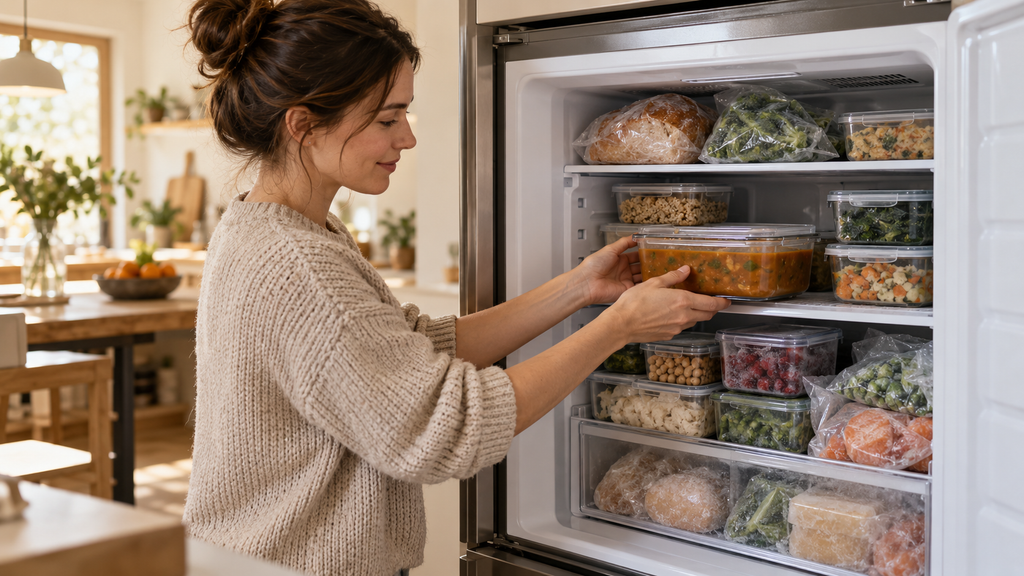
The freezer can make a weekly meal rhythm much more flexible.
It gives you a place to save useful food before it is forgotten, hold a few backup options, and create some breathing room between grocery trips.
The key is to treat the freezer as part of the system rather than a place where food disappears.
Freeze ingredients you know you will use
Not everything needs to become a full frozen meal.
Bread, cooked grains, soup, chopped vegetables, cooked beans, portions of protein, or extra sauce can all be useful later.
If you prepare more than you need, freeze part of it while it is still fresh instead of waiting until the end of the week.
That gives the food a purpose before it becomes something you feel pressured to finish.
Keep portions practical
Large containers can be difficult to use when you only need one or two servings.
Whenever possible, freeze food in portions that match the way you normally eat.
A single serving of soup can become lunch.
A small container of cooked rice can support a quick dinner.
A few slices of bread can be taken out without thawing an entire loaf.
Practical portions make frozen food much easier to use.
Keep a simple freezer list
You do not need a complicated inventory system.
A short note on your phone or a small list near the kitchen can be enough.
Write down the main things you want to remember.
For example:
- two portions of soup;
- cooked rice;
- frozen vegetables;
- bread;
- one prepared dinner;
- a portion of cooked chicken.
The list helps prevent the freezer from becoming a collection of mystery containers.
Use the freezer before buying more
Before making the next grocery list, take a quick look at what is already frozen.
You may discover that one dinner is essentially ready.
That can reduce the grocery bill, clear space, and give you another easy meal during a busy week.
A weekly meal rhythm becomes much easier to maintain when you have a few reliable options waiting in reserve.
Review the Week Before You Plan the Next One
A weekly meal rhythm gets easier when you pay attention to what actually worked.
Before planning the next week, take a quick look back.
Which meals were easy to make?
Which ingredients were used more than once?
What sat in the refrigerator longer than expected?
Did you prepare too much of something?
Was there a night when the planned dinner felt too complicated for the time or energy you had?
These small observations are more useful than trying to follow the same plan every week.
Keep what made the week easier
If a certain breakfast worked well, repeat it.
If preparing rice ahead saved time, do it again.
If one backup dinner rescued a busy night, keep that option in your regular rotation.
A good rhythm becomes simpler over time because you begin to recognize what is genuinely useful.
Remove what created extra work
Not every idea deserves to stay.
Maybe a recipe required too many ingredients.
Perhaps you prepared something nobody really wanted to eat twice.
Maybe your grocery list was larger than the week needed.
Those are not failures. They are useful information.
The next plan can be smaller.
Let repetition work in your favor
You do not need a completely new menu every week.
Repeating meals your household enjoys can make shopping faster, preparation easier, and food waste easier to manage.
You can always change one ingredient, sauce, side, or method when you want variety.
The structure can stay familiar while the details change.
A weekly meal rhythm becomes more valuable when it is shaped by your real habits instead of an idealized version of how you think you should cook.
Make Your Weekly Meal Rhythm Work for Real Life
A weekly meal rhythm does not need to organize every bite you eat.
Its real value is simpler: it gives everyday food enough structure that meals stop demanding so many last-minute decisions.
A few dependable dinners, ingredients that can be used more than once, one short prep session, a plan for leftovers, and a backup meal can change the way an entire week feels.
You may still change your mind.
Plans will still move.
Some weeks will involve more cooking, while others will rely heavily on simple meals, leftovers, and the freezer.
That flexibility belongs in the system.
The most useful rhythm is the one that helps you open the refrigerator and see possibilities instead of another problem to solve.
Start with the part of your week that causes the most friction.
If dinner is difficult, plan three reliable dinners first.
If mornings are rushed, choose two breakfasts you can repeat.
If food is regularly being forgotten, plan one leftover meal before buying more groceries.
You do not need to redesign the entire week at once.
As the rhythm becomes familiar, shopping gets clearer, preparation becomes more intentional, and meals can take up less mental space.
And when dinner is easier to handle, there may be a little more room at the end of the day to slow down. If that is something you are working on too, our guide to a gentle evening reset offers simple ways to make the transition into the evening feel calmer.
A good weekly meal rhythm should leave you with more time to live the week—not more time managing the plan.
- A simpler week does not require a perfect meal plan — just a flexible rhythm you can return to, one meal at a time.