
Waking up with stiff knees, tight shoulders, or a back that feels reluctant to move can make even simple morning activities uncomfortable. Maybe you need a few extra minutes before getting out of bed, or your joints feel less flexible when you take those first steps of the day.
Morning stiffness after 50 can happen for several reasons, including prolonged periods of inactivity, changes in joint health, or underlying medical conditions. Although occasional stiffness may improve as you begin moving, persistent or worsening symptoms should never be dismissed as an inevitable part of aging.
The encouraging news is that gentle movement and thoughtful daily habits may help you start your mornings more comfortably. You don’t need an intense workout, complicated stretching techniques, or expensive equipment to begin paying attention to your mobility.
Small adjustments, such as moving your joints gently before getting out of bed, warming up gradually, and choosing activities that match your abilities, can make a morning routine feel more manageable.
In this guide, we’ll explore seven gentle habits that may help with morning stiffness after 50, along with practical ways to support joint mobility and recognize when symptoms deserve medical attention.
We’ll also look at a few optional wellness products, explaining their purposes and limitations so you can make informed decisions without unrealistic expectations.
The goal isn’t to force your body to move faster. It’s to understand its needs and build a morning routine that feels comfortable, realistic, and sustainable.
Affiliate Disclosure: This article contains affiliate links. We may earn a commission from qualifying purchases at no additional cost to you. As an Amazon Associate, we earn from qualifying purchases.
Health Disclaimer: This article is intended for general educational purposes and does not replace professional medical advice, diagnosis, or treatment.
Why Morning Stiffness Can Become More Noticeable After 50
Waking up with stiff joints can feel frustrating, particularly when simple movements like bending your knees, turning your neck, or getting out of bed require extra effort.
Morning stiffness after 50 may have several causes, and understanding the difference between occasional discomfort and persistent symptoms is an important part of protecting your joint health.
During sleep, your body spends several hours in relatively limited movement. For some people, this period of inactivity can make their joints feel temporarily stiff when they first wake up. Gentle movement may help them feel more comfortable as the morning progresses.
However, not all morning joint stiffness is related to inactivity or natural aging.
Conditions such as osteoarthritis can contribute to stiffness, particularly after rest. Inflammatory conditions, including rheumatoid arthritis, may also cause morning stiffness, sometimes accompanied by swelling, warmth, or persistent discomfort.
The duration and pattern of symptoms can offer useful clues. Brief stiffness that improves with movement may have different causes from stiffness that lasts a long time, affects multiple joints, or becomes progressively worse. These patterns alone cannot establish a diagnosis.
Age-related changes in joint tissues, previous injuries, physical activity levels, and underlying health conditions may all influence how your body feels in the morning.
The important thing to remember is that stiffness should not automatically be accepted as an unavoidable part of getting older.
Paying attention to when symptoms occur, how long they last, and whether they interfere with everyday activities can help you recognize when simple adjustments may be useful and when professional medical advice is needed.
7 Gentle Habits to Help With Morning Stiffness After 50
1. Begin With Gentle Movement Before Getting Out of Bed
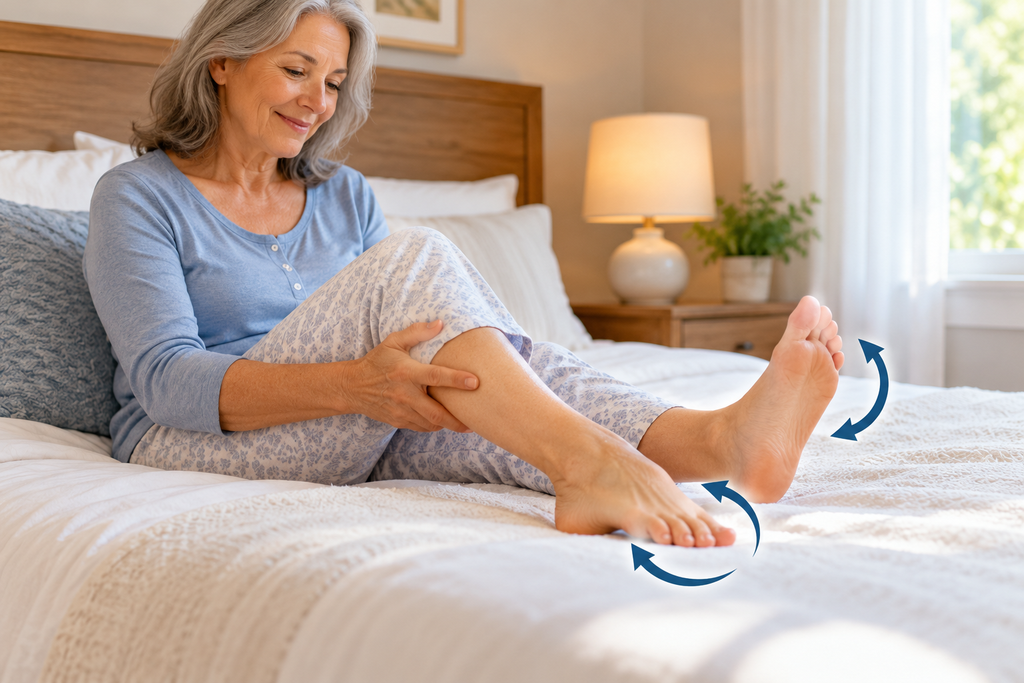
When you wake up feeling stiff, your first instinct may be to get out of bed quickly and start moving. However, allowing yourself a few moments of gentle movement can be a more comfortable way to begin the day.
If you’re experiencing morning stiffness after 50, try starting with small, controlled movements while you’re still lying down or sitting safely on the edge of your bed.
These movements aren’t meant to provide an intense stretch. Instead, they can help you gradually explore a comfortable range of motion after several hours of rest.
Here are a few gentle movements to consider:
- Ankle circles: Slowly rotate each ankle in a small, comfortable circle, changing directions after a few repetitions.
- Ankle pumps: Gently point your toes away from you, then bring them back toward your body without forcing the movement.
- Finger movements: Slowly open and close your hands to encourage comfortable movement in your fingers.
- Gentle shoulder rolls: Once you’re sitting upright, slowly roll your shoulders backward and forward without straining your neck.
- Easy knee movements: While lying comfortably, gently bend and straighten one knee at a time, keeping the motion within a pain-free range.
There’s no need to complete a specific number of repetitions or follow a strict schedule. Begin with a few comfortable movements and pay attention to how your joints respond.
If an exercise causes pain, increased swelling, or noticeable discomfort, stop rather than trying to push through it.
For people with significant mobility limitations, recent injuries, or known joint conditions, a physical therapist or qualified healthcare professional can help identify appropriate movements.
A gentler morning begins with listening to your body—not forcing it to move before it’s ready.
2. Use Gentle Warmth Before Stretching
When your joints feel stiff first thing in the morning, a little gentle warmth may help make movement more comfortable. Heat can temporarily relax tense muscles and reduce the sensation of stiffness, particularly after a long period of inactivity.
For some adults experiencing morning stiffness after 50, a warm shower can be a pleasant way to ease into the day before attempting gentle stretches or mobility exercises.
The goal isn’t to expose your body to intense heat. Instead, it’s to use comfortable warmth as part of a gradual transition from rest to movement.
Here are a few simple ways to incorporate warmth into your morning routine:
- Take a warm shower: Allow comfortably warm water to flow over areas that feel stiff before beginning gentle movements.
- Use a warm towel: Apply a comfortably warm, not hot, towel to a stiff area for a short period.
- Consider a reusable heat pack: Follow the manufacturer’s instructions, use a protective layer when needed, and avoid excessive temperatures.
- Move gently afterward: Once you feel comfortable, try a few slow movements without forcing your joints beyond their natural range.
Warmth may be helpful for some types of stiffness, but it isn’t appropriate for every situation. Avoid applying heat to joints that are noticeably swollen, red, or unusually warm, especially when the cause is unclear.
People with reduced skin sensation, circulation problems, or medical conditions that affect temperature awareness should seek professional guidance before using heating products.
Heat provides temporary comfort rather than treating the underlying cause of joint stiffness. If your symptoms persist, worsen, or interfere with daily activities, a healthcare professional can help determine what may be contributing to them.
A comfortable morning routine begins with gentle choices, not intense heat or forced stretching.
3. Practice Simple Joint Mobility Exercises

When you wake up with stiff joints, gentle mobility exercises may help you gradually become more comfortable with movement. Unlike stretches that focus primarily on lengthening muscles, joint mobility exercises encourage controlled movement through a comfortable range of motion.
For adults experiencing morning stiffness after 50, the goal is not to achieve greater flexibility overnight. It’s to explore movements that feel manageable without placing unnecessary stress on sensitive joints.
A simple morning mobility routine can include movements for different parts of the body:
- Shoulder circles: Slowly move your shoulders in small circles, keeping your neck relaxed and avoiding any movement that causes discomfort.
- Wrist rotations: Gently rotate your wrists in both directions, using a comfortable range of motion.
- Seated knee extensions: While sitting on a stable chair, slowly straighten one knee, then lower your foot back to the floor.
- Ankle movements: Point and flex your feet gently to encourage comfortable movement around your ankles.
- Gentle neck turns: Slowly turn your head from side to side without forcing the movement or tilting your head excessively.
Perform each movement slowly, avoiding bouncing, sudden twisting, or stretching into pain. If a particular joint feels especially uncomfortable, reduce the range of motion or skip that exercise.
As your body becomes more comfortable with movement, you may also explore gentle stretches for specific muscle groups.
A stretching strap can be a useful optional tool for certain flexibility exercises, particularly when reaching your feet comfortably is difficult. However, it should never be used to pull a joint beyond its natural range or force a painful stretch.
It’s important to distinguish normal stretching sensations from joint pain. If a movement causes sharp discomfort, increased swelling, dizziness, or worsening symptoms, stop and seek appropriate professional guidance.
Gentle mobility isn’t about how far you can move. It’s about moving comfortably, safely, and consistently within your abilities.
4. Avoid Staying in One Position for Too Long
Morning stiffness isn’t always limited to the first few minutes after waking up. Some people also notice that their joints feel less comfortable after sitting at a desk, watching television, or remaining in the same position for an extended period.
When your body stays relatively still for a long time, your muscles and joints have fewer opportunities to move through their usual range of motion. This can contribute to a temporary feeling of stiffness, particularly if you already experience joint discomfort.
For adults concerned about joint mobility after 50, incorporating regular movement throughout the day can be a practical way to support physical comfort and maintain an active lifestyle.
You don’t need to completely change your routine. Small adjustments can help you avoid spending too much time in one position.
Consider these simple habits:
- Take regular movement breaks: Stand up and walk around when you’ve been sitting for a long time, choosing intervals that work for your comfort and abilities.
- Change your sitting position: Adjust your posture occasionally rather than remaining in exactly the same position for hours.
- Move during everyday activities: Walk around your home while taking a phone call or take a short movement break between household tasks.
- Make transitions gradual: After sitting for an extended period, rise slowly and use a stable surface for support if needed.
- Choose enjoyable activities: Gentle walking, light gardening, or other comfortable activities can provide opportunities to keep moving.
Although regular movement may help some people manage stiffness after periods of inactivity, it doesn’t address every possible cause of joint discomfort.
If stiffness becomes persistent, is accompanied by swelling, or progressively limits your ability to move, it’s important to seek medical evaluation rather than relying only on activity breaks.
The goal is not to stay in constant motion, but to give your body regular opportunities to move comfortably throughout the day.
5. Support Your Joints With Appropriate Strength Exercises
Gentle stretching and mobility exercises can help you explore comfortable movement, but maintaining muscle strength is another important part of supporting your joints as you age.
The muscles surrounding your knees, hips, shoulders, and other joints help provide stability and control during everyday activities. When these muscles are sufficiently strong, movements such as climbing stairs, standing up from a chair, or carrying groceries may become easier to manage.
For adults experiencing morning stiffness after 50, appropriate strength exercises can complement a gentle mobility routine. However, strengthening alone will not necessarily resolve stiffness caused by arthritis, inflammation, or other underlying medical conditions.
You don’t need to begin with demanding workouts. Depending on your abilities, suitable activities might include:
- Supported sit-to-stands: Practice rising from a stable chair to engage the muscles around your hips and knees.
- Gentle wall push-ups: Use a wall to challenge your upper-body muscles without getting down on the floor.
- Light resistance exercises: Use appropriately selected resistance bands or weights to strengthen muscles through comfortable, controlled movements.
- Supported heel raises: Hold a stable surface while slowly raising and lowering your heels.
The most appropriate exercises depend on your current strength, joint condition, and mobility. If you experience significant pain or swelling, seek guidance from a qualified healthcare professional before beginning or changing your routine.
Strength and mobility work best as complementary habits. If you’d like to explore this topic in more detail, our guide on how to support muscle strength after 50 explains seven everyday habits involving resistance training, nutrition, recovery, and gradual progression.
Remember that the goal isn’t to push through discomfort or achieve rapid results. It’s to develop the strength and movement control that can support daily activities over time.
A comfortable mobility routine becomes more balanced when gentle movement and appropriate muscle-strengthening exercises work together.
6. Pay Attention to Sleep, Comfort, and Recovery
A restful night’s sleep can make a difference in how you feel when you wake up. Although sleep doesn’t directly eliminate joint stiffness, poor rest, uncomfortable sleeping positions, and existing joint discomfort can make mornings feel more challenging.
For adults experiencing morning stiffness after 50, paying attention to nighttime comfort may be a useful part of a gentle mobility routine.
Remaining in one position for several hours can sometimes contribute to temporary stiffness. However, persistent morning discomfort may also be related to an underlying joint condition rather than simply how you sleep.
A few thoughtful adjustments may help make your nighttime routine more comfortable:
- Find a supportive sleeping position: Choose a position that feels comfortable for your back, hips, and shoulders without forcing your joints into awkward angles.
- Consider gentle pillow support: Depending on your sleeping position, placing a pillow between your knees or beneath your legs may help some people feel more comfortable.
- Check your mattress comfort: A mattress should provide appropriate support without creating uncomfortable pressure points. Personal preferences and physical needs vary.
- Maintain consistent sleep habits: Going to bed and waking up at similar times can help support healthy sleep patterns.
- Notice recurring discomfort: Pay attention to whether stiffness or joint pain regularly interrupts your sleep or becomes more noticeable in the morning.
According to the Centers for Disease Control and Prevention (CDC), most adults between 18 and 60 need at least seven hours of sleep, while adults ages 61–64 generally need seven to nine hours and those 65 and older generally need seven to eight hours.
It’s also important to remember that changing your pillow or mattress will not necessarily resolve stiffness caused by arthritis or another medical condition.
If joint pain frequently wakes you, prevents restful sleep, or continues to worsen, a healthcare professional can help investigate the cause.
Supporting comfortable mornings begins with paying attention to your nighttime needs, while recognizing that persistent joint symptoms deserve proper evaluation.
7. Build a Morning Routine That Fits Your Body

Creating a gentle morning mobility routine doesn’t have to be complicated. In fact, a few comfortable movements performed consistently may be more practical than following an elaborate stretching program that becomes difficult to maintain.
When dealing with morning stiffness after 50, it’s important to remember that everyone experiences joint discomfort differently. A routine that feels comfortable for one person may not be suitable for someone with arthritis, a previous injury, or limited mobility.
Instead of trying to complete every possible exercise, focus on a few movements that match your abilities and allow you to start the day gradually.
Here’s an example of a simple morning routine you can adapt:
- First minute — Wake up gently: While lying comfortably in bed, move your fingers and ankles through a small, pain-free range of motion.
- Second minute — Sit and adjust: Sit safely on the edge of your bed and take a moment to notice how your body feels before standing.
- Third minute — Explore comfortable movement: Try a few slow shoulder rolls or gentle ankle movements without forcing any joint.
- Fourth minute — Stand with support if needed: Use a stable surface while standing up slowly, especially if you experience balance difficulties.
- Fifth minute — Begin moving: If you feel steady, take a short, comfortable walk around your home.
These five minutes are only an example, not
When Morning Stiffness Deserves Medical Attention
Occasional morning stiffness may improve as you begin moving, but persistent or worsening symptoms shouldn’t automatically be considered a normal part of aging.
For adults experiencing morning stiffness after 50, paying attention to how long symptoms last, which joints are affected, and whether other changes occur can help identify when medical advice is appropriate.
Consider scheduling an appointment with a healthcare professional if you notice:
- Prolonged morning stiffness: Stiffness that regularly lasts 30–60 minutes or longer, particularly when accompanied by other symptoms.
- Swollen or tender joints: Repeated swelling, warmth, or tenderness that doesn’t resolve.
- Increasing difficulty with everyday activities: Trouble walking, dressing, gripping objects, or performing familiar movements.
- Symptoms affecting several joints: Especially when both sides of the body are involved or stiffness is becoming progressively worse.
- Persistent pain or fatigue: Joint discomfort accompanied by unusual tiredness, weakness, or other unexplained symptoms.
Some conditions, including osteoarthritis and inflammatory forms of arthritis, can cause joint stiffness. However, the timing and duration of symptoms alone cannot determine the underlying cause.
Seek urgent medical attention if a joint becomes suddenly very painful, hot, and swollen, especially if you also have a fever or feel unwell. These symptoms can sometimes indicate a serious condition, such as a joint infection, that requires prompt evaluation.
If you’re unsure what is causing your stiffness, avoid forcing painful stretches or relying on supplements to manage persistent symptoms.
A healthcare professional can assess your symptoms, review your medical history, and recommend appropriate next steps.
Recognizing when to ask for help is an important part of protecting your mobility and long-term well-being.
Helpful Tools and Products for a Gentle Mobility Routine
A comfortable morning routine doesn’t require expensive equipment or a long list of supplements. However, understanding the purpose and limitations of different wellness products can help you make more informed choices.
Here are three products to explore, each serving a different purpose.
OPTP Original Stretch Out Strap — Gentle Flexibility Exercises
A non-elastic stretching strap with multiple loops can help you control your hand positioning during certain seated or lying-down stretches.
The OPTP Original Stretch Out Strap is one option to consider for gentle flexibility exercises at home. It is not a treatment for joint stiffness, and it should never be used to pull a painful joint beyond its comfortable range of motion.
Product: OPTP Original Stretch Out Strap View the Stretch Out Strap on Amazon

- Top Choice Stretching Strap for Physical Therapy: The OPTP Stretch Out Strap was the first stretching strap on the marke…
- Versatile Non-Elastic Stretch Strap: For yoga, physical therapy, as a leg stretch strap, knee and lower body exercise tr…
- Stretch Out Strap Health Benefits: Perform stretching and mobility exercises for better flexibility, muscle recovery, ra…
Joint Genesis — Understanding Joint Support Supplements
Joint Genesis, from BioDynamix, is marketed as a dietary supplement for joint comfort and mobility.
Its advertised ingredients include Mobilee, a hyaluronic acid complex, along with boswellia, ginger, maritime pine bark extract, and BioPerine.
Although some ingredients have been studied for joint-related outcomes, this does not establish that the finished Joint Genesis formula reduces morning stiffness or treats arthritis.
Product information: Joint Genesis
Explore Joint Genesis Ingredients and Product Details
Advanced Collagen Plus — A Multi-Source Collagen Supplement
Advanced Collagen Plus, from Advanced BioNutritionals, is marketed as a powder containing five collagen types from bovine, chicken, fish, and eggshell membrane sources.
Collagen supplements have been studied for certain connective tissue and joint-related outcomes, but results vary by formulation and study population.
There is insufficient product-specific evidence to conclude that Advanced Collagen Plus reduces morning stiffness after 50.
Product information: Advanced Collagen Plus
Explore Advanced Collagen Plus Ingredients and Product Details
Choosing Products With Care
Exercise equipment and dietary supplements are not interchangeable. Before purchasing, consider your individual needs, check product instructions or ingredient labels, and discuss supplements with a healthcare professional if you take medications or have medical conditions.
Products marketed for joint support should never replace evaluation of persistent, painful, swollen, or worsening joint symptoms.
“A gentler morning begins with patience, not pressure. Listen to your body, move at your own pace, and remember that small, thoughtful habits can make each day feel a little more comfortable.”
— Daily Wellbeing Path