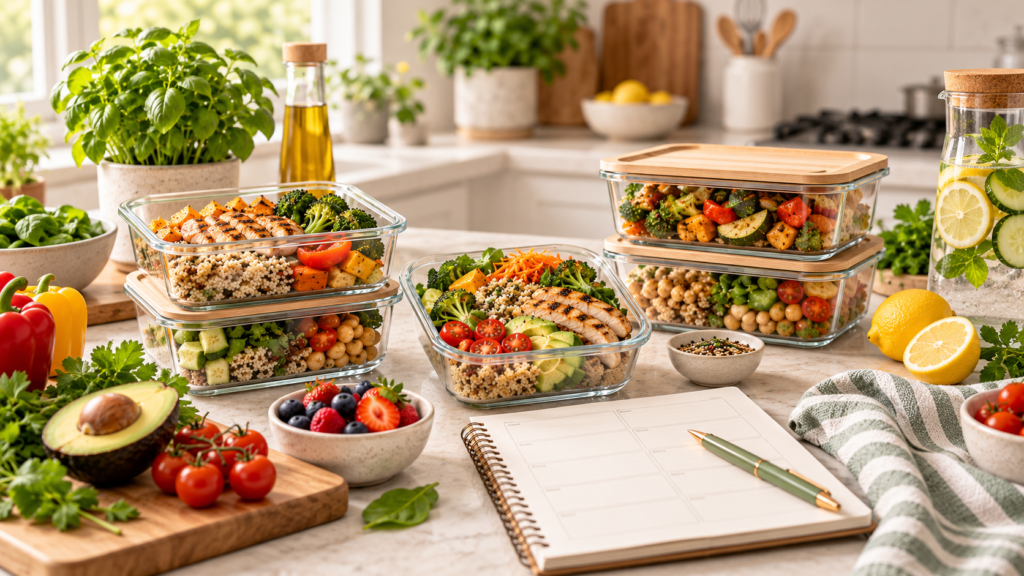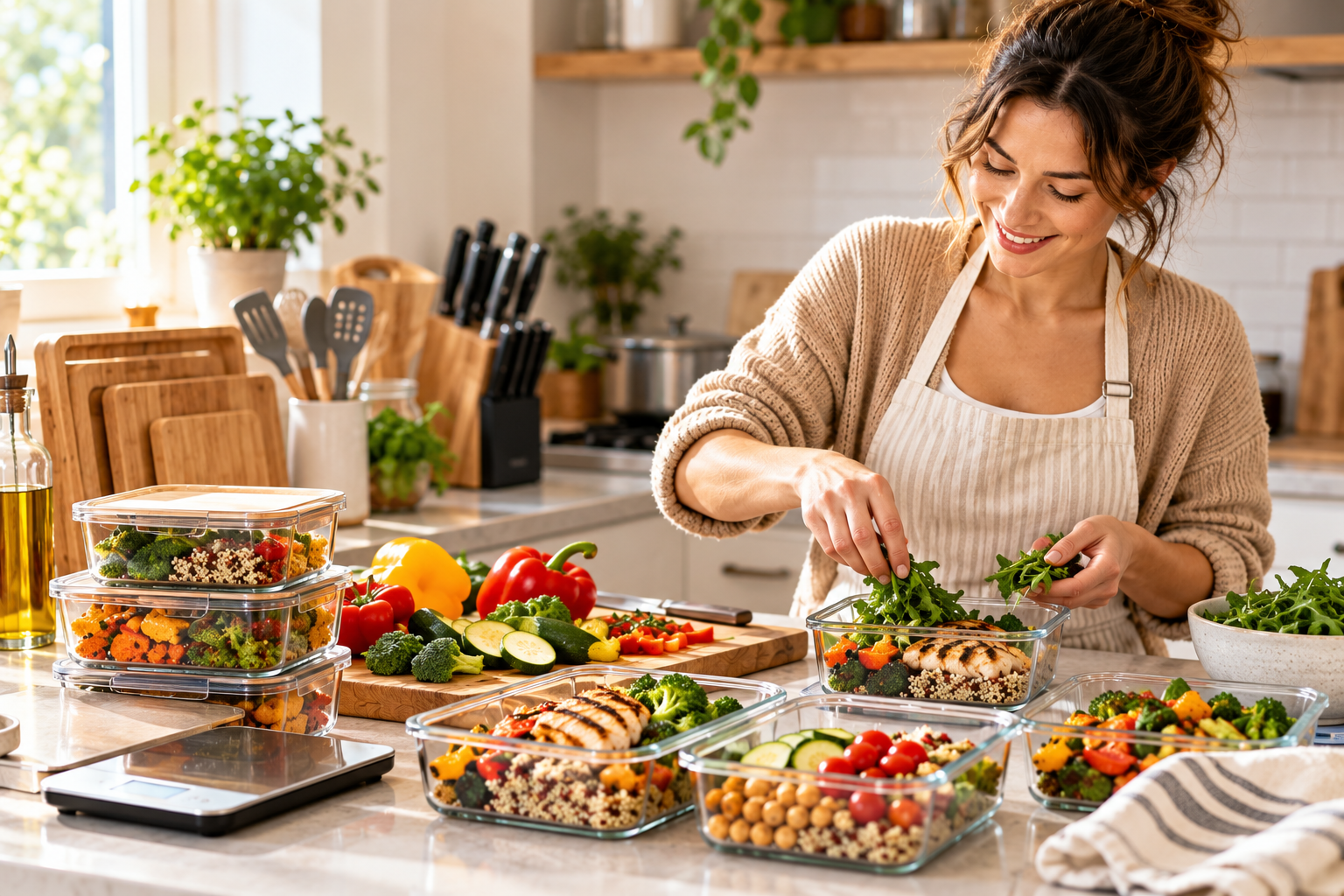
Busy weeks can make everyday meals feel more complicated than they need to be. When schedules fill up, it becomes easy to reach the end of the day without knowing what to cook, what ingredients are available, or whether there is enough time to prepare something from scratch.
A simple meal prep routine can make those moments easier.
Meal prep does not have to mean spending an entire Sunday cooking dozens of identical meals. A more flexible approach is often much easier to maintain: preparing a few useful ingredients, organizing some ready-to-eat options, and making the next several meals simpler to put together.
The goal is not to prepare everything in advance. It is to reduce some of the decisions and repetitive work that can make busy weekdays feel harder.
You might cook a grain that can be used in several meals, wash and chop vegetables, prepare one or two proteins, portion a few snacks, or simply make sure the ingredients you use most often are ready when you need them.
If you already use a broader weekly planning system, a simple meal prep routine can work especially well alongside a weekly meal rhythm. One helps you decide what kinds of meals will fit the week, while the other makes those meals easier to prepare when the time comes.
The best routine is not necessarily the one that prepares the most food. It is the one that saves you useful time later without turning meal prep itself into another exhausting task.
In this guide, we will build a practical approach you can adjust to your schedule, household, and everyday eating habits.
1. Start With the Meals That Cause the Most Stress

You do not need to prepare every meal for the entire week.
A simpler approach is to begin by noticing which meals usually create the most difficulty in your routine.
Maybe mornings are rushed and breakfast is often an afterthought. Perhaps lunch becomes complicated on workdays, or dinner is the moment when everyone is tired and deciding what to cook feels like one decision too many.
Choose the part of the week where a little preparation would make the biggest difference.
Look at your real schedule first
Before deciding what to prepare, take a quick look at the week ahead.
Which days will be especially busy? When will you realistically have time to cook? Are there evenings when leftovers would be particularly useful?
This does not need to become a detailed meal plan.
A few minutes of looking ahead can help you decide whether preparing three lunches, chopping vegetables for several dinners, or making breakfast easier would actually save you time.
Prep for a purpose
Instead of asking, “What should I meal prep this week?” try asking:
“What can I prepare now that will make a busy moment easier later?”
That small shift keeps meal prep practical.
One week, the answer might be a few ready-to-go lunches. Another week, it may simply be washed produce, cooked rice, and a protein that can become several different meals.
A useful simple meal prep routine should respond to your week rather than forcing every week into the same system.
2. Choose a Simple Preparation Day
Meal prep becomes easier when it has a realistic place in your week.
Instead of waiting until you feel overwhelmed by empty cupboards or last-minute decisions, choose a time that works naturally with your schedule.
For some people, this may be a quiet weekend morning. For others, it might be preparing a few ingredients after grocery shopping or using a shorter period during the week to get ahead.
The goal is not to spend hours in the kitchen.
Create a routine that fits your energy
A simple meal prep routine should match the amount of time and energy you actually have available.
If you only have thirty minutes, focus on one or two tasks that will make the biggest difference:
- washing and cutting vegetables;
- preparing a protein for several meals;
- cooking a basic ingredient such as rice, grains, or pasta;
- organizing snacks or breakfast options.
Small preparation steps can remove several decisions later in the week.
Avoid preparing more than you will use
One common mistake with meal prep is creating a plan that is too ambitious.
Preparing seven completely different meals may sound organized, but it can quickly become another responsibility to manage.
A more sustainable approach is to prepare flexible ingredients that can be combined in different ways.
For example, cooked vegetables can become a side dish, a salad ingredient, or part of a quick meal. A prepared protein can work in wraps, bowls, or simple dinners.
The best meal prep routine is the one you can repeat without feeling like it takes over your week.
3. Prepare Ingredients That Can Work in More Than One Meal
One of the easiest ways to simplify meal prep is to prepare ingredients rather than complete meals.
This gives you more flexibility during the week and makes it easier to use the same ingredients in different ways.
For example, you might prepare a batch of roasted vegetables, cook a grain such as rice or quinoa, and have one protein ready to use. During the week, those ingredients can become a bowl, a salad, a wrap, or a simple dinner.
Think in components
Instead of deciding on seven completely different meals, choose a few components that can work together.
You might prepare:
- one or two proteins;
- a cooked grain or other simple carbohydrate;
- several vegetables;
- a basic sauce or dressing;
- fruit or other easy snacks.
The idea is to create building blocks, not a refrigerator full of identical containers.
This can also make it easier to adapt meals when your plans change. If you unexpectedly eat lunch away from home, the ingredients you prepared can simply become part of another meal later in the week.
Keep preparation simple
Not everything needs to be cooked in advance.
Some foods are better prepared closer to the time you eat them, while others can be washed, chopped, cooked, or portioned ahead.
The goal is to find the few preparation steps that genuinely save you time.
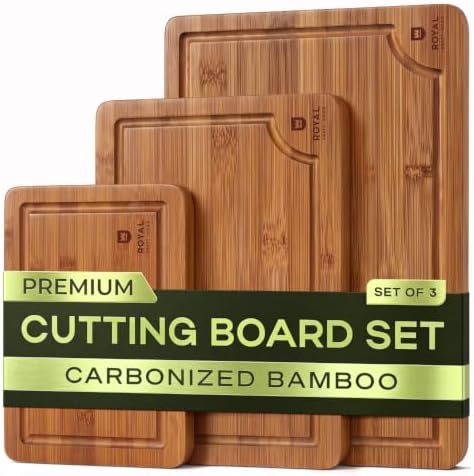
Meal Prep & Kitchen Essentials
Having a few practical kitchen tools on hand can make meal prep faster, easier, and more organized. Here are six useful finds to help simplify prepping, cooking, portioning, and storing meals for busy weeks.
As an Amazon Associate, we earn from qualifying purchases.




4. Store Prepared Food So It Is Easy to Use
Preparing food ahead of time only saves you effort if you can easily see, find, and use what you prepared.
This is why storage is an important part of a simple meal prep routine.
Use containers that make sense for the food you are preparing and the way you normally eat. If you often take lunch to work, individual portions may be useful. If you prefer assembling meals at home, larger containers for prepared ingredients may work better.
Keep the fridge easy to read
Try to keep prepared foods where you can see them.
Place ready-to-eat meals and prepared ingredients in accessible areas rather than hiding them behind everything else in the refrigerator.
You can also group similar items together: prepared proteins in one area, vegetables in another, and breakfast or snack options somewhere easy to reach.
The simpler it is to see what is available, the less likely you are to forget about food you already prepared.
Label when it helps
You do not need to label every container.
But if you prepare several similar foods at once, a simple label can make things easier to identify later. You might note what the container contains or the day it was prepared.
The goal is not to create a complicated storage system.
It is simply to make your prepared food easy to recognize and use.
Prepare for the way you actually eat
A meal prep system should fit your household.
If you live alone, smaller portions may be more practical. If you are preparing food for several people, larger containers may make more sense.
You may also discover that you prefer preparing ingredients rather than complete meals.
There is no single correct way to organize prepared food. The useful system is the one that makes your next meal easier to put together.
5. Prepare Enough to Help, Not Enough to Create More Work
Meal prep is meant to make the week easier. Preparing more food than you can realistically use can have the opposite effect.
You do not need to cook every meal in advance or fill the refrigerator with containers just because you have time to prepare them.
Instead, think about how much food your household is likely to use over the next few days.
Start with the meals you know you will need
If you know that three workday lunches will be difficult to prepare, focus on those first.
If breakfast is usually the problem, prepare a few simple options that can be ready quickly.
If dinner tends to become stressful, prepare ingredients that can be combined into different meals.
This keeps your preparation connected to an actual need rather than an idealized version of the week.
Leave room for flexibility
Plans change.
You might eat out, receive an invitation, have a busier day than expected, or simply want something different from what you prepared.
A flexible meal prep routine leaves some space for those changes.
Rather than preparing seven identical meals, consider preparing components that can be mixed and matched. This gives you more options while still reducing the amount of work required during the week.
Use what you prepare
One of the simplest ways to avoid waste is to make prepared food visible and easy to reach.
Before preparing something new, check what is already in the refrigerator or pantry.
You may already have cooked ingredients that can become part of another meal.
Meal prep works best when it supports the way you actually eat. More preparation is not automatically better preparation.
6. Build Different Meals From the Same Prepared Ingredients
Meal prep does not have to mean eating the exact same meal several days in a row.
Preparing a few versatile ingredients gives you the flexibility to create different combinations throughout the week.
A cooked protein, for example, might work in a grain bowl one day, a wrap the next, and a salad later in the week.
Choose ingredients that can move between meals
When deciding what to prepare, look for foods that can be used in more than one way.
Cooked vegetables can become a side dish, filling for a wrap, or part of a grain bowl.
Rice, quinoa, or another cooked grain can be served with different proteins, vegetables, sauces, or seasonings.
Fresh ingredients can also be prepared in stages. Wash and portion what you know you will use, while leaving some items whole so they remain useful for another meal.
Change the flavor, not necessarily the ingredients
You can make the same basic ingredients feel different by changing the way you combine them.
A simple dressing, sauce, herbs, or spices can give prepared ingredients a different character without requiring another cooking session.
This approach can also make your shopping list simpler because you are buying ingredients with several possible uses rather than choosing completely different foods for every meal.
Keep one or two meals completely flexible
Not every meal needs to be planned.
Leaving one or two opportunities open during the week gives you room to use leftovers, eat something unexpected, or prepare a meal based on what needs to be used first.
The goal is not to control every meal.
It is to make enough preparation in advance that you have more options and fewer decisions when the week gets busy.
7. Make Breakfasts, Lunches, and Snacks Easier
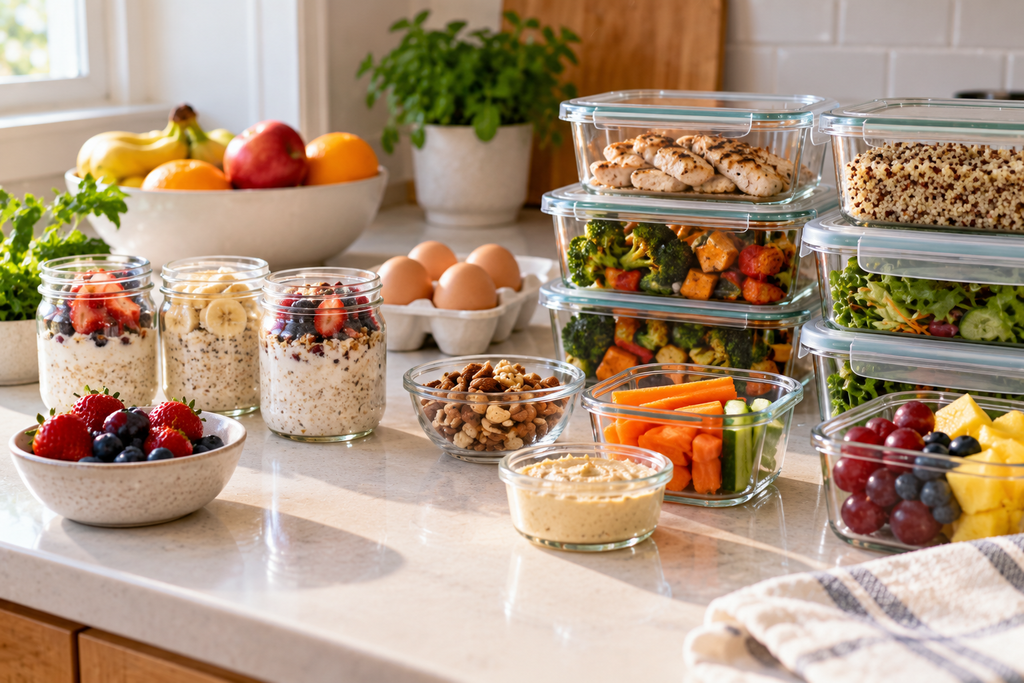
Some of the most useful meal prep happens before the main cooking even begins.
Having a few simple breakfast, lunch, and snack options ready can remove several small decisions from busy days.
You do not need a different option for every day. A few dependable choices are often enough.
Keep breakfast simple
Choose breakfasts that are easy to prepare and store.
Overnight oats, yogurt with fruit, boiled eggs, prepared fruit, or simple breakfast portions can all make rushed mornings easier.
The important thing is not variety for its own sake.
It is having something available when you need it.
Make lunch easier to assemble
If lunch is usually difficult during the workweek, prepare a few components that can be combined quickly.
A cooked grain, prepared protein, washed vegetables, and a simple dressing can become several different lunches without requiring a full cooking session each day.
You can also portion complete lunches into containers if that makes your routine easier.
Keep a few snacks ready
Simple snacks can be prepared or portioned ahead as well.
Fresh fruit, yogurt, nuts, cut vegetables, or other foods you already enjoy can be easier to choose when they are visible and ready to use.
The goal is not to create a strict eating schedule.
It is simply to make everyday food choices a little easier when time is limited.
Optional Recipe Resource
If you want more ideas for simple meals that can fit into a busy week, 100 Quick & Healthy Recipes offers a collection of recipes covering breakfast, lunch, dinner, snacks, and desserts.
It can be useful when you want to have more meal ideas available without making weekly planning more complicated.
This page contains an affiliate link. We may earn a commission at no extra cost to you. Learn More
8. Keep Your Meal Prep Routine Flexible
A routine works better when it can adapt to real life.
Some weeks you may have plenty of time to prepare food. Other weeks may be much busier, leaving you with only a short window for cooking.
Your meal prep routine does not need to look identical every week.
Use a smaller version when necessary
On a busy week, you might only prepare one protein, wash some vegetables, and organize a few breakfast options.
That may be enough.
You do not have to complete every step simply because you normally do.
A shorter preparation session can still make several days easier.
Let your routine respond to what you already have
Before shopping for another long list of ingredients, check your refrigerator, freezer, and pantry.
You may already have grains, canned foods, frozen vegetables, sauces, or other ingredients that can become part of the week’s meals.
Using what you already have can reduce both food waste and unnecessary shopping.
Do not aim for perfect consistency
There will be weeks when meal prep works beautifully and others when it barely happens.
That does not mean the routine has failed.
The purpose is to make everyday meals easier when you can, not to create another standard you have to meet perfectly.
A simple meal prep routine should give you support, not pressure.
9. Create a Simple Weekly Meal Prep Checklist
Once you know which meals tend to cause the most stress, your weekly preparation can become much simpler.
You do not need a detailed schedule. A short checklist can be enough to help you remember the tasks that make the biggest difference.
Before the week begins, consider:
- Which meals will be hardest to prepare?
- Which ingredients can be prepared ahead?
- What needs to be washed, chopped, cooked, or portioned?
- Which breakfasts or snacks would be useful to have ready?
- What is already available in the refrigerator, freezer, or pantry?
- How much time do you realistically have for preparation?
Then choose only the tasks that are likely to make the coming week easier.
Keep the checklist short
A useful meal prep checklist might look like this:
1. Check the week ahead
Identify the busiest days and the meals that may need extra preparation.
2. Choose a few flexible ingredients
Select foods that can be used in more than one meal.
3. Prepare what saves the most time
Wash, chop, cook, or portion only what you are likely to use.
4. Store everything clearly
Keep prepared foods easy to see and reach.
5. Leave some meals flexible
Do not plan every meal so tightly that there is no room for changes.
6. Use what you already have
Build some meals around ingredients that need to be used first.
This small process can be repeated each week and adjusted as your schedule changes.
A meal prep routine does not have to become a complicated system. It only needs to remove enough work from the week to make everyday meals feel easier.
Make Meal Prep Work for Your Real Life
A simple meal prep routine does not need to organize your entire week in advance. Its purpose is simply to make a few busy moments easier.
Prepare the foods that save you the most time, keep useful ingredients easy to reach, and leave enough flexibility for plans to change.
Start small, notice what genuinely helps, and adjust the routine as your weeks change.
The best meal prep routine is the one that makes everyday meals feel simpler — not another task you have to manage.
A simple meal prep routine is not about preparing everything ahead — it is about making the busy moments easier.